…says political gatekeeping, cost, violence still keep women off ballot
Gender Strategy Advancement International (GSAI) has expressed concern over the low number of women among candidates cleared to contest Nigeria’s 2027 National Assembly elections, saying political gatekeeping, the rising cost of politics, violence and limited access to party structures continue to constrain women’s political advancement.
According to the organisation, only 443 women are among the 4,408 candidates cleared to contest the 469 seats in the Senate and House of Representatives, representing 10.1 per cent of all candidates.
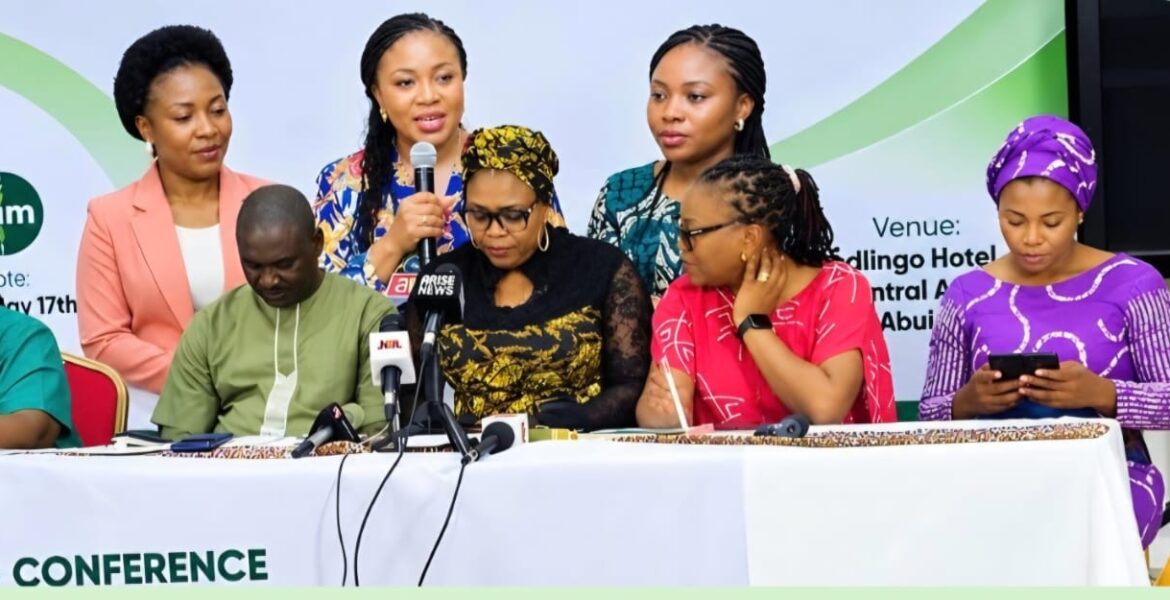
The figures were highlighted at a press conference in Abuja organised by GSAI, in collaboration with Partners West Africa Nigeria (PWAN), Civil Society Legislative Advocacy Centre (CISLAC), PAACA and other stakeholders, under the theme, “Beyond Participation: Amplifying Women Candidates, Advancing Political Leadership and Building an Inclusive Nigeria for 2027.”
A breakdown of the figures shows that 115 women are contesting the 109 Senate seats, accounting for 9.6 per cent of the 1,195 senatorial candidates, while 328 women are among the 3,213 candidates contesting the 360 House of Representatives seats, representing 10.2 per cent.
Although the number of female candidates has increased from the 380 recorded in the 2023 National Assembly elections, GSAI said the progress remained slow when measured against the size of Nigeria’s population and women’s participation in the electoral process.
Executive Director of GSAI, Adaora Onyechere Sydney-Jack, said the figures reflected a wider problem within Nigeria’s political system, where women often struggle to move from political participation to positions of decision-making.
She said the issue was not whether women were capable of leading, but whether political structures provided them with a fair opportunity to emerge as candidates and compete effectively.
“The question before Nigeria is not whether women are prepared to lead. The question is whether our political systems are creating equitable pathways for women to compete, be visible, and succeed,” she said.
Sydney-Jack identified the cost of politics as one of the major barriers facing women candidates, pointing to nomination fees, campaign logistics, mobilisation, media visibility and other expenses associated with elections.
She said women often had less access to political financing, established networks and traditional sources of campaign support, making it difficult for many qualified candidates to remain competitive.
“Women candidates often face additional disadvantages due to limited access to political financing, established networks, and traditional sources of campaign support,” she said.
The GSAI executive director also raised concern over the visibility of women candidates in political reporting, urging media organisations to give them sustained coverage based on their policies, leadership records and governance proposals.
She said women contesting elections should not be treated primarily as a gender category but as political actors whose ideas and records deserved public scrutiny.
“Women candidates should not be presented merely as ‘the few women running.’ They should be profiled as political actors with ideas, policy positions, governance records, and solutions for Nigeria,” Sydney-Jack said.
She called on media organisations to provide women candidates with greater access to interviews, debates, headline stories and political analysis, while adopting gender-responsive approaches to election reporting.
Sydney-Jack also advocated consideration of reserved seats for women as part of broader electoral reforms, arguing that such a mechanism could help address historical barriers to women’s representation in legislative institutions.
Also speaking, Executive Director of Partners West Africa Nigeria (PWAN), Kemi Okenyodo, said the problem of political exclusion extended beyond women, with young people and persons living with disabilities also poorly represented on the ballot.
“What we see is more of an exclusion, that we don’t have enough women on the ballot, we don’t have enough young people and we don’t have persons living with disability,” Okenyodo said.
She identified political gatekeepers and entrenched structures within political parties as major factors influencing who gains access to party tickets.
According to her, political parties need to move beyond making commitments to inclusion and establish practical mechanisms for ensuring that women and other underrepresented groups are reflected in their candidates’ lists.
Okenyodo said while the Independent National Electoral Commission (INEC) could encourage political parties to adopt more inclusive practices, the parties remained central to the emergence of candidates.
“INEC presents to you what the political parties have done,” she said.
She added that INEC could continue advocating for political parties to adopt quotas and other mechanisms capable of producing a more inclusive and representative ballot.
Okenyodo also called for stronger grassroots engagement by civil society organisations to ensure that advocacy for women’s political participation reaches women beyond established networks.
She stressed the importance of collaboration with the media in taking the message of political inclusion to a wider audience.
For Rafsanjani of the Transition Monitoring Group (TMG), violence and entrenched political practices were among the factors discouraging women from participating fully in electoral politics.
He identified electoral violence, political patronage, alleged bribery and male-dominated party structures as some of the barriers women face when seeking political office.
“The institutionalization of violence has been one of the major barriers that women are not able to participate in the electoral process,” he said.
Rafsanjani also criticised the tendency of political parties to rely on women for voter mobilisation while limiting their access to strategic leadership positions.
According to him, women are frequently assigned roles such as mobilisation without being given comparable opportunities to occupy influential positions within political parties.
“They will never give them chairmanship or vice-chairmanship or secretary or any serious position, it is only women leaders,” he said.
He noted that the situation represented a contradiction, given the significant role women play as voters during elections.
Rafsanjani said women constitute a substantial proportion of registered and participating voters, yet continue to face barriers to becoming candidates and decision-makers.
The stakeholders therefore urged political parties, electoral institutions, civil society organisations, development partners and the media to address the structural barriers limiting women’s political representation ahead of the 2027 elections.
They said efforts to promote women’s political participation should extend beyond encouraging women to vote or mobilise voters to ensuring that they have meaningful opportunities to secure party nominations, contest competitive seats and influence governance.
The latest figures show that women’s representation also varies across states. At the senatorial level, Jigawa, Nasarawa, Niger and Yobe have no female candidate, while Akwa Ibom has the highest number, with 10 women contesting Senate seats.
For GSAI and its partners, the figures underscore the need to examine the political, financial, institutional and security conditions that determine who is able to enter and remain competitive in Nigeria’s electoral system.
Sydney-Jack said political inclusion should ultimately translate into women being “visible, competitive, elected, and empowered” to contribute to national development.