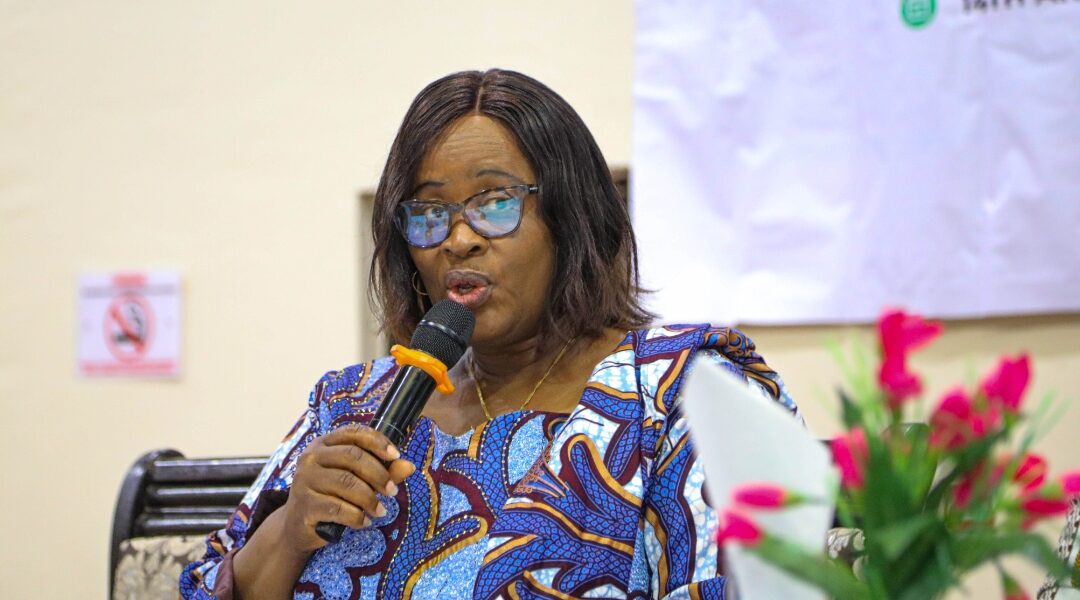
Nigeria loses an estimated $26 billion annually to gender inequality through lost earnings, reduced productivity and weak human capital development, the United Nations Women (UN Women) Country Representative to Nigeria and ECOWAS, Beatrice Eyong, has disclosed.
Eyong, who spoke at a two-day Capacity Building Programme on Gender-Responsive Planning and Budgeting (GRPB) for Ministries, Departments and Agencies (MDA’s), organised by the UN Women in partnership with the Federal Ministry of Women Affairs, and Ministry Of Budget and Economic Planning
of said the economic cost of gender inequality made it imperative for government to integrate gender considerations into planning, budgeting and public financial management.
She said an International Monetary Fund (IMF) analysis showed that reducing gender inequality in Nigeria to levels recorded in comparable countries could raise real GDP per capita growth by about 1.25 percentage points annually, while evidence from Nigeria’s Gender Profile and Roadmap to Equality indicated that closing gender gaps could increase GDP by between two and three per cent annually.
According to her, gender-responsive budgeting was not merely a social justice issue but an economic development tool capable of improving resource allocation and ensuring equitable outcomes.
“Gender-responsive planning and budgeting can also prevent conflicts,” Eyong said, noting that exclusion from planning and unequal access to public resources could fuel grievances, mistrust and social instability.
She said UN Women had prioritised institutionalising GRPB in Nigeria, stressing that it should become embedded in government systems, institutional procedures and organisational culture rather than remain a series of training programmes.
Eyong disclosed that UN Women had signed a memorandum of understanding with the Civil Service to support the institutionalisation of GRPB and inclusive working environments, adding that Permanent Secretaries and senior government officials had already received training, with the process being cascaded to directors and other officers and eventually to the states.
The Permanent Secretary, Federal Ministry of Women Affairs and Social Development, Mrs. Asanye Nko Esuabana, represented at the event, said gender-responsive budgeting involved mainstreaming gender considerations into decision-making throughout the annual budget cycle.
She urged gender focal persons to apply the knowledge acquired to address inequalities and the diverse needs of women, children and other vulnerable groups.
“Remember, the family remains the foundation of every society,” she said, warning that weakened families could worsen poverty, insecurity, gender inequality, unemployment, violence and social disruption.
Also speaking, the Permanent Secretary, Federal Ministry of Budget and Economic Planning, Dr. Deborah O. N. Odoh, said gender-responsive budgeting was critical to reducing gender disparities and improving Nigerians’ wellbeing.
Odoh said the ministry’s GRPB framework would guide MDAs to identify gender gaps, integrate interventions into sector plans, align resources with priorities and establish measurable indicators.
She disclosed that the Budget Office had included GRPB in budget call circulars since 2022, but acknowledged that institutional response remained below expectations.
Odoh expressed optimism that ongoing capacity building would produce “more practical results” in the 2027 budget, urging MDAs to use gender-disaggregated data in designing programmes, allocating resources and monitoring outcomes.
She also disclosed that government had conducted a Renewed Hope Ward Development Survey across 8,809 wards, with the results expected to be released soon.
The development partners, including the African Development Bank, reaffirmed support for institutionalising GRPB, underscoring the need to move from policy commitments to measurable investments and outcomes.