…As envoy seeks reserved seats for women ahead of 2027 elections
The National Human Rights Commission (NHRC) and the African Commission on Human and Peoples’ Rights have intensified calls on the Federal Government to ratify the African Union Convention on Ending Violence Against Women and Girls, amid growing concerns over femicide, sexual violence and technology-facilitated abuse in Nigeria.
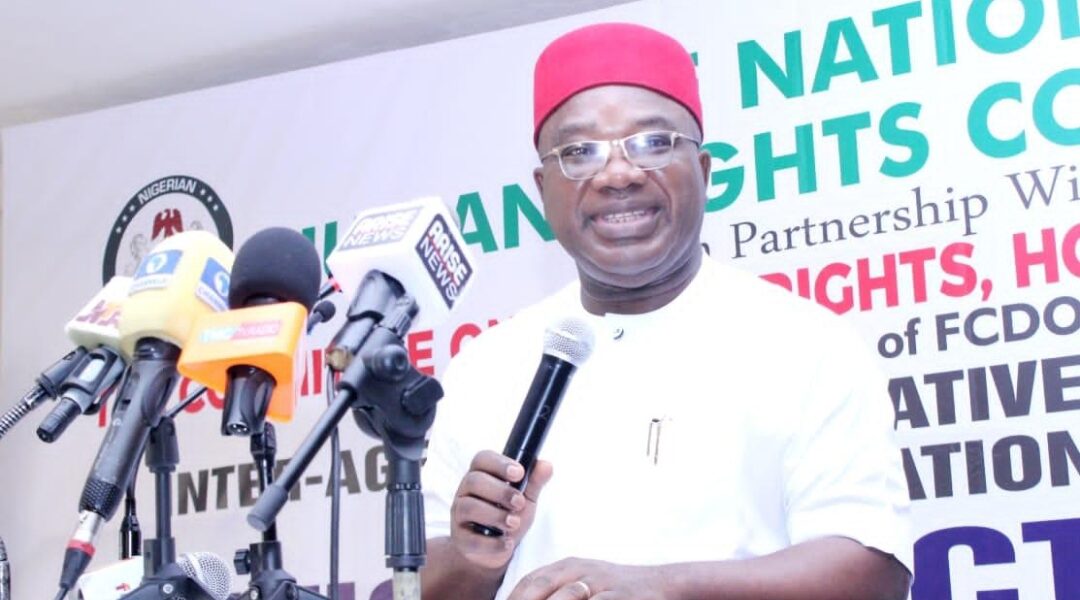
The call was made during an advocacy meeting between the Executive Secretary of the NHRC, Tony Ojukwu, and the African Commission’s Special Rapporteur on the Rights of Women in Africa, Janet Ramatoulie Sallah-Njie, at the commission’s headquarters in Abuja.
The meeting also focused on the need to strengthen accountability for gender-based violence, improve access to justice for survivors and address the persistent exclusion of women from political decision-making, particularly as Nigeria approaches the 2027 general elections.
Ojukwu said the commission was committed to mobilising civil society organisations and other relevant stakeholders to intensify advocacy for Nigeria’s adoption and ratification of the continental instrument.
He identified the increasing incidence of femicide and technology-facilitated violence against women as disturbing developments requiring urgent legislative, institutional and enforcement responses.
According to him, the NHRC would work with relevant institutions to improve access to justice for victims of gender-based violence and ensure that recommendations made by the African Commission were translated into concrete action.
He said the commission would not allow the engagement to end with expressions of commitment, but would pursue practical steps towards strengthening the protection of women and girls.
The urgency of the campaign was underscored by Sallah-Njie, who urged Nigeria to use its influence as one of Africa’s leading countries to help secure the entry into force of the convention by becoming one of the 15 countries required to ratify the instrument.
The African Union adopted the Convention on Ending Violence Against Women and Girls in February 2025. It is designed to strengthen the continent’s legal and institutional response to violence against women and girls, including emerging forms of abuse that require specific attention.
Sallah-Njie described the convention as an important addition to existing regional human rights protections, particularly because it explicitly recognises and prohibits femicide.
“The new convention specifically addresses femicide and its prohibition,” she said.
She expressed concern over the incidence of femicide in Nigeria, Cameroon and South Africa, stressing the need for stronger national and continental responses to the killing of women because of their gender.
The envoy urged the NHRC to champion the ratification process, facilitate the preparation of relevant national reports and monitor the implementation of laws designed to protect women and girls.
She also called for stronger collaboration among governments, national human rights institutions and civil society organisations, noting that the responsibility for ending violence against women could not rest on one institution alone.
Beyond violence prevention, Sallah-Njie raised concerns over women’s continued underrepresentation in political leadership and the intimidation and harassment they face when seeking elective positions.
With the 2027 elections approaching, she called for temporary special measures, including affirmative action and reserved seats for women in parliament, to address structural and socio-cultural barriers limiting their participation.
She argued that merely granting women the constitutional right to contest elections was insufficient without deliberate interventions to ensure that they could compete on equal terms with men.
The Special Rapporteur also urged Nigerian women to scrutinise the voting records of their representatives on legislation affecting women’s rights and hold them accountable for their decisions.
She encouraged more women to seek elective offices, warning that attacks, intimidation and victimisation of women pursuing political ambitions could discourage others from participating in public life.
Of particular concern, she identified election-related sexual violence, harassment and technology-facilitated abuse as threats capable of pushing women out of the political space.
She called on the NHRC and other relevant authorities to establish preventive mechanisms and monitor violations to ensure that women could campaign, vote and contest elections without fear of violence or discrimination.
Sallah-Njie further stressed the importance of including women in peacebuilding and conflict-resolution processes, maintaining that decisions affecting the security and future of communities should not exclude half of the population.
Responding to the concerns, Ojukwu disclosed that the NHRC had established specialised thematic departments, including a dedicated Department of Women and Children, to strengthen its response to violations affecting women and other vulnerable groups.
He said the restructuring was intended to provide more focused attention to human rights concerns, rather than relying solely on a general institutional response.
The NHRC boss also highlighted the commission’s collaboration with the African Commission, noting that regional resolutions and recommendations were important tools for strengthening Nigeria’s human rights protection framework.
He disclosed that the NHRC had linked its website with that of the African Commission to make relevant human rights instruments, resolutions and recommendations more accessible to Nigerians seeking information and remedies.
Supporting the call for affirmative action, the Executive Director of Baobab for Women’s Human Rights, Yèyé Bunmi Dipo-Salami, recalled previous advocacy efforts for special seats for women in the National Assembly.
She said the proposal had encountered resistance from some lawmakers, who argued that reserving seats for women would amount to discrimination against men.
Dipo-Salami, however, maintained that affirmative action was an internationally recognised mechanism for addressing historical inequalities and improving the representation of disadvantaged groups.
She commended the NHRC for establishing specialised departments and creating leadership opportunities for women, while pledging civil society support for efforts to advance gender equality.
The delegation also included representatives of the Women’s Advocacy Research and Documentation Centre (WARDC), among other stakeholders.
Sallah-Njie said she would report the outcome of the engagement in her next intersessional report to the African human rights community, expressing hope that Nigeria would demonstrate measurable progress towards ratifying and implementing the convention.
She maintained that concrete action by Nigeria would strengthen Africa’s collective efforts to eliminate violence against women and girls.
The proposed ratification comes against the backdrop of persistent concerns about gender-based violence across the continent, including intimate partner violence, sexual abuse, harmful traditional practices, conflict-related violence and online harassment.
The African Union has said the convention is intended to address the root causes of violence, strengthen legal and institutional mechanisms, and promote a coordinated response that protects the rights and dignity of women and girls.
For Nigeria, stakeholders say ratification must be accompanied by effective domestic implementation, adequate funding, stronger law enforcement and accessible support services for survivors if the instrument is to produce meaningful change.