For more than three decades, the question of whether a woman could occupy the highest elective office of Nigeria’s foremost professional legal body remained largely unanswered.
But as lawyers converged on Port Harcourt for the 66th Annual General Conference of the Nigerian Bar Association (NBA), the significance of having a woman poised to lead the association was no longer confined to history.
It became a wider conversation about how many more women should be at the decision-making table, and what must change to make that possible.
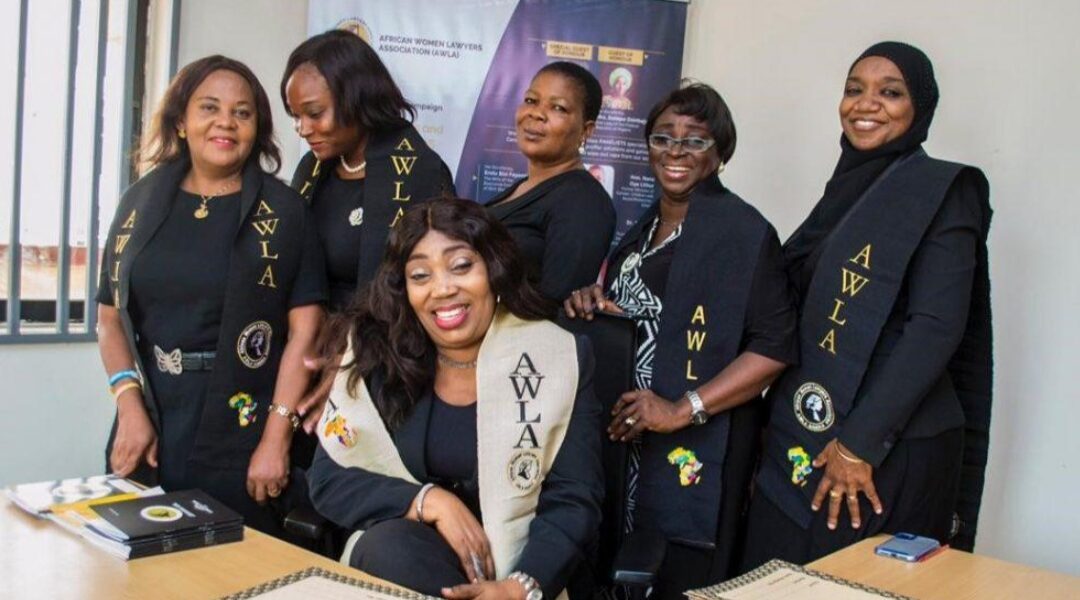
That conversation took centre stage at the 2026 Annual Parley of the African Women Lawyers Association (AWLA), Nigeria, in Port Harcourt, where lawyers and public officials challenged women to move beyond being beneficiaries of empowerment and become active participants in leadership, while also calling for deliberate measures to remove the barriers that keep women out of influential positions.
The parley, themed “Excellence Wears Heels,” provided a gender-focused dimension to the wider discussions taking place around the NBA’s Annual General Conference, themed “Beyond Limits.”
At the centre of the conversation was Oyinkansola Badejo-Okusanya, SAN, whose emergence as the NBA’s first directly elected female president has given renewed visibility to the question of women’s leadership within the legal profession.
But rather than presenting her achievement as an end in itself, Badejo-Okusanya used the platform to make a case for what should come next.
‘We do need affirmative action’
Speaking at the AWLA parley, Badejo-Okusanya acknowledged that women have historically come from behind in the race for leadership and argued that deliberate interventions are necessary to close the gap.
She, however, insisted that affirmative action must be accompanied by competence.
“Even though I was intentional about not running a gender card, I’m not running away from the fact that I’m a woman, and that women are coming from far behind,” she said.
“Therefore, we do need affirmative action, and we will take every opportunity, every advantage that we can of affirmative action, but we will put capacity first, because there are so many capable women in and out of the profession.”
Her position presents an important distinction in the debate around women’s representation: creating opportunities for women does not mean lowering standards; rather, it is about ensuring that qualified women are not excluded by structural barriers.
For Badejo-Okusanya, her own journey is evidence of what can happen when women are able to access leadership opportunities.
Reflecting on the road that brought her to the leadership of the Bar, she told the gathering that the journey had been difficult but that resilience had helped her overcome the obstacles.
“The fact that I’m standing before you today … is a testament to the resilience that we all have in us,” she said.
She urged women to recognise their own capacity, adding: “If she can do it, I can do it too, because you can.”
‘Women must become agents of transformation’
The message from the Rivers State Government was equally direct.
Rivers State Deputy Governor, Prof. Ngozi Odu, represented at the event by former Permanent Secretary Dr Josephine Chukuigwe, urged women to stop seeing themselves merely as recipients of empowerment programmes.
Instead, she challenged them to become agents of transformation and contributors to nation-building.
“The theme, ‘Excellence Wears Heels’, is both inspiring and symbolic. It reminds us that excellence has no gender, but women must be encouraged and supported to occupy spaces where their talents, intelligence, courage and leadership can make meaningful contributions,” Odu said.
She urged female lawyers to mentor younger women, support women-owned businesses, promote education and skills development and create opportunities for women to participate meaningfully in leadership and decision-making.
For Odu, empowering women is not simply a question of fairness.
“Empowering women is, therefore, not only a matter of fairness; it is an investment in stronger families, stronger communities and a stronger economy,” she said.
The emphasis on creating opportunities is particularly significant in a profession where women may enter in substantial numbers but still encounter barriers as they progress towards the highest levels of leadership.
‘Allow women to soar’
Lawyer and keynote speaker, George Etomi, approached the issue from the other side of the gender divide, urging men to see women’s advancement not as a threat but as an opportunity for society to benefit from the talents of both sexes.
Etomi called on men to abandon what he described as complexes when women attain positions of influence.
“To men, allow women to soar. Allow women to succeed. We’ll not be poor because there are rich women around us. We’ll not be less human; we can co-exist,” he said.
His intervention added another dimension to the debate: that achieving greater representation for women cannot rest solely on women fighting for space.
Men who occupy existing positions of influence must also become partners in dismantling barriers.
From one woman at the top to many
For the African Women Lawyers Association, the significance of Badejo-Okusanya’s emergence is therefore not simply that one woman has reached the summit.
The association’s International President, Mandy Demechi-Asagba, in a goodwill message ahead of the Port Harcourt gathering, called for women to take their place at decision-making tables and said achieving gender parity requires intentional partnerships with male allies as well as empowerment of women and girls.
“The march to parity demands intentional partnership with our male allies and empowerment of women and girls,” she said.
She also urged women lawyers to support Badejo-Okusanya’s tenure, describing her emergence as another milestone in the advancement of women in law.
That message is particularly relevant because the legal profession occupies a unique position in the struggle for gender equality.
Lawyers do not merely participate in the justice system; they draft laws, interpret constitutional provisions, challenge discriminatory practices and represent people whose rights have been violated.
Increasing women’s representation within the profession’s leadership therefore has implications beyond the profession itself.
The leadership picture is changing
Badejo-Okusanya’s emergence comes against a broader transformation in Nigeria’s legal and judicial leadership.
Recent reporting has highlighted the unusual concentration of women at the top of several institutions within the legal sector, including Chief Justice of Nigeria, Justice Kudirat Kekere-Ekun; President of the Court of Appeal, Justice Monica Dongban-Mensem; Director-General of the Nigerian Law School, Olugbemisola Odusote; and now Badejo-Okusanya at the Bar.
The development is significant because leadership visibility can alter perceptions about who is qualified to occupy positions of authority.
Yet women lawyers at the Port Harcourt gathering made clear that visibility alone is not enough.
The real objective is to create a pipeline through which more women can progress from the classroom to the courtroom, from junior practice to partnership, from professional committees to national leadership.
That is why mentorship featured prominently in the AWLA discussions.
Odu urged women lawyers to encourage and mentor younger women, while Etomi praised AWLA for its mentorship efforts and contributions to the profession and wider society.
What happens after the breakthrough?
The question now confronting the legal profession is not whether a woman can lead the NBA.
That question has effectively been answered.
The more important question is whether one woman’s historic breakthrough can become a pathway for many more women.
Badejo-Okusanya has already acknowledged that women are “coming from far behind” and that affirmative action is necessary.
But her insistence on capacity is equally important.
It suggests that the next phase of women’s leadership in the Bar should combine access, opportunity, mentorship, competence and institutional support.
That means identifying talented young female lawyers early, giving them opportunities to serve on influential committees, encouraging them to seek branch and national leadership positions, creating mentoring relationships with senior practitioners and addressing professional environments that may discourage women from seeking advancement.
It also means ensuring that women are not invited into leadership merely to satisfy a numerical target.
They must be given the authority, resources and institutional backing required to lead effectively.
Beyond one historic woman
As the NBA’s Annual General Conference continues in Port Harcourt, the symbolism of Badejo-Okusanya’s leadership is impossible to ignore.
But perhaps the most important message emerging from the women’s conversations around the conference is that the goal should not be to celebrate one woman breaking the ceiling and then leave the ceiling intact.
The goal should be to break it wide open.
For Badejo-Okusanya, the responsibility is therefore bigger than occupying a historic office.
It is about using the visibility that comes with that office to demonstrate to younger women that leadership is possible — and, ultimately, to help create the conditions in which they no longer need to wait decades for another woman to reach the top.
For the women gathered in Port Harcourt, “Excellence Wears Heels” was more than a conference theme.
It was a declaration.
Women are ready to lead. The question now is whether institutions are ready to make room for them.
Sources: Punch Newspapers, “AWLA confab: Rivers deputy gov tasks women on nation building,” August 27, 2026; African Women Lawyers Association (AWLA) Nigeria; Nigerian Bar Association; Punch Newspapers, “Historic rise of Nigeria’s most powerful women in law.”