For decades, Nigerian women have turned out in their millions to vote, campaign, mobilise communities and support political parties, yet when the doors to elected office open, only a small fraction make it through.
That imbalance is now coming under renewed scrutiny as West African governments move towards reforms that could fundamentally change how women enter and remain in political leadership.
At the heart of the debate is a simple but consequential question: Can electoral reforms move Nigerian women from being a powerful voting bloc to an equal force in political decision-making?
The question gained fresh urgency following calls by ministers from the Economic Community of West African States (ECOWAS) for stronger legal frameworks, electoral reforms and increased financing to improve women’s participation in politics across the region.
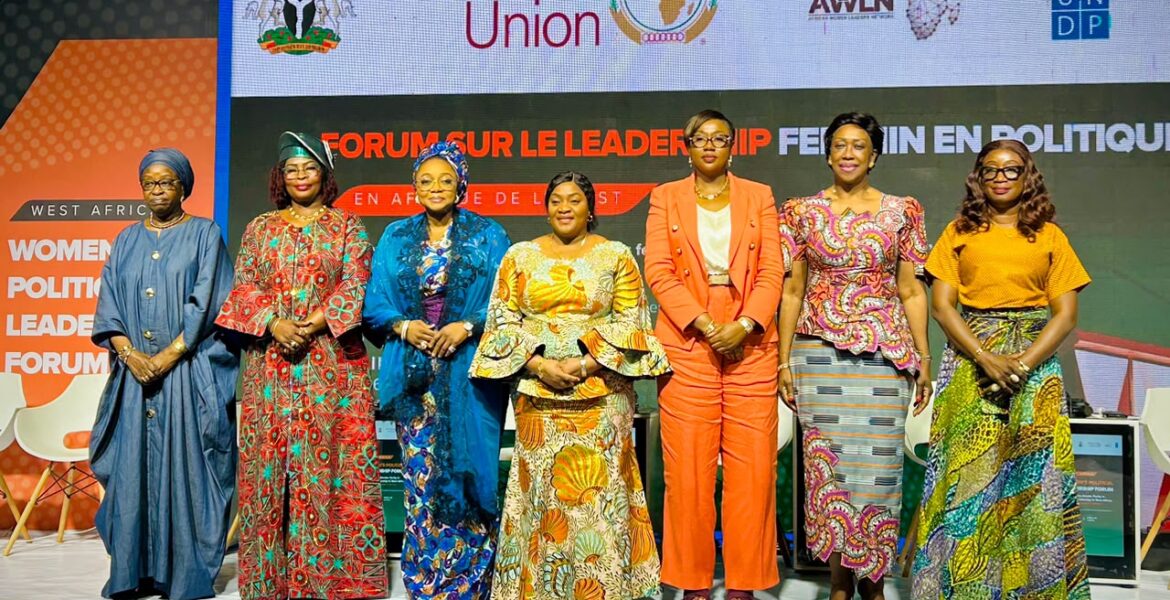
The call was made during the West Africa Women’s Political Leadership Forum in Abuja, where regional leaders insisted that commitments to gender equality must now translate into concrete and measurable action.
The forum came shortly after ECOWAS Heads of State and Government adopted a declaration committing member states to progressively work towards full gender parity in elective positions by 2035.
At the close of the forum, participants adopted the Abuja Regional Action Agenda, setting out time-bound measures to turn that commitment into action.
From promises to pathways
For Nigerian women, the significance of the reforms lies not simply in the promise of more female candidates, but in whether the political system itself becomes less hostile and expensive for women seeking office.
Nigeria’s Minister of Women Affairs and Social Development, Imaan Sulaiman-Ibrahim, argued that the problem is not a shortage of qualified women but the structures that determine who gets access to political power.
“Africa does not suffer from a shortage of capable women. It suffers from structures that were never built to let them through,” she said.
The numbers underline the scale of the problem.
According to the minister, women occupy leadership positions in major sectors of the Nigerian economy, including leading 11 of the country’s 24 commercial banks, accounting for about one-third of superior court positions and more than 30 per cent of senior positions in the Federal Civil Service.
Yet women account for less than five per cent of elected offices.
The contrast exposes a gap between women’s demonstrated capacity to lead and their access to political power.
“Where competence is the measure, she rises. Where the cost of entry and structural barriers stand in the way, too many are held back. Our challenge is not the candidate. It is the pathway,” Sulaiman-Ibrahim said.
The money barrier
One of the most immediate barriers identified by the regional forum is money.
Running for elective office in Nigeria can require substantial resources for nomination forms, party structures, mobilisation, campaign logistics, publicity and other political activities. For many women, particularly those without wealthy political sponsors or established political networks, the financial hurdle can end a political ambition before the campaign begins.
Liberia’s Minister of Gender, Children and Social Protection, Gbeme Horace-Kollie, called for reforms that would require political parties to dedicate a percentage of campaign resources to female candidates.
She also advocated lower nomination fees and dedicated funding mechanisms to reduce the cost of political participation for women.
Nigeria’s proposed response includes the establishment of a Women’s Political Leadership Trust Fund, designed to support credible female candidates with nomination fees, campaign financing and leadership development.
If implemented transparently, such a mechanism could alter who gets the opportunity to contest elections — particularly women with competence and community support but limited financial capacity.
Will reserved seats change the numbers?
Another reform with potentially far-reaching implications is Nigeria’s proposed reserved seats for women legislation.
The Minister of Women Affairs disclosed that the proposed bill is undergoing comprehensive review as part of wider electoral reforms aimed at creating a more inclusive political system.
The proposal has already generated significant public debate, but its underlying objective is clear: to create a direct pathway for more women into legislative institutions where their representation remains disproportionately low.
Whether reserved seats ultimately become part of Nigeria’s electoral architecture, however, will depend on legislation, political agreement and implementation.
For women’s rights advocates, the broader lesson from other African countries is that political commitments are most effective when backed by enforceable laws.
Sierra Leone’s Minister of Gender and Children’s Affairs, Isata Mahoi, pointed to her country’s experience, where legislation and electoral reforms have helped increase women’s representation to about 30 per cent.
She stressed that laws must not only exist but must be implemented and enforced.
Beyond the ballot box
Electoral reform, however, cannot succeed if women remain unsafe in political spaces.
The Abuja Regional Action Agenda specifically calls for women’s safety and dignity in political life, including zero tolerance for physical, psychological, sexual and technology-facilitated violence.
It also prioritises young women and women facing multiple forms of exclusion, while calling for stronger cross-party and cross-generational networks of women leaders.
This is important because political exclusion is not always visible in election results.
A woman may be qualified, financially prepared and willing to contest, yet withdraw because of threats, harassment, online abuse, political intimidation or the expectation that political life is incompatible with family responsibilities.
Reforms that address only election laws without confronting these realities could therefore produce limited change.
What could change for Nigerian women?
If the proposed reforms move from policy documents to implementation, the impact could extend well beyond the number of women appearing on election ballots.
More women in elected office could mean greater representation in debates around healthcare, education, social protection, economic empowerment, security and laws affecting families and communities.
The UN Development Programme noted that women currently hold only 18.4 per cent of parliamentary seats across West Africa, the lowest share of any region on the African continent.
The ECOWAS agenda therefore represents more than a campaign for numerical representation. It is an attempt to change the political systems that determine whose voices are heard when public resources are allocated and policies are made.
UNDP’s Regional Programme Director for Africa, Jide Okeke, put the challenge bluntly: women are not the problem to be solved; rather, the political system must be changed to allow them to participate meaningfully.
For Nigeria, the test will now be implementation.
The country has no shortage of women with experience, qualifications and grassroots influence. What remains uncertain is whether political parties, lawmakers and institutions will dismantle the financial, legal, cultural and security barriers that continue to keep many of them outside elected office.
As Nigeria moves closer to another major electoral cycle, the real measure of reform will not be the number of declarations signed or conferences held.
It will be whether a young Nigerian woman who decides to run for office can actually enter the political arena, compete fairly, remain safe, raise the resources she needs and win on the strength of her ideas and the confidence of voters.
That is where electoral reform becomes more than an election promise. It becomes a pathway to power.