
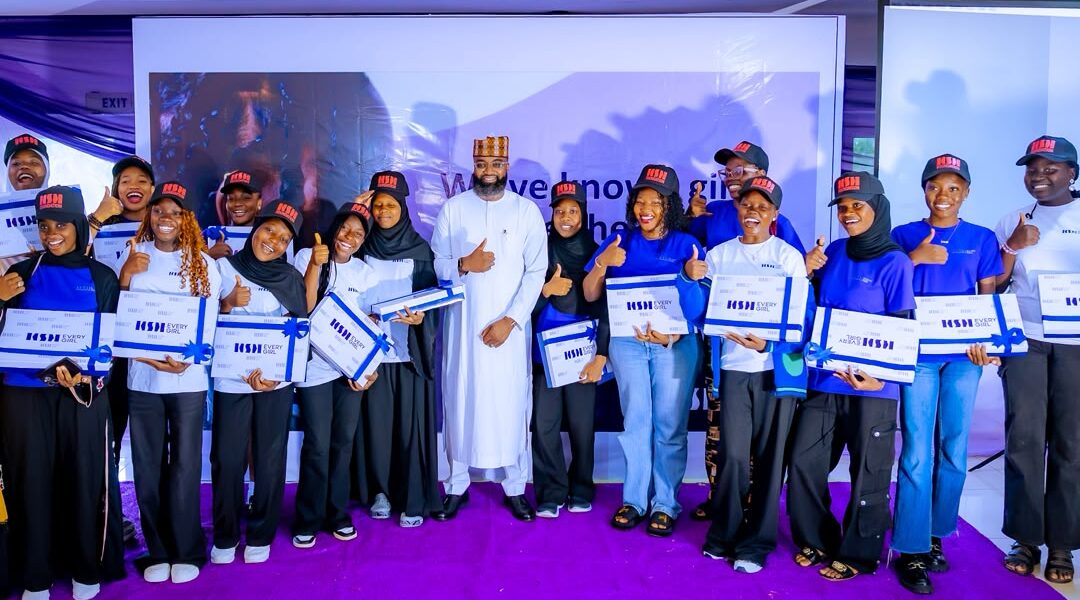
As Nigeria grapples with persistent gender disparities in science, technology and innovation, the KSH Foundation has intensified efforts to equip young women with digital and entrepreneurial skills, arguing that closing the country’s technology gap will require deliberate investment in girls.
The non-profit organisation, founded by Khalil Suleiman Halilu in 2022, unveiled the third edition of its Every Girl Fellowship, a technology-focused initiative designed to empower girls through digital literacy, artificial intelligence (AI), entrepreneurship, mentorship and innovation.
The programme comes at a time when stakeholders continue to raise concerns over the underrepresentation of women in emerging technologies, despite the sector’s growing influence on economic growth, healthcare, governance and education.
Speaking at the Every Girl 3.0 Reveal Ceremony in Abuja, Founder of KSH Foundation, Khalil Suleiman Halilu, said the initiative was conceived to create opportunities that many talented girls have historically been denied.
According to him, the fellowship was never intended to be a short-term intervention but a long-term investment in building female leaders capable of shaping Africa’s digital future.
“From day one, we wanted to build something that outlived trends and headlines. Today, I can confidently say the idea is still standing, and even better, it has grown beyond our expectations,” Halilu said.
Reflecting on his experiences working alongside accomplished women, he explained that he recognised the need to create more pathways for girls who lacked access to quality opportunities.
“I realised there could be more women in those rooms, but there were limited spaces that gave girls access without compromising standards. So we decided to build what we couldn’t find, and Every Girl began—not as a programme, but as a promise to one girl multiplied,” he added.
Halilu disclosed that the fellowship has expanded significantly, with girls participating from 15 states across the country and over 400 applications received during the selection process.
“Four hundred is not just a number. It represents 400 girls who believed enough to imagine themselves here and families who trusted us with that responsibility,” he said.
The foundation deliberately expanded this year’s curriculum to include artificial intelligence and FemTech, describing both sectors as critical to the future of innovation.
“Whether we like it or not, artificial intelligence will shape the next 50 years, and we refuse to allow our girls to merely learn about it. We want them to shape it.
“We also focused on women’s health through FemTech because if half of the world’s population experiences these challenges, then half of those designing the solutions should be women,” Halilu stressed.
He attributed the programme’s growing success to partnerships, consistency and practical skills development.
“Every Girl was never about a single event. It is about that girl sitting somewhere in one of our communities wondering whether she is allowed to dream of a future in technology, engineering, healthcare or AI. Every Girl tells her ‘yes.’ We already believe in you. Now go and believe in yourself,” he said.
Halilu further explained that the foundation intends to bridge the technology access gap by exposing girls to opportunities they rarely encounter.
“We want girls to learn technology, receive mentorship, visit institutions they ordinarily would not have access to, meet inspiring leaders and receive tools such as laptops and seed funding that will help them move to the next level.
“Girls have been sidelined for too long. We must lead by example. That is why we continue to encourage institutions to prioritise women, not just through advocacy but through practical programmes,” he said.
He also urged beneficiaries to become ambassadors of the initiative.
“Very few people have access to opportunities like this. Don’t take it for granted. Pass the knowledge forward and inspire others,” he advised.
Project Coordinator of Every Girl, Farida Yahya, said the third edition deliberately expanded its reach to previously underserved communities while ensuring merit remained central to the selection process.
She explained that girls from across Nigeria’s six geopolitical zones underwent a rigorous virtual learning phase before final selection.
“Technology is an enabler. We wanted these girls to understand that they can use technology to unlock opportunities for themselves and for their communities.
“Our focus was inclusion without compromising excellence. Every fellow selected earned her place through merit. They presented ideas, completed assessments and demonstrated exceptional potential,” Yahya said.
She noted that the programme has evolved into a supportive ecosystem where participants not only acquire digital and entrepreneurial skills but also gain confidence to develop technology-driven solutions.
“We are not simply teaching skills. We are building a sisterhood that helps young women believe in themselves and rewrite what is possible for girls in today’s digital economy,” she added.
Director of Operations and Rescue at the Citizenship and Leadership Training Centre (CLTC), Dr. Alero Ajekuta, described the initiative as timely, saying Nigeria must encourage girls to see themselves as innovators and employers rather than job seekers.
“It is time the girl child believes more in herself. Programmes like this encourage girls to embrace digital technology and develop skills that make them employers of labour instead of merely searching for white-collar jobs,” she said.
According to Ajekuta, women’s education can no longer be confined to traditional stereotypes.
“The era when people believed a woman’s education ended in the kitchen is over. Today, a woman’s education ends in the boardroom. When you empower a woman, she becomes a catalyst for positive change and inspires others to succeed,” she stated.
Beneficiaries of the fellowship also shared testimonies of how the programme transformed their outlook.
One of the fellows, Jonas Chinewa Princess Anne, said she gained practical skills in content creation, confidence building and no-code application development.
“I have learned how to monetise my skills and even build applications without writing a single line of code. I am returning home with confidence, new ideas and the determination to create impact in my community,” she said.
Another fellow, Hafsa Ibrahim-Berndi, a medical student, said the programme demonstrated how innovation could be applied to healthcare.
“The fellowship introduced me to technology and entrepreneurship and showed me that I can solve real-life problems through innovation, even as a medical student,” she said.
For many participants and partners, the Every Girl initiative represents more than another youth development programme. It reflects a growing recognition that expanding girls’ access to technology, mentorship and innovation is essential to building a more inclusive digital economy and ensuring Nigerian women are not left behind in the rapidly evolving world of artificial intelligence and emerging technologies.