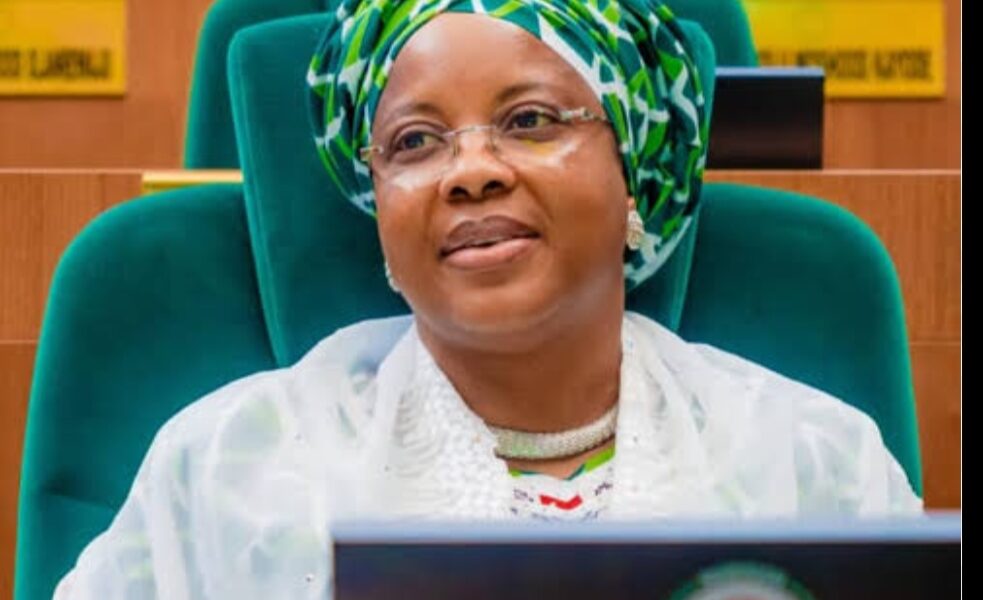
The glaring underrepresentation of women in Nigeria’s political leadership took centre stage at the National Assembly Open Week, as lawmakers, former legislators, civil society advocates and development partners renewed calls for the passage of the Special Seats Bill, insisting that only deliberate legislative action can reverse the country’s dismal record of female representation.
Speaking at a high-level dialogue on women’s political participation, Chairperson of the House of Representatives Committee on Women Affairs and Social Development, Hon. Kafilat Ogbara, described Nigeria’s current representation of women in the National Assembly—about four per cent—as unacceptable and among the lowest in Africa.
She argued that democracy can only thrive when it reflects the voices and aspirations of all citizens, regardless of gender, disability or social background.
According to her, the proposed Special Seats Bill offers Nigeria a practical opportunity to address decades of exclusion by creating additional seats that will guarantee women’s representation without displacing existing lawmakers.
“Women’s representation is not about charity or tokenism; it is about strengthening democracy, improving governance and ensuring that every segment of society has a voice in decision-making,” Ogbara said.
Drawing comparisons with other African countries, she noted that Rwanda has over 61 per cent women in parliament following constitutional reforms introduced after the 1994 genocide, while South Africa records about 46 per cent, Uganda 35 per cent and Kenya approximately 25 per cent.
“Nigeria remains at about four per cent. This reflects the cultural barriers, political violence, financial constraints and institutional obstacles that continue to prevent women from participating meaningfully in politics,” she stated.
The lawmaker stressed that although women constitute nearly half of Nigeria’s population, they remain largely excluded from political leadership despite their contributions to national development.
She also called for greater inclusion of persons with disabilities, insisting that electoral reforms must promote accessibility, participation and equal representation for all marginalised groups.
Ogbara explained that the proposed Electoral College model being discussed as part of the Special Seats framework could provide an innovative mechanism for selecting representatives while reducing some of the barriers women currently face in conventional party primaries.
She, however, acknowledged concerns about possible elite influence and urged stakeholders to continue refining the model to ensure transparency, fairness and broad-based participation.
“We must build political systems that work for women, persons with disabilities and every Nigerian whose voice has been left behind. Political will remains the missing ingredient,” she added.
The event also featured passionate interventions from former lawmakers and advocates, who agreed that legislative reforms alone would not succeed without the commitment of political parties and government institutions.
Several speakers lamented that despite repeated promises of inclusion, women continue to be sidelined during party primaries and candidate selection processes, making affirmative action an urgent necessity rather than a political favour.
Echoing the call for action, participants urged political parties to demonstrate genuine commitment by supporting female aspirants, eliminating discriminatory practices and creating safer political spaces free from violence and intimidation.
The meeting concluded with a strong appeal to the National Assembly to sustain momentum on the constitutional amendment process and ensure that the Special Seats Bill receives the broad bipartisan support required for passage.
Stakeholders maintained that increasing women’s representation would not only advance gender equality but also strengthen governance, improve policymaking and deepen Nigeria’s democracy.
As discussions closed, one message resonated across the hall: the challenge facing Nigeria is no longer a lack of evidence that women deserve equal representation, but whether political leaders possess the courage and political will to make it a reality.