
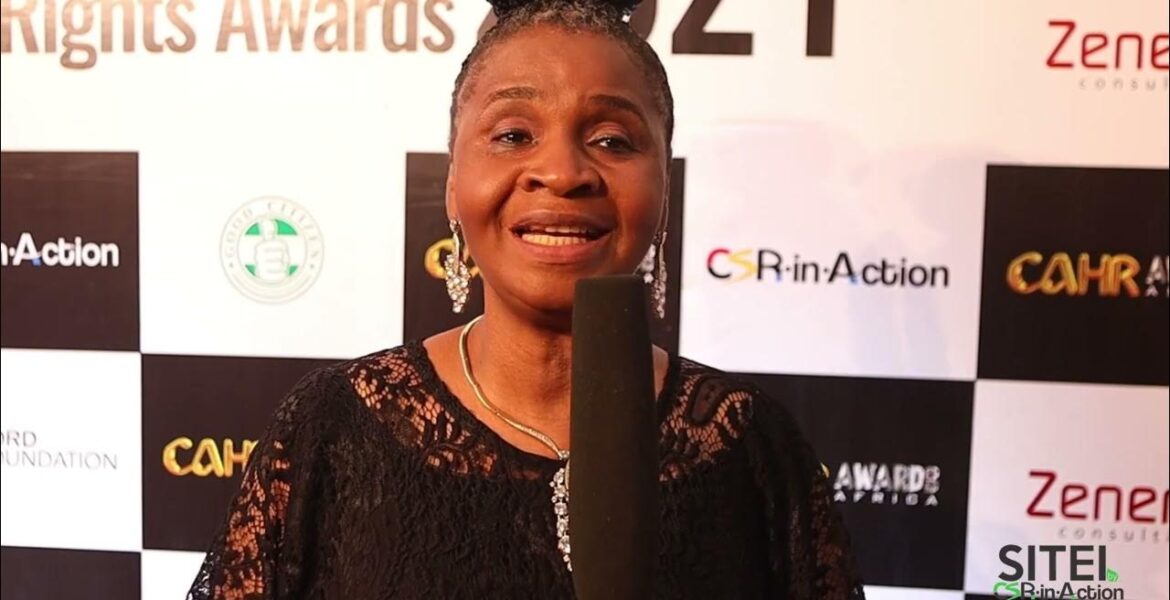
The Executive Director and Secretary of the Board of the Gender Equality, Peace and Development Centre (GEPaDC), Professor Patricia O’Donli, has identified political will, adequate funding and public accountability as critical factors needed to advance sexual and reproductive health and rights in Nigeria.
O’Donli made this assertion while fielding questions from the media during a two-day policy dialogue on sexual and reproductive health and rights organised by the Women Advocates Research and Documentation Centre (WARDC), where policymakers, civil society actors and development partners engaged on strategies to improve health outcomes for women and girls.
The former university lecturer of 47 years stressed that while policies exist across different levels of government, implementation remains the greatest challenge.
“It is political will that makes governments implement policies. Putting policies on paper is easy, but implementation becomes a problem when the political will is absent,” she said.
She also raised concerns over chronic underfunding of the health sector, referencing Nigeria’s commitment under the Abuja Declaration, which recommends that at least 15 per cent of national and state budgets be allocated to health.
“On paper, we hear figures like 13 per cent, but what actually gets released may be as low as two per cent. Without funding, we cannot put the necessary structures in place for universal health access,” she noted.
O’Donli warned that without adequate investment in healthcare, the country risks undermining Goal 3 of the Sustainable Development Goals, which focuses on ensuring healthy lives and promoting wellbeing for all.
She further criticised Nigeria’s reliance on medical tourism, arguing that policymakers often fail to prioritise local healthcare systems because they seek medical treatment abroad.
“If policymakers are compelled to use healthcare facilities in this country like everyone else, there will be rapid improvement. We must stop medical tourism and begin to strengthen our own systems,” she said.
Drawing parallels with past education reforms in Kano State, where government officials were barred from sending their children to private schools, she said similar regulations could drive improvements in public healthcare.
O’Donli also emphasised the importance of awareness creation, noting that while primary healthcare facilities have improved in some states, many citizens remain unaware of available services.
“Structures may exist, but how many people know about them? Awareness is key, especially for women who rely heavily on primary healthcare services,” she added.
Speaking specifically on sexual and reproductive health, the GEPaDC executive director lamented that women continue to die from preventable causes due to systemic failures, cultural barriers and restrictive practices.
“Women are dying every minute from preventable conditions. Healthcare providers are trained to save lives, regardless of personal beliefs. No woman should be denied care because of religion or personal convictions,” she said.
She called on governments at all levels to ensure that healthcare services are accessible to all citizens, irrespective of income or social status, stressing that access must be backed by sustained funding.
O’Donli also urged greater transparency in the management of health sector allocations, noting that civil society organisations must be empowered to monitor budgetary releases and expenditures.
“Civil society organisations can speak where others cannot. When we work together with government and have access to information, we can collectively ensure accountability and improved service delivery,” she said.
She concluded by advocating stronger collaboration between government and civil society, describing it as essential to transforming Nigeria’s sexual and reproductive health landscape and saving lives.