Nigeria has called for the institutionalisation of women’s participation in global peace negotiations and stronger accountability for conflict-related sexual violence, warning that the continued exclusion of women from peace processes undermines efforts to achieve sustainable peace and security.
The Federal Government also urged the United Nations, African Union and regional organisations to ensure that qualified women are systematically included in mediation teams, peace negotiations and other conflict-resolution mechanisms.
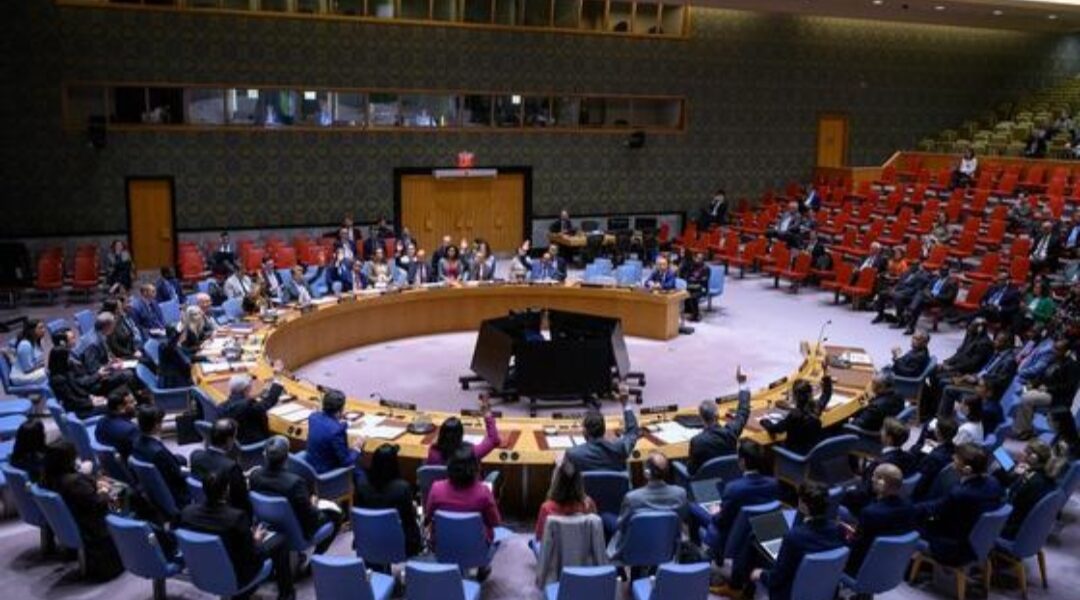
The Permanent Secretary of the Ministry of Foreign Affairs, Ambassador Dunoma Umar Ahmed, made the call during the United Nations Security Council (UNSC) Open Debate on Women, Peace and Security, held at the UN headquarters in New York on October 27, 2026.
The debate, themed, ‘Women, Peace and Security in the Next Quarter-Century: Fulfilling the Promise Through Implementation,’ examined progress in translating international commitments on women’s participation in peacebuilding and security into practical outcomes.
Ahmed, who delivered Nigeria’s statement, welcomed the report of the UN Secretary-General, António Guterres, on Women, Peace and Security but expressed concern over the persistent marginalisation of women in UN-led peace processes.
He disclosed that women accounted for only five per cent of lead negotiators and 14 per cent of mediators across 57 negotiation processes in 2025, while only 10 peace agreements explicitly referenced women.
He also raised concerns over reports that cases of conflict-related sexual violence had more than doubled since 2024, describing the development as particularly alarming for Africa, where armed conflicts continue to affect communities across the Sahel, Lake Chad Basin, Sudan and the Great Lakes region.
According to him, excluding women from peace negotiations weakens conflict-resolution efforts, undermines fragile agreements and increases the risk of renewed violence.
“The exclusion of women from peace processes continues to undermine peace efforts, weaken fragile agreements, fuel new conflicts and cost lives,” he said.
Drawing from Nigeria’s experience in the North-East, Ahmed noted that women and girls had borne a disproportionate burden of terrorism, abductions and displacement.
He, however, emphasised that women should not be viewed only as victims of conflict, noting their contributions as community mediators, first responders, peace advocates and members of security forces.
The Permanent Secretary said their experiences and knowledge of local communities positioned them to contribute meaningfully to conflict prevention, negotiations, reconciliation and post-conflict recovery.
To address the persistent gaps, Nigeria proposed three priority measures for strengthening the global Women, Peace and Security agenda.
First, the country called for the institutionalisation of women’s meaningful participation in peace processes, urging the United Nations, African Union and Regional Economic Communities to systematically include qualified women in mediation and negotiation teams.
Ahmed stressed that women’s participation should extend beyond symbolic representation to meaningful involvement in shaping decisions and outcomes.
He also called for predictable financing for national and local action plans on Women, Peace and Security, including adequate support for women-led organisations working in conflict-affected communities.
He urged international partners to preserve gender expertise in peace operations, particularly African Union-led missions financed under UN Security Council Resolution 2719, warning against weakening gender-responsive interventions because of funding constraints.
The third recommendation focused on strengthening protection, justice and accountability for survivors of conflict-related sexual violence.
Ahmed called for survivors to be placed at the centre of protection and justice mechanisms, while perpetrators should be held accountable primarily through national justice systems, with appropriate international support.
He said women and girls who had experienced sexual violence, including those formerly held captive by terrorist groups, must have access to medical treatment, psychosocial support and economic opportunities to rebuild their lives with dignity.
The Nigerian government also drew attention to technology-facilitated violence against women, warning that online harassment, intimidation and other forms of digital abuse increasingly threaten women’s participation in public and political life.
Ahmed said governments and relevant institutions must strengthen responses to such abuses to ensure that women can participate safely in governance, peacebuilding and other public activities.
Highlighting Nigeria’s domestic efforts, he cited the implementation of the National Action Plan on United Nations Security Council Resolution 1325 and the Violence Against Persons (Prohibition) Act as part of the country’s commitment to protecting women and girls.
He also referenced Nigeria’s engagement with regional frameworks, including the Economic Community of West African States (ECOWAS) Regional Action Plan and the African Union’s Continental Results Framework on Women, Peace and Security.
The Permanent Secretary reaffirmed Nigeria’s commitment to working with the UN Security Council, the African Union and other international partners to translate the commitments of Resolution 1325 into measurable improvements in the lives of women and girls.
He maintained that sustainable peace across Africa would remain difficult to achieve without women’s full and meaningful participation in conflict prevention, negotiations and post-conflict reconstruction.
The Women, Peace and Security agenda is anchored on United Nations Security Council Resolution 1325, adopted on October 31, 2000, which recognises the disproportionate impact of armed conflict on women and girls and calls for their increased participation in peace and security decision-making.
The resolution also urges governments and other stakeholders to strengthen the protection of women and girls from gender-based violence, particularly sexual violence during armed conflicts.
More than two decades after its adoption, women’s representation in formal peace negotiations remains limited, while conflict-related sexual violence, displacement and insecurity continue to affect women and girls in several parts of the world.
Nigeria’s intervention at the Security Council debate therefore renewed calls for governments and international institutions to move beyond policy commitments towards adequately funded mechanisms that guarantee women’s participation, protect survivors and hold perpetrators accountable.