..Former Malawi president urges women to challenge political barriers, demand decision-making roles
Former Malawi President Joyce Banda, has called on women across Africa to actively participate in politics and governance, warning that the continent cannot achieve meaningful development while excluding women from positions of power and decision-making.
Banda said women must move beyond being used to mobilise political support and demand greater representation in political parties, parliament, public institutions and executive leadership.
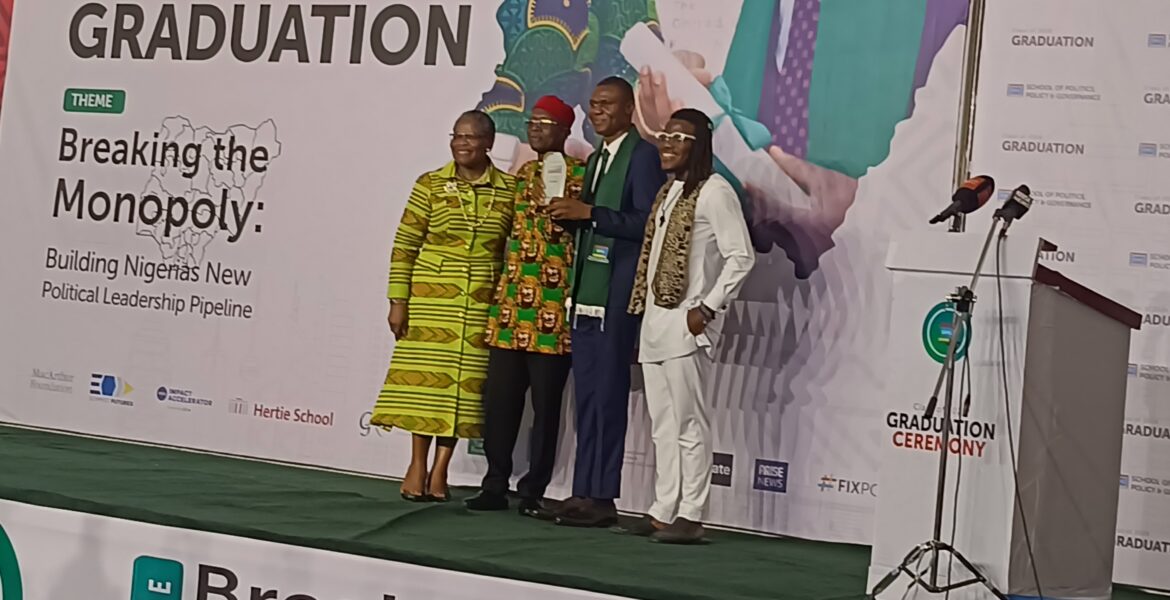
She made the call in Abuja on Saturday at the 2026 graduation ceremony of the School of Politics, Policy and Governance (SPPG), themed “Breaking the Monopoly: Building Nigeria’s New Political Leadership Pipeline.”
The former president lamented that women continued to face structural barriers that hindered their participation in politics, despite their significant contributions to political campaigns, community mobilisation and nation-building.
“Too often, women have been told, directly or indirectly, that politics is no place for them.
“Even when they enter, they encounter structures and practices that make participation and advancement unnecessarily difficult,” Banda said.
She observed that women were frequently mobilised to build political movements but often sidelined when leadership positions and opportunities to influence decisions were allocated.
According to her, women must not wait for invitations before seeking leadership positions but should consistently challenge exclusionary practices and engage those who control political structures.
“Women belong in the room where decisions are made; you belong in public institutions, you belong in political parties, you belong in parliament.
“You belong in executive leadership and wherever the future of your communities and countries is being decided,” she said.
Banda called for a more inclusive approach to political leadership that would open opportunities for women, young people, professionals and reform-minded citizens who might otherwise be excluded by established political networks.
She added that Africa’s abundant natural and human resources could drive sustainable development if the continent had leaders with the character, competence and capacity to govern effectively.
The former president commended SPPG for equipping aspiring leaders with the knowledge and practical skills needed to understand governance challenges and develop solutions.
The founder of SPPG and former Minister of Education, Dr Oby Ezekwesili, urged the graduands to apply their training to improving political leadership, public policy and governance across the continent.
Ezekwesili said the institution had graduated more than 1,000 students across Nigeria, Senegal and Kenya since its establishment in 2021.
She identified gaps in leadership character and policy competence as major obstacles to effective governance in Africa, explaining that the school’s multidisciplinary curriculum was designed to prepare leaders to respond to complex public policy challenges.
“We told you that the greatest gap in Africa, other than the issue of a lack of character in public leadership, is the absence of competencies that would be able to think through policies in the right way,” she said.
Ezekwesili added that the institution would continue to monitor its alumni and could revoke certificates where graduates failed to uphold the values and standards promoted by the school.
Also speaking, the Speaker of the National Assembly of Côte d’Ivoire, Patrick Achi, stressed the importance of preparing emerging leaders with the skills and values required to address Africa’s development challenges.
Achi noted that the continent’s vast mineral resources and human capital had yet to translate into improved living conditions for many citizens, underscoring the need for effective leadership and active citizen participation.
He urged the graduands to regard leadership as a responsibility to serve the public and promote the common good.
The Dean of SPPG Nigeria, Associate Professor Abiola Akiyode-Afolabi, said the institution remained committed to nurturing a new generation of leaders equipped to address Nigeria’s governance challenges through accountability, integrity and inclusive leadership.
She urged the graduands to apply their knowledge and practical skills to achieving meaningful change in their communities and the country.
The overall best graduating male student, Merit, and the best graduating female student, Chinyere, expressed appreciation to the school’s founder, management and faculty for supporting their academic development.
Merit, who was also named the overall most outstanding graduating student, pledged the graduating class’s commitment to working collectively towards Nigeria’s and Africa’s development.
The ceremony brought together professionals from the public sector, business community and civil society, with discussions centred on broadening access to political leadership and building a pipeline of competent, accountable and inclusive leaders.