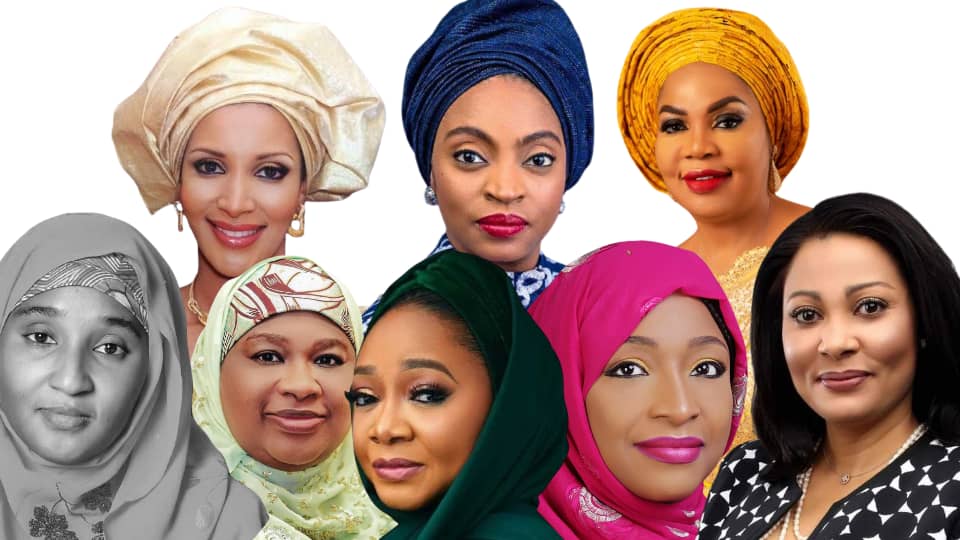
A recent analysis published by TheCable found that eight in 10 Nigerians are comfortable with a woman serving as Head of Government, a level of acceptance that is higher than the reported G7 average of 68 per cent.
The finding raises a compelling question as Nigeria moves towards the January 16, 2027 presidential election: if Nigerians are increasingly comfortable with a woman leading the country, what is stopping women from getting to the ballot — and ultimately to Aso Rock?
The answer may have less to do with voters’ willingness to elect a woman and more to do with the political structures through which candidates must pass before voters ever get the choice.
A country ready for the possibility
Nigeria has never elected a woman president, yet the argument that Nigerian voters would automatically reject a female presidential candidate is becoming increasingly difficult to sustain. The latest public sentiment highlighted by TheCable suggests substantial acceptance of women at the highest level of government.
This is important because opposition to women in politics is often explained through assumptions about voters: that women are not considered strong enough, that Nigerians prefer male leaders or that cultural attitudes make a female president unacceptable.
But if a large majority of Nigerians say they are comfortable with a woman as head of government, the bigger obstacle may lie elsewhere. It may be who controls access to political power.
The numbers tell another story
Nigeria’s political representation figures reveal a striking contradiction.
Women make up nearly half of the country’s population, yet they occupy less than five per cent of seats in the 10th National Assembly. Across the 990 seats in Nigeria’s State Houses of Assembly, only 54 are held by women, while 15 states have no female legislator at all.
The gap between population and political power is therefore enormous.
It also means that the journey to the presidency is not beginning from a level playing field.
A woman seeking the presidency must navigate a political system in which women remain significantly underrepresented at almost every level — from local party structures and state assemblies to the National Assembly and executive offices.
The problem is therefore not simply finding a woman capable of becoming president.
It is creating a political environment in which enough women can enter, survive and rise through the system.
Political parties remain a critical gatekeeper
Political parties are the first major doorway to elective office.
Before Nigerians can vote for a woman president, political parties must be willing to nominate women, provide them with meaningful platforms and allow them to compete on reasonably fair terms.
But women’s political participation continues to be affected by what the Policy and Legal Advocacy Centre identifies as political gatekeeping, campaign funding gaps, unfair nomination processes, cultural and religious stereotypes and electoral violence.
These barriers operate at different stages.
A woman may have the education, experience and public support to contest, but still struggle to secure a party ticket.
She may obtain the ticket but lack the financial resources required to run a competitive campaign.
She may have the money and political network but face harassment, threats or gender-based attacks.
And even after surviving the nomination process, she must still compete in an electoral environment where political power and resources are heavily concentrated.
The result is a pipeline in which relatively few women reach the point where voters can actually choose them.
2027 presents a telling test
The 2027 presidential race offers an opportunity to see whether the political system is changing.
As of May 2026, 18 presidential candidates had emerged from Nigeria’s registered political parties, including four women.
The women identified at that stage included Esther Nkem Okereke of the National Rescue Movement, Anita Zugwai-Chukwu of the Young Progressives Party and Ada Fredrick of the National Democratic Party, alongside another female candidate listed in the emerging presidential field.
The number remains small compared with the number of male contenders.
But the presence of women in the presidential race is significant because visibility matters.
Every woman who contests for the presidency expands the public imagination of who can occupy the office. It also gives younger women an opportunity to see political leadership as something they can aspire to rather than something permanently reserved for men.
Still, representation on the ballot is not the same as equal opportunity.
The real test is whether women candidates can secure the resources, political networks, media visibility and institutional support necessary to compete effectively.
Money remains one of the biggest barriers
Politics is expensive.
For women, the financial challenge can be even greater because they have historically had less access to political networks, private wealth and major sources of campaign financing.
Research on women’s political participation in Nigeria continues to identify high campaign costs, private party financing and inadequate institutional support as significant barriers to women’s political advancement.
This creates a vicious cycle.
Women have less access to political power, which can mean less access to the networks through which campaign resources are mobilised. Without sufficient resources, fewer women win elections. And without women in positions of influence, the political system changes more slowly.
Breaking that cycle requires more than telling women to “participate”.
It requires parties, institutions, businesses, civil society and voters to address the structural cost of entering politics.
Violence and harassment also push women away
Another barrier is the hostile environment many women face in politics.
Electoral violence affects both men and women, but women can face additional forms of intimidation, including sexualised abuse, gender-based insults, threats and attacks on their families and personal lives.
The rise of digital platforms has also created another battlefield.
Women politicians increasingly face online harassment and digital violence designed not merely to criticise their political ideas but to shame, silence or discredit them because they are women.
When politics becomes dangerous — physically, financially and psychologically — it can discourage qualified women from entering in the first place.
That ultimately becomes a democratic problem for everyone.
The Special Seats debate
One of the most significant attempts to address Nigeria’s representation gap is the proposed Special Seats Bill for Women.
The proposal seeks to create additional seats reserved for women in the National Assembly and State Houses of Assembly. Under the proposal, 37 additional women would enter the House of Representatives, another 37 would enter the Senate, while three additional women-only seats would be created in each State House of Assembly.
The bill is intended as a temporary corrective measure rather than a permanent ceiling for women.
But its failure to complete the constitutional amendment process in time to affect the 2027 elections demonstrates just how difficult institutional reform can be.
Young women and advocacy organisations have continued campaigning for the legislation, arguing that increasing women’s representation in legislatures would help create a stronger pipeline of women leaders.
That pipeline matters.
A woman who becomes a councillor can become a state legislator.
A legislator can become a commissioner, minister, governor or senator.
A woman who acquires years of governing experience becomes harder to dismiss as “inexperienced” when she seeks higher office.
Political representation therefore has a multiplier effect.
What would it take to produce Nigeria’s first woman president?
The answer is not simply to find one exceptional woman.
Nigeria has many qualified women.
The greater challenge is creating the conditions under which many qualified women can compete.
Political parties need transparent nomination processes and deliberate pathways for women into leadership.
Campaign financing needs to become less dependent on networks that traditionally favour men.
Women candidates need stronger access to political mentoring, fundraising networks, media platforms and grassroots structures.
Electoral institutions must continue strengthening mechanisms that protect candidates and voters from violence.
And Nigerian society must move beyond judging female politicians by standards that are rarely applied equally to men — particularly expectations around appearance, marriage, motherhood, personality and “likeability”.
Most importantly, women must not only be invited to participate in politics during election season.
They must be present where political decisions are made before candidates are chosen.
The question Nigerians should be asking
The debate about whether Nigeria is ready for a woman president may therefore be asking the wrong question.
Perhaps the more important question is:
Is Nigeria’s political system ready to give women a genuinely equal opportunity to become president?
The evidence on public attitudes offers some reason for optimism. If eight in 10 Nigerians are comfortable with a woman as head of government, then the electorate may not be the immovable barrier many assume it to be.
But the country’s political representation figures tell a different story.
Women remain dramatically underrepresented in the institutions that produce political power.
The contradiction is clear: a country can be ready for a woman president while its political system remains unready to produce one.
As Nigeria heads towards the 2027 elections, that is the gap worth confronting.
Because the historic moment will not come simply when Nigerians finally decide they are ready to vote for a woman.
It will come when Nigerian women are given enough space, resources, protection and political opportunity to stand before the electorate as serious contenders — and when voters are allowed to choose from a field that genuinely reflects the country they represent.
**Nigeria may already be ready for a woman president.
The bigger question is whether Nigeria is ready to let her emerge.**