
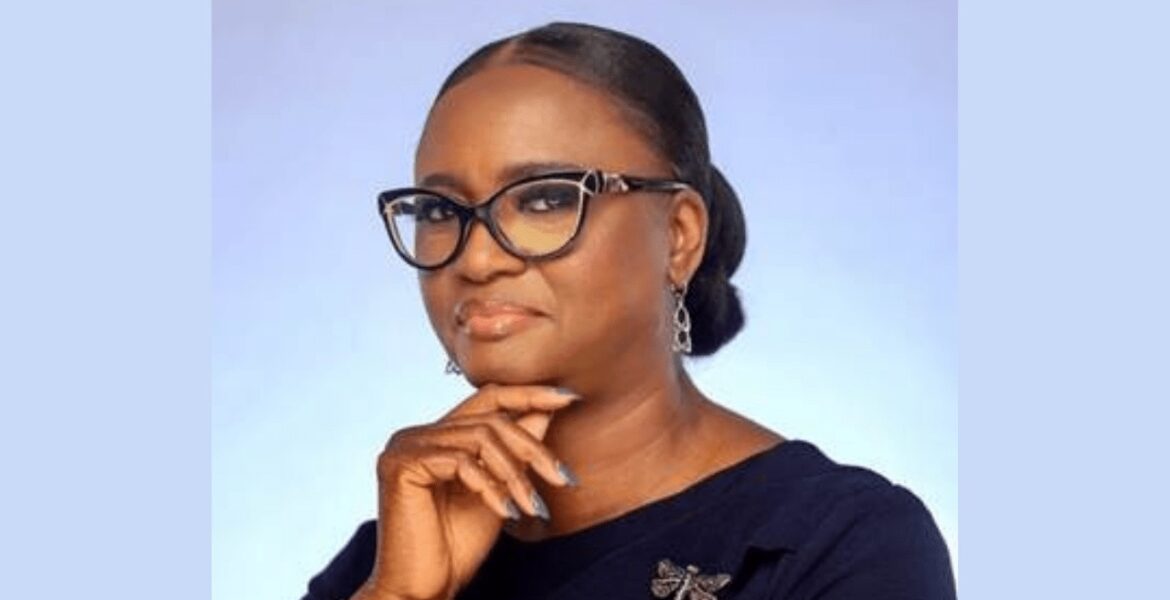
Elohor Aiboni has assumed office as Executive Vice President and Country Chair of Shell Nigeria, a position that represents more than another corporate promotion. Her appointment marked two historic milestones: she became the first Nigerian to occupy the combined Executive Vice President and Country Chair position for Shell in Nigeria, and the first woman to hold the role.
But Aiboni’s rise to the top of one of Nigeria’s most influential energy businesses did not happen overnight.
It is the culmination of more than two decades of technical training, operational experience, international exposure and progressively greater leadership responsibilities in an industry where women have historically been underrepresented at the highest levels.
From trainee engineer to industry leader
Aiboni’s career with Shell began far from the executive office.
After studying Chemical Engineering at the University of Benin and completing her National Youth Service, she gained admission into Shell’s Intensive Training Programme. She subsequently joined the company as a trainee production engineer and began building her career through technical and operational roles.
Her career path took her through production operations, project and asset management, operations readiness and assurance, as well as business advisory and stakeholder-management responsibilities.
She also worked across Shell operations in Nigeria and Kazakhstan, giving her exposure to different aspects of the energy business and to international working environments.
Her academic background combined technical expertise with environmental management. She holds a bachelor’s degree in Chemical Engineering from the University of Benin and a master’s degree in Integrated Environmental Management from the University of Bath in the United Kingdom.
Before becoming a managing director, Aiboni had already taken on significant operational responsibilities, including serving as Asset Manager for the Sea Eagle FPSO in Nigeria’s Niger Delta and later as Asset Operations Manager for the Bonga deepwater facility.
Those assignments placed her at the intersection of engineering, production, safety, people management and business performance — experience that would later prove important in her rise to the top.
Breaking the SNEPCo glass ceiling
In August 2021, Aiboni made history when Shell appointed her Managing Director of Shell Nigeria Exploration and Production Company Limited, SNEPCo.
She became the first woman to lead SNEPCo in more than six decades of Shell’s operations in Nigeria. At the time, she was also described as the first woman to lead a Shell exploration company in the country.
Her appointment was significant not simply because she was a woman, but because of the technical and operational demands of the position.
SNEPCo operates Shell’s deepwater business in Nigeria, including the Bonga development, which pioneered deepwater oil and gas production in the country. Shell says Bonga operates in water depths exceeding 1,000 metres and increased Nigeria’s oil production capacity by 10 per cent when production began in 2005.
Aiboni’s promotion therefore placed a Nigerian woman with an engineering background at the helm of one of the country’s most technically demanding oil and gas operations.
Her leadership also came with an emphasis on developing people and encouraging continuous improvement. When she was appointed SNEPCo MD, Shell highlighted her passion for talent development and her experience leading diverse teams.
The Bonga milestone
One of the major milestones associated with Aiboni’s tenure at SNEPCo came in 2023, when the Bonga field reached one billion barrels of cumulative oil production.
The achievement was significant for Nigeria’s deepwater oil industry and underscored the scale of the operation she had been responsible for leading.
Bonga remains an important part of Shell’s Nigerian portfolio. According to Shell, the field was the country’s first oil and gas project in water depths exceeding 1,000 metres and continues to form part of the company’s deepwater interests in Nigeria.
For Aiboni, the Bonga milestone represented more than production figures. It was also evidence of the kind of leadership that can emerge when women are given responsibility for technically complex and strategically important operations.
Taking her experience beyond Nigeria
In 2024, Aiboni moved to Brunei Shell Petroleum as Asset Director.
The international assignment broadened her experience beyond Nigeria, with responsibility for asset performance, production and project delivery. She had already worked internationally in Kazakhstan, and her Brunei posting added another layer of global experience to a career that had been largely built within Shell’s Nigerian operations.
That experience became part of the preparation for her return to Nigeria at an even higher level.
In June 2026, Shell announced that Aiboni would succeed Marno de Jong as Executive Vice President and Country Chair Nigeria, with the appointment taking effect on August 1.
Shell described Aiboni as bringing more than 24 years of experience across Nigeria’s offshore, shallow-water and onshore operations, as well as international assignments in Kazakhstan and Brunei.
Why her appointment matters for Nigerian women
Aiboni’s story comes at a time when conversations about women’s representation in Nigeria’s leadership spaces are becoming increasingly urgent.
For decades, the country’s oil and gas industry has been dominated by men, particularly in senior technical and executive positions. Aiboni’s journey challenges the assumption that women belong primarily in support, administrative or traditionally female-dominated roles.
Her career demonstrates another pathway: entering through a technical profession, acquiring operational competence, accepting difficult assignments, managing major assets and eventually becoming responsible for an entire national business.
It is also significant that her rise has been built largely within the organisation she now leads.
She did not arrive at Shell Nigeria’s top position as an outsider. She rose through its ranks — from trainee production engineer to increasingly senior operational and management positions, before becoming SNEPCo MD and subsequently taking an international leadership assignment.
Her journey therefore offers a lesson about succession and the importance of investing in women long before they reach the executive table.
A new chapter
Aiboni takes over Shell’s Nigerian leadership at a significant moment for the company.
Shell completed the sale of its interest in the Shell Petroleum Development Company of Nigeria Limited in March 2025, while retaining interests in deepwater oil and gas through SNEPCo and other businesses, including Shell Nigeria Gas.
The company has also signalled renewed interest in investment opportunities in Nigeria’s energy sector. Premium Times reported that Shell’s CEO, Wael Sawan, expressed optimism about investment opportunities in the country during a January 2026 meeting with President Bola Tinubu.
This means Aiboni’s new role is not merely symbolic. She is taking charge at a time of significant change in Shell’s Nigerian business and at a moment when questions around investment, energy security, local participation and the future of the sector remain important to the country.
Her own words following the appointment suggest that she sees the responsibility as one of continuity as well as opportunity.
She said she was excited to contribute to the efficient delivery of Shell’s business in Nigeria and to build on the foundation established by her predecessor.
For Nigerian women watching her journey, however, the significance goes beyond Shell.
Aiboni’s story shows what can happen when a woman enters a traditionally male-dominated profession, develops expertise, accepts leadership responsibility and is given the opportunity to lead at scale.
Her journey from trainee engineer to SNEPCo’s first female managing director, through an international assignment in Brunei, and now to Shell Nigeria’s top leadership position is a reminder that the most powerful breakthroughs in women’s leadership are often built long before the historic appointment is announced.
Elohor Aiboni’s latest achievement may be a first. But the more important question is how many more women will follow.