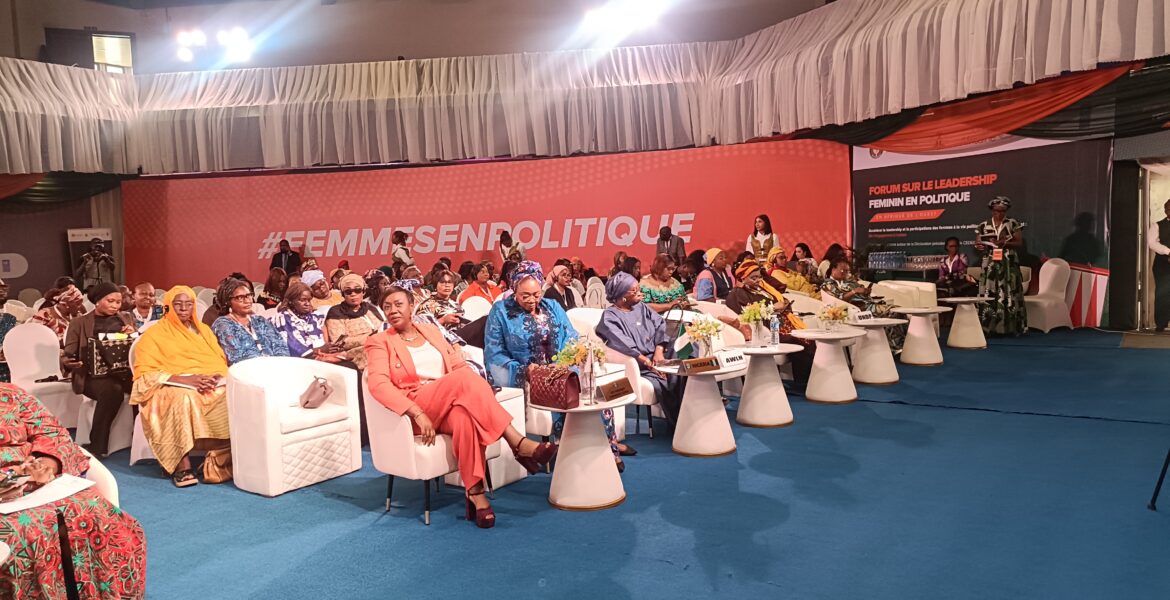
As countries across West Africa grapple with the persistent underrepresentation of women in politics, governments, regional institutions and development partners have endorsed a new roadmap aimed at accelerating gender parity in political leadership across the sub-region.
The Abuja Action Agenda, adopted at the Women’s Political Leadership Forum in Abuja, outlines practical steps to dismantle barriers that continue to prevent women from participating fully in governance, with a strong emphasis on sustainable financing, legal reforms, leadership development and institutional accountability.
The forum, themed “Accelerating Gender Parity in Political Leadership in West Africa: From Commitment to Action,” was convened by the African Women Leaders Network (AWLN) in collaboration with the United Nations Development Programme (UNDP), the Economic Community of West African States (ECOWAS) and Nigeria’s Federal Ministry of Women Affairs.
A major outcome of the meeting was the call for dedicated funding mechanisms, including the creation of a Women’s Political Endowment Fund, to reduce the financial hurdles that often discourage women from contesting elective offices.
Speaking at the forum, Jide Okeke, Director of UNDP Programmes for Africa, described women’s political participation as indispensable to the continent’s peace, development and democratic growth. He noted that despite their contributions to nation-building, women remain significantly underrepresented in decision-making, occupying only about 18 per cent of parliamentary seats across West Africa.
According to him, limited access to campaign financing remains one of the biggest obstacles confronting aspiring female politicians.
Okeke said the UNDP is responding by investing in leadership development through initiatives such as the Women’s Political Participation Academy, which is expected to train women leaders from 28 African countries, and the Africa Young Women Leaders Programme, designed to prepare young women for leadership roles within multilateral institutions and public service.
He urged governments, development partners and the private sector to jointly establish sustainable financing mechanisms that would enable women to compete more fairly during elections.
Nigeria’s Minister of Women Affairs, Hajiya Imaan Sulaiman-Ibrahim, said the Abuja Action Agenda signals a shift from policy declarations to measurable action aimed at increasing women’s participation in governance.
She described gender equality as a strategic development imperative, stressing that sustainable national progress cannot be achieved while women remain excluded from leadership and decision-making.
The minister said Nigeria continues to implement its Third National Action Plan on Women, Peace and Security, while strengthening leadership programmes and reviewing the proposed Special Seats Bill as part of broader efforts to expand women’s representation in elective positions.
Also speaking, Mme Damien Tchintchigbidja, Vice-President of the ECOWAS Commission, reaffirmed the regional body’s commitment to supporting member states in translating regional gender commitments into national laws and policies.
She said ECOWAS would coordinate a regional implementation roadmap, strengthen partnerships, mobilise resources and establish accountability mechanisms to monitor progress towards gender parity.
Sharing experiences from their respective countries, Dr Isata Mahoi, Sierra Leone’s Minister of Gender and Children’s Affairs, attributed her country’s progress in women’s political participation to legislative reforms, stronger political party regulations and sustained investment in women’s economic empowerment and mentorship.
Similarly, Liberia’s Minister of Gender, Children and Social Protection, Gbeme Horace-Kollie, identified campaign financing as one of the most significant barriers preventing women from contesting elections. She advocated dedicated financial support for female candidates, lower nomination fees and electoral reforms that require political parties to provide equitable campaign funding.
For the African Women Leaders Network (AWLN), achieving gender parity requires more than political goodwill. Co-Convener Mme Bineta Diop said meaningful progress depends on strong institutions, effective legislation, active women’s movements, responsive political parties and robust accountability systems.
At the close of the forum, participants unanimously endorsed the Abuja Action Agenda, committing governments, regional organisations and development partners to strengthen legal frameworks, expand women’s access to political financing, invest in leadership development and establish monitoring mechanisms to track progress.
With women still occupying less than one-fifth of parliamentary seats across West Africa, stakeholders said the success of the Action Agenda will depend on how quickly commitments are translated into concrete reforms that create equal opportunities for women seeking political office.