
Persistent violence against Women and girls, rising child marriage cases, poor access to education and growing family instability are threatening Nigeria’s long-term social and economic development, the Federal Government (FG) has warned.
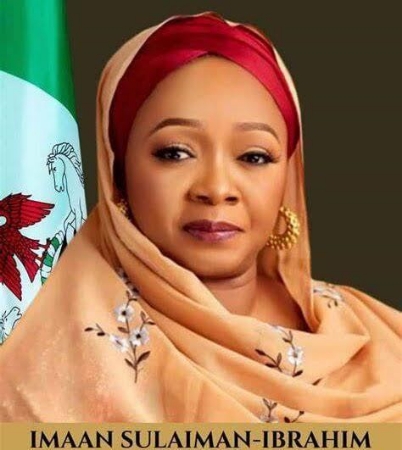
the Minister of Women Affairs and Social Development, Imaan Sulaiman-Ibrahim, said millions of Nigerian children, particularly girls, continue to face systemic barriers that undermine their safety, wellbeing and future productivity.
The minister noted that despite existing legal and policy frameworks, abuse, exploitation and educational exclusion remain widespread across the country, especially in rural and conflict-affected communities.
According to her, about 30 per cent of Nigerian women aged between 15 and 49 have experienced physical or sexual violence, while one in three girls is still married before the age of 18. In rural areas, she said, the figure rises to nearly half of adolescent girls.
She added that girls remain disproportionately affected by Nigeria’s out-of-school crisis, exposing many to child labour, trafficking, exploitation and early marriage.
The minister warned that the consequences of child marriage, female genital mutilation and violence against children extend beyond personal trauma, stressing that they weaken national productivity, social stability and economic growth.
She said the Federal Government was therefore intensifying efforts to strengthen child protection systems, improve inclusion and expand access to education and social welfare services.
Part of the response, she explained, includes ongoing review of the Child Rights Act to address emerging threats facing children in the digital age, alongside stronger implementation of the Violence Against Persons (Prohibition) Act across states.
Sulaiman-Ibrahim said government had also developed national action plans on ending violence against children, ending child marriage and eliminating female genital mutilation.
She disclosed that the World Bank-supported AGILE project is being used to scale educational opportunities and digital literacy programmes to more than 8.6 million girls across 18 states.
The minister further announced plans for a Universal Child Benefit targeting vulnerable children and households, as well as the expansion of the “Future Now Initiative,” aimed at equipping children with digital literacy, STEM education and artificial intelligence awareness.
She also revealed that Nigeria’s first National Menstrual Health and Hygiene Policy is awaiting approval, describing period poverty as another major barrier affecting girls’ school attendance and dignity.
Declaring 2026 as the “Year of Families and Social Development,” President Bola Ahmed Tinubu, according to the minister, is placing renewed attention on the role of families in child protection, moral development and national stability.
The government also unveiled the theme for the 2026 National Children’s Day celebration as “Future Now: Promoting Inclusion for Every Nigerian Child.”
Sulaiman-Ibrahim stressed that children must no longer be treated merely as beneficiaries of government interventions but as active participants in national development.
She said platforms such as the proposed “FutureNow” podcast would give children and adolescents opportunities to share their experiences and contribute to public discourse.
Permanent Secretary of the ministry, Esuabana Nko Asanye, called for stronger collaboration among government agencies, development partners, civil society groups and the media to advance child welfare and protection.
She noted that safeguarding children requires collective responsibility from families, schools, communities and institutions.
Development partners including UNICEF, Save the Children and SOS Children’s Villages were commended for supporting Nigeria’s child protection and family strengthening programmes.
Activities lined up for the 2026 National Children’s Day celebration include a national caregivers and parents-teachers summit, essay competitions, children’s parliament sessions, science exhibitions and programmes promoting menstrual health awareness and youth participation.
Stakeholders, however, say implementation gaps, poverty and uneven enforcement of child protection laws across states remain key obstacles to achieving meaningful progress in child welfare and inclusion nationwide.