
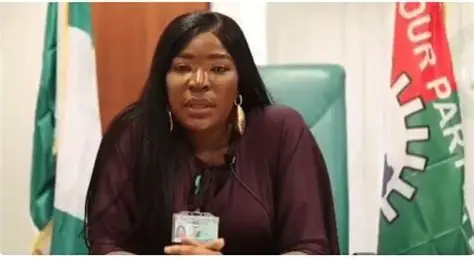
In a country where politics is often loud, combative and transactional, Prof. Lilian Obiageli Orogbu represents a quieter, steadier form of leadership, one rooted in ideas, institutions and service. Since assuming office as the Member of the House of Representatives for Awka North/Awka South Federal Constituency under the Labour Party, Orogbu has gradually carved a reputation as a lawmaker focused less on spectacle and more on substance.
Her entry into the 10th National Assembly in June 2023 marked a significant moment for Anambra politics and for women’s representation nationally. A professor of Business Administration and former university dean, Orogbu brought into parliament an academic’s discipline and a reform-minded approach shaped by years in public institutions. For many observers, her transition from academia to politics signalled a growing appetite among voters for competence-driven leadership.
A Constituency-Centred Approach
From the outset, Orogbu’s legislative journey has been anchored on constituency engagement and visible development. Across communities in Awka North and Awka South, her interventions have largely focused on education, health, youth development and economic empowerment, sectors often cited by residents as critical gaps.
Several school infrastructure projects, including the construction and rehabilitation of classroom blocks in public primary and secondary schools, have improved learning conditions and eased pressure on overstretched facilities. In rural communities where access to quality public education remains fragile, these interventions have been received as practical steps toward long-term human capital development.
Healthcare delivery has also featured prominently. Through solar-powered electrification of selected primary health centres, Orogbu has addressed one of the most persistent challenges in rural healthcare, unreliable power supply. For health workers and patients alike, the impact is immediate: improved service delivery, safer maternal care, and extended operational hours.
Youth, Livelihoods and Social Stability
Beyond infrastructure, Orogbu’s work reflects a keen awareness of the social pressures facing young people and women in her constituency. Youth-focused projects, including the development of a mini stadium in Achalla, point to a strategy that combines recreation, social cohesion and crime prevention. In a region where youth restiveness and unemployment remain ongoing concerns, such spaces serve as more than sporting facilities, they function as community stabilisers.
Economic empowerment initiatives have similarly targeted women, widows and small-scale entrepreneurs, with the distribution of vocational tools such as sewing and grinding machines. While modest in scale, these programmes address everyday economic realities and reinforce the role of women as drivers of household and community resilience.
In the agricultural sector, the distribution of farm inputs and fertilisers has supported local farmers, aligning with broader national conversations around food security and rural livelihoods. These interventions, though incremental, reflect a lawmaker attentive to the intersection between policy, poverty and productivity.
Legislative Voice and Public Accountability
Inside the National Assembly, Orogbu has combined constituency work with legislative advocacy, sponsoring and supporting bills aimed at strengthening education and entrepreneurship. Her interest in skills development has been evident in proposals focused on expanding access to entrepreneurial training, particularly for young people navigating a difficult labour market.
She has also demonstrated a willingness to engage complex public-interest issues. By supporting petitions and debates around financial accountability and investor protection, Orogbu has positioned herself as a representative willing to amplify citizens’ grievances within formal democratic institutions, a critical function in a system where public trust is often strained.
Her appointment to the Pan-African Parliament further extends her influence beyond national borders, offering a platform to contribute to continental policy conversations while reinforcing Nigeria’s representation in African governance spaces.
Women in Power, Impact in Practice
Perhaps the most significant layer of Orogbu’s political journey lies in its symbolism. As one of the relatively few women in Nigeria’s 10th National Assembly, her presence challenges long-standing gender imbalances in political leadership. Yet, it is her performance, not her symbolism, that strengthens the case for more women in governance.
Rather than leaning on visibility alone, Orogbu’s record suggests a leadership style grounded in planning, consultation and delivery. For young women watching from outside the corridors of power, her trajectory offers a counter-narrative: that politics can be intellectual, ethical and service-oriented.
As Nigeria continues to debate the quality of its representation and the role of women in decision-making, Lilian Orogbu’s tenure in Awka North and South provides a useful case study, one that underscores how leadership, when approached with clarity and commitment, can translate into measurable community impact.
For Women News Today, her story is not just about one lawmaker’s achievements; it is about what becomes possible when women are entrusted with power and choose to use it deliberately.