
President Bola Tinubu has approved three national policies aimed at addressing period poverty, recognising unpaid care work and strengthening protection for children against violence in Nigeria.
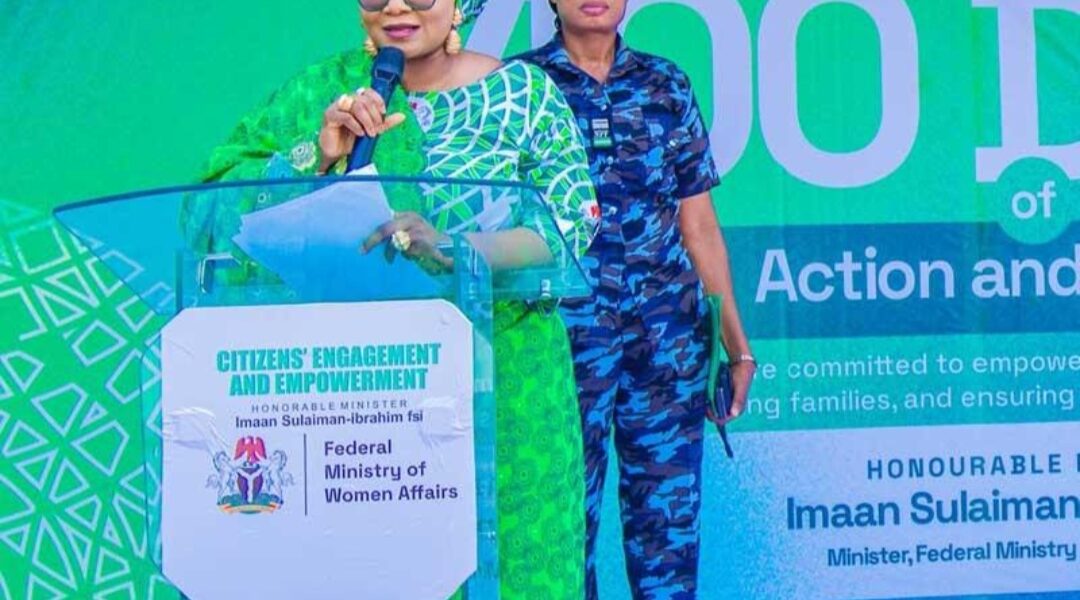
The Federal Ministry of Women Affairs and Social Development announced the approvals, describing the policies as significant steps towards addressing structural challenges affecting women, girls and children.
The approved frameworks are the National Policy on Menstrual Health and Hygiene Management (2026–2030), the National Policy and Implementation Plan for the Care Economy (2026–2030), and the National Action Plan on Ending Violence Against Children (EVAC).
The National Policy on Menstrual Health and Hygiene Management seeks to address period poverty, which reportedly affects more than 40 million Nigerian women and girls who lack reliable access to sanitary products due to affordability challenges, inadequate infrastructure and cultural stigma.
The policy also seeks to reduce Nigeria’s reported 99 per cent dependence on imported menstrual products and retain an estimated N184 billion spent annually on such products within the domestic economy.
To achieve this, the government plans to promote local manufacturing, strengthen product quality assurance and support women-owned and women-led businesses in the menstrual health sector.
Other proposed interventions include establishing a National Care Fund, providing accessible pad banks in public spaces and expanding grassroots sensitisation campaigns on menstrual health and hygiene.
The policy builds on existing government interventions, including the removal of taxation on locally manufactured menstrual products and efforts to improve access to water and sanitation facilities.
Similarly, the National Policy and Implementation Plan for the Care Economy (2026–2030) seeks to address the economic and social implications of unpaid care work, estimated to cost Nigeria up to $111 billion annually.
The framework aims to formalise and professionalise the care sector by introducing minimum standards for private childcare and elderly care providers.
It also proposes an integrated regulatory framework for child adoption nationwide, alongside the establishment of a National Care Digital Platform through a public-private partnership.
The ministry further plans to establish an oversight-managed National Care Fund, supported by multiple revenue streams, while pursuing legislation to transform the framework into an enforceable Act through the National Assembly.
On child protection, the National Action Plan on Ending Violence Against Children seeks to tackle the prevalence of physical, emotional and sexual violence, with an estimated 60 per cent of Nigerian children reportedly experiencing at least one form of violence before the age of 18.
The costed action plan provides for preventive, coordinated and multi-sectoral interventions to strengthen child protection systems and address the vulnerabilities that expose children to abuse, exploitation and street destitution.
A key component is the introduction of a Pathfinder State Model, which will support state-specific, data-driven interventions and promote stronger enforcement across Nigeria’s 36 states and the Federal Capital Territory.
The initiative is expected to involve security and justice institutions in strengthening prevention, response and accountability mechanisms.
However, the Ministry of Women Affairs and Social Development is seeking Federal Executive Council approval and dedicated funding to ensure the effective rollout of the action plan.
The three policies are expected to provide a broader framework for improving the wellbeing of women, girls and children, while addressing issues that have historically received inadequate institutional and economic attention.
Their impact, however, will depend largely on adequate funding, effective implementation, accountability and sustained collaboration between federal and state governments, civil society organisations and relevant private-sector stakeholders.