
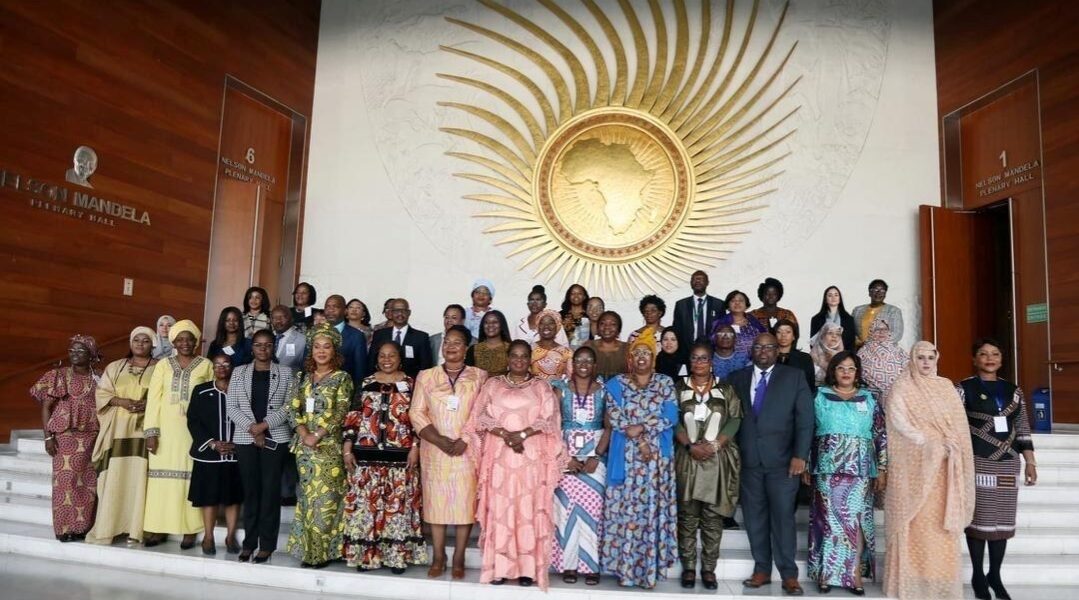
The African Union Commission has opened a high-level dialogue on gender equality and women’s empowerment, with a focus on addressing barriers that limit women’s access to finance, markets and economic opportunities across the continent.
The second Egumeni Dialogue on Gender Equality and Women’s Empowerment commenced on Monday, October 19, 2026, at the African Union headquarters in Addis Ababa, Ethiopia, and is scheduled to conclude on Wednesday, October 21.
The meeting, organised by the African Union Commission’s Women, Gender and Youth Directorate in partnership with the World Bank Group under the EAGER Project, is being held under the theme, “Building a Resilient Africa through Accelerated Women Financial and Economic Inclusion.”
According to the African Union Commission, women across Africa continue to face a financing gap estimated at $42 billion, alongside structural barriers that restrict their access to credit, digital financial services and markets.
The dialogue is expected to bring together ministers, financial regulators, development partners, private-sector representatives, civil society organisations and women entrepreneurs to discuss practical approaches to improving women’s economic participation.
Initiative targets economic opportunities for women
One of the key objectives of the dialogue is the launch of the Acceleration Plan for the Women and Youth Financial and Economic Inclusion initiative, known as WYFEI 2030.
The initiative aims to unlock $100 billion in economic opportunities for at least 10 million African women and young people by 2030.
The proposed plan is expected to support efforts to improve access to financial services, strengthen women’s businesses and encourage investment in women-led enterprises.
The dialogue will also examine innovative financing mechanisms, policy reforms and partnerships that could help remove barriers preventing women from participating fully in economic activities.
Other expected outcomes include a country-level acceleration strategy and roadmap, recommendations for consideration by African Union policy organs and stronger partnerships involving governments, financial institutions and development organisations.
The programme also includes the inauguration of a continental leadership training network for women’s business associations.
Implications for women entrepreneurs
Access to affordable finance remains an important consideration for women seeking to establish, sustain or expand businesses.
Limited access to credit, financial services and markets can constrain the ability of women entrepreneurs to acquire equipment, employ workers, increase production and compete with larger businesses.
Addressing these challenges requires more than financial commitments. It also involves examining policies and institutional practices that affect women’s ability to own assets, access business opportunities and participate in formal markets.
For Nigerian women entrepreneurs, the continental discussion provides an opportunity to assess how regional commitments can translate into practical support for businesses at national and local levels.
The effectiveness of the initiative will depend partly on implementation, the participation of financial institutions and the extent to which proposed financing mechanisms reach women-owned enterprises, including small businesses.
The African Union has identified the current decade as the Decade of African Women’s Financial and Economic Inclusion, covering 2020 to 2030.
The Egumeni Dialogue is intended to advance this agenda by moving discussions from identifying barriers towards coordinated action, investment and policy commitments.
The closing session is scheduled for Wednesday, October 21, when participants are expected to conclude discussions on recommendations and next steps.
Source: African Union Commission — Second Egumeni Dialogue
Editorial note: This report is based on the AU’s event announcement. Before publishing a follow-up claiming that commitments or funding have been approved, obtain the final outcome statement and verify the specific decisions taken.