
…UNICEF cites regional disparities, says nearly one in two young women in North-East, North-West married before 18
The Federal Government has called for urgent, coordinated action and sustained funding to end child marriage in Nigeria by 2030, as UNICEF reports that nearly one in two young women in the North-West and North-East were married before the age of 18.
The call followed the launch of the National Strategy and Costed Action Plan on Ending Child Marriage in Nigeria (2025–2030) in Kano on October 13, 2026, with the government seeking stronger interventions to protect girls, improve access to education and address the social and economic factors sustaining the practice.
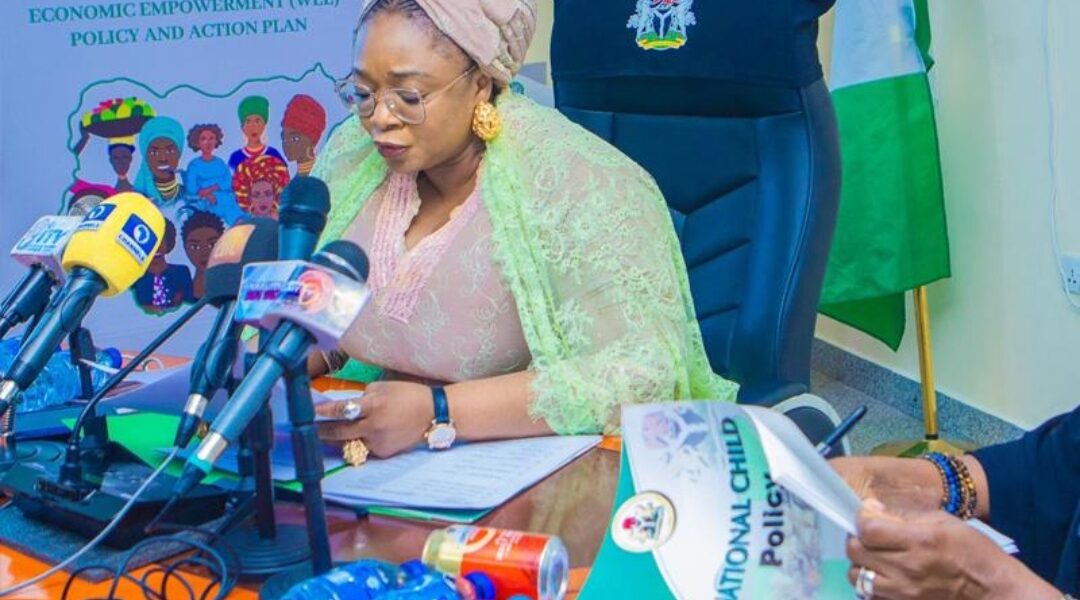
The strategy, launched by the Minister of Women Affairs and Social Development, Imaan Sulaiman-Ibrahim, provides a framework for coordinating government institutions, state authorities, development partners and communities towards eliminating child marriage.
However, the regional disparities highlighted by UNICEF underscore the scale of the challenge facing the government, particularly in northern states where poverty, school exclusion, insecurity and harmful social practices continue to expose girls to early marriage.
Speaking at the launch, UNICEF’s Chief of Field Office in Kano, Shafeeq Ur-Rehman, cited findings from the 2024 Nigeria Demographic and Health Survey, which indicated that approximately one in three young women nationwide had married before turning 18.
The proportion was significantly higher in the North-West and North-East, where nearly half of young women were reported to have married before the age of 18.
The figures point to the need for targeted interventions that address the different circumstances confronting girls across the country, including barriers to education, limited economic opportunities and inadequate access to child-protection services.
Ur-Rehman stressed that the strategy would require adequate financing and effective implementation to deliver measurable results.
“A costed plan must become a financed and implemented plan, reflected in state priorities, budgets, strong services and measurable results,” he said.
His remarks highlighted concerns about the gap that can exist between policy commitments and the resources required to translate them into practical support for vulnerable girls.
Education, protection key to ending child marriage
Child marriage can interrupt girls’ education, restrict their economic opportunities and expose them to health risks associated with early pregnancy. It can also increase their vulnerability to violence and reinforce cycles of poverty.
Experts and child-protection stakeholders have consequently identified continued access to education, community engagement and stronger social protection as important components of efforts to delay marriage.
Keeping girls in school can help expand their future choices, while financial and social support for vulnerable households can reduce pressures that encourage parents to marry off their daughters early.
Schools also need safe learning environments and adequate facilities, while girls who have dropped out require opportunities to return to education without discrimination.
The national strategy seeks to strengthen coordination across these areas, alongside improved enforcement of child-protection laws and access to support services for girls at risk.
Traditional and religious leaders, families, civil society organisations and healthcare providers are also expected to play important roles in changing attitudes and supporting girls’ rights.
Regional disparities demand targeted interventions
The UNICEF figures highlight the need for states with high child-marriage prevalence to prioritise interventions that respond to local realities.
While national policies provide an overarching framework, state governments are responsible for implementing many of the education, health and social-protection measures that can help prevent early marriage.
This includes strengthening birth registration and child-protection systems, improving school retention, expanding opportunities for adolescent girls and ensuring that existing legal safeguards are enforced.
Community-level engagement is equally important in addressing beliefs and practices that limit girls’ choices, particularly where early marriage is viewed as an accepted response to economic hardship or social insecurity.
Without sustained investment in these areas, the government risks falling short of its target despite the introduction of a national strategy.
Funding and accountability will determine progress
The strategy covers the 2025–2030 period and aligns with Sustainable Development Goal 5.3, which calls for the elimination of harmful practices, including child, early and forced marriage, by 2030.
Its success will depend on how effectively federal and state authorities translate the framework into funded programmes with clear responsibilities and measurable targets.
Regular monitoring and public reporting will also be necessary to establish whether interventions are reaching vulnerable communities, keeping girls in school and reducing the incidence of child marriage.
The costed action plan provides a basis for determining the resources required, but funding commitments must be reflected in actual budgetary allocations and expenditure.
As the 2030 deadline approaches, the regional differences highlighted by UNICEF place renewed attention on the urgency of action in the North-West and North-East.
For girls facing the risk of early marriage, the ultimate measure of the strategy will be whether it delivers practical protection, sustained access to education and the opportunity to determine their own futures.