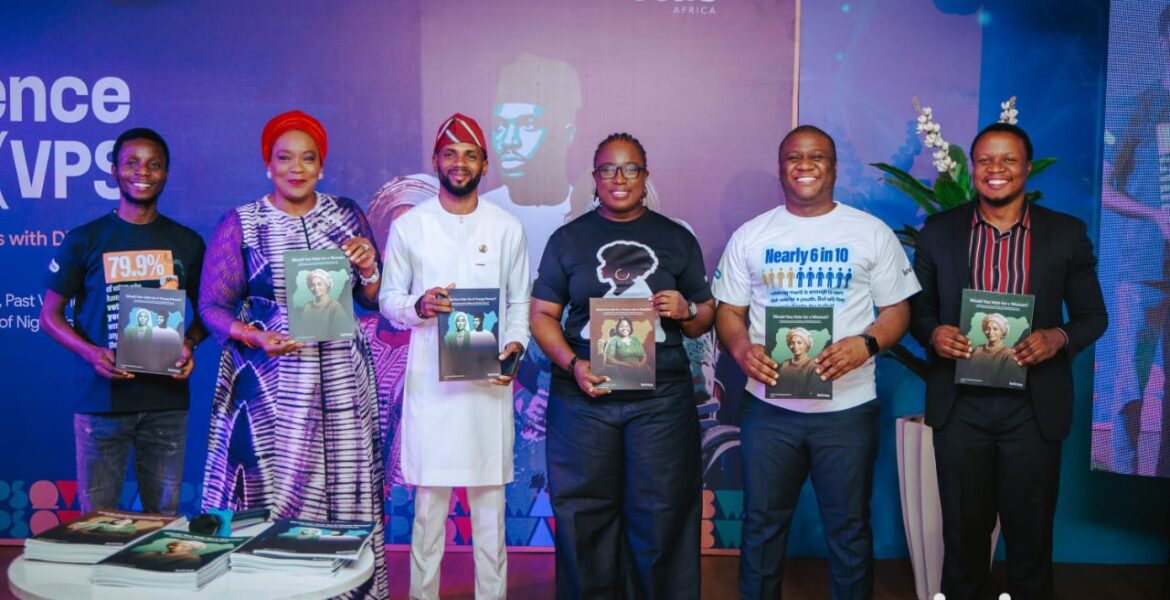
Invictus Africa has revealed that 64% of Nigerians are willing to vote for women in the 2027 general elections, despite the 69.1% saying they had never voted for a female candidate.
The Voters’ Preference Survey (VPS) Series, launched in Abuja, sampled 11,196 eligible voters across the 36 states and the Federal Capital Territory.
The survey also found that 74.3 per cent of respondents would vote for a young candidate, while 38.7 per cent said they would support a candidate with a disability in 2027.
Presenting the findings, Executive Director of Invictus Africa, Bukky Shonibare, said the results challenged the assumption that voters were primarily responsible for the poor representation of women, young people and persons with disabilities in elective positions.
She said the findings showed that the conversation should shift from asking why Nigerians were not voting for underrepresented groups to examining whether such candidates were being given fair opportunities to emerge, secure party nominations and gain visibility.
“For women, 69.1 per cent of respondents said they had never voted for a woman. Among them, 51.1 per cent said this was because they did not see a woman on the ballot.
“Yet, 64.4 per cent said they would vote for a woman in 2027, while 55.1 per cent said a woman’s track record would be enough to earn their vote,” she said.
Shonibare said political representation was shaped long before voters reached polling units through factors including access to nomination forms, internal party processes, campaign resources and visibility.
The Head of Data and Research, Gabriel Mbogwogu, said the survey was designed to address gaps in understanding voters’ attitudes towards women, young people and persons with disabilities.
According to him, structural barriers, rather than outright voter rejection, remained the biggest challenge.
“Nigerians are open to voting for a woman, Nigerians are open to voting for a youth as well as a person with disability. What matters now is for political parties and other stakeholders to give this group of candidates a chance to emerge on the ballot,” he said.
The survey found that 52.4 per cent of respondents believed men were better political leaders than women, while 49.2 per cent believed women lacked the experience required for political leadership. Also, 74.6 per cent recognised that female candidates often faced violence and intimidation.
It placed Nigerians’ overall openness to women in political leadership at 3.63 out of five.
For persons with disabilities, 61.3 per cent of those who had never voted for a candidate with a disability said they were unaware of such candidates on the ballot. Support was higher among voters with disabilities, at 59.2 per cent, compared with 37.7 per cent among voters without disabilities.
On young candidates, 79.9 per cent of those who had never voted for one said they were unaware of any on the ballot, despite 74.3 per cent expressing willingness to vote for a young candidate in 2027.
The CEO of Women Radio, Toun Okewale-Sonaiya, said the survey was significant because it focused on the voters who ultimately determine electoral outcomes.
“Politicians can’t do anything without voters. You can’t vote for yourself. You can’t win elections by yourself,” she said.
She urged aspiring candidates from underrepresented groups to understand voters’ expectations, communicate their track records and work towards earning public trust.
Shonibare said Invictus Africa would conduct a post-election survey to determine whether voters’ stated intentions translated into actual votes in 2027.