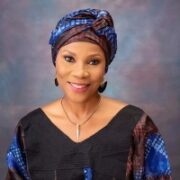
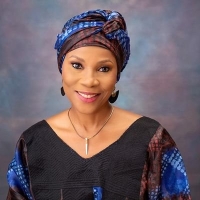
The newly appointed United Nations Assistant Secretary-General, Assistant Administrator and Regional Director for Africa at the United Nations Development Programme (UNDP), Ms. Ahunna Eziakonwa, has urged African governments to move beyond conversations about women’s inclusion and create systems that allow women to lead the continent’s transformation, stressing that Africa cannot attain sustainable development while relying on only half of its leadership capacity.
Speaking in Abuja at the Women Leaders Networking Meeting themed “Women Leading Africa’s Next Chapter,” Eziakonwa said the debate on women’s participation in development had become outdated, stressing that the real issue was whether governments and institutions were intentionally creating opportunities for women to influence policy, governance and economic growth.
“The question before us is no longer whether women should participate in Africa’s development—they already do. The more important question is whether Africa is creating the conditions that allow women to lead transformation at the scale our future demands, because the future we seek cannot be built by drawing on only half of our leadership capacity,” she said.
The event, organised by UNDP Nigeria in collaboration with the Federal Ministries of Women Affairs and Foreign Affairs, brought together women leaders from government, diplomacy, academia, business, civil society and development organisations to discuss pathways for strengthening women’s leadership across Africa.
Eziakonwa argued that inclusive leadership should no longer be viewed as a gender agenda but as an economic and development imperative.
“This is not only a gender conversation; it is a development conversation, because countries that fail to unlock the full potential of all their people inevitably limit the pace of their own transformation,” she stated.
She maintained that although the number of women occupying leadership positions across Africa had increased over the years, representation alone would not deliver the continent’s aspirations unless women were empowered to influence decision-making, mobilise investments, drive innovation and build resilient institutions.
According to her, Africa’s development trajectory would depend on interconnected systems that support women in leadership, entrepreneurship, innovation and regional trade.
Highlighting ongoing efforts by UNDP to expand women’s political participation, Eziakonwa pointed to the African Facility for Women in Political Leadership and the Africa Academy for Women in Political Leadership, revealing that more than 1,300 women from 41 African countries, including Nigeria, had already applied for the inaugural programme.
“Africa does not lack women ready to lead. What we must do is continue investing in the institutions, networks and opportunities that allow them to do so,” she said.
She also identified the African Continental Free Trade Area (AfCFTA) as a major opportunity to strengthen women-led enterprises, urging governments and development partners to invest in innovation, financing and partnerships that would enable women to compete across regional markets.
According to her, the success of Africa’s development agenda would ultimately be measured by how ordinary women’s leadership becomes.
“The true measure of progress will not be how many remarkable women we can name, but whether remarkable women become entirely unremarkable because leadership has become genuinely inclusive,” she added.
Earlier, UNDP Resident Representative in Nigeria, Ms. Elsie Attafuah, described the gathering as a strategic platform designed to strengthen collaboration among women leaders and create lasting networks capable of influencing national development.
She said Africa’s future would depend on the diversity and inclusiveness of today’s leadership, urging participants to transform the platform into a movement that mentors future generations of women leaders.
“How do we strengthen the relationships that already exist, build new partnerships across sectors, mentor the next generation of women leaders and create a platform through which the collective wisdom, influence and experience gathered here can continue shaping Nigeria’s development long after this evening has ended?” she asked.
Also speaking, Minister of Women Affairs, Imaan Sulaiman-Ibrahim, acknowledged progress in advancing women’s rights but noted that women remained significantly underrepresented in governance, diplomacy, industry and innovation.
“Women remain underrepresented in the corridors of power. Within our public institutions, diplomacy, industry and the portfolio of innovation, however, each one of us, in her own way, has broken the mould,” she said.
The minister disclosed that investments under initiatives such as the Nigeria for Women Project and the SCALE-UP Programme had exceeded $540 million, with discussions underway to increase funding beyond $2 billion to expand economic opportunities for women nationwide.
She also linked Nigeria’s development challenges to weak family systems, arguing that stronger families would help address insecurity, malnutrition and the growing number of out-of-school children.
Stakeholders at the meeting agreed that achieving Africa’s development goals would require sustained investments in women’s leadership, stronger institutional support, expanded economic opportunities and deliberate efforts to remove structural barriers preventing women from contributing fully to governance and development.