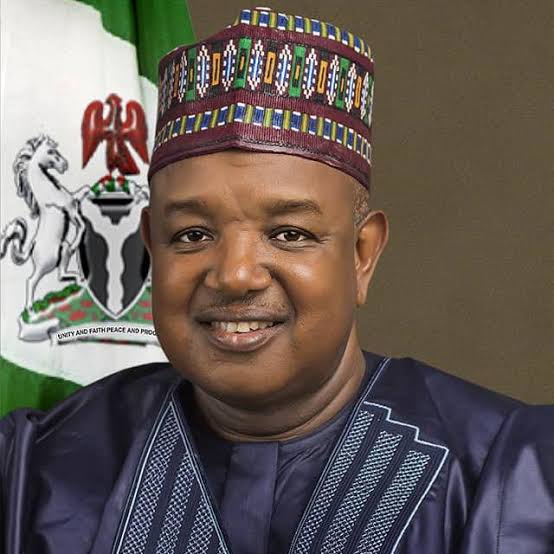
Minister of Budget and Economic Planning, Senator Abubakar Bagudu, has said Nigeria’s economic future depends significantly on how well the country removes the barriers limiting women’s participation and productivity across key sectors.
Speaking at the World Bank Group’s Women, Jobs and Markets Forum in Abuja, Bagudu argued that women’s economic advancement should be treated as a national development priority, stressing that the country cannot achieve inclusive growth while a large segment of its workforce remains structurally disadvantaged.
Addressing participants at the forum themed “Women, Jobs, and Markets: Unlocking Inclusive Opportunities in Nigeria,” the minister said the challenge is not a lack of effort from women, but the persistent absence of systems that allow them to thrive economically.
“The question is no longer whether women are working hard enough,” he said. “The real issue is whether the country is creating the conditions for them to succeed.”
Bagudu noted that Nigerian women remain active contributors to the economy, particularly in agriculture, informal trade, and small-scale production, yet their labour is often undervalued and insufficiently recognised in economic planning.
He warned that the structural constraints facing women — including poor access to finance, limited entry into formal markets, weak infrastructure, and inadequate institutional support, continue to suppress their earnings and reduce their productivity despite long hours of labour.
According to the minister, these obstacles are not only a gender equity concern but a major economic inefficiency that undermines national growth.
He called for a shift from low-yield, subsistence-level economic activity to more productive and scalable enterprise models for women, stressing the need for targeted investments in value addition, improved production systems, and stronger market integration.
Bagudu said enabling women to move beyond survival-based businesses into competitive and growth-oriented enterprises would significantly strengthen household incomes, improve livelihoods, and expand Nigeria’s economic base.
His remarks come amid growing calls for more gender-responsive economic policies as experts continue to highlight the disproportionate challenges women face in accessing productive resources despite their central role in Nigeria’s informal and agricultural sectors.
Development advocates have repeatedly argued that unlocking women’s full economic participation is essential not only for gender equality, but also for job creation, poverty reduction, and sustainable national development.