… Pressure Mounts for Immediate Passage of Special Seats Bill
As Nigeria prepares for the 2027 general elections, renewed pressure is mounting on policymakers to take decisive steps toward improving women’s representation in governance.
This formed the focus of a high-level engagement convened by the Policy and Legal Advocacy Centre (PLAC), the Nigerian Bar Association Section on Public Interest and Development Law (NBA-SPIDEL), and the Nigerian Women Trust Fund, with backing from the European Union. The meeting brought together key actors across government, civil society, and the political space to deliberate on pathways for advancing women’s political leadership.
Held under the theme “Advancing Women’s Political Leadership: Strengthening Pathways to Inclusive Representation in 2027,” discussions centered on the progress of the Special Seats Bill, the need for reforms within political parties, and practical strategies to enhance women’s participation in upcoming elections.
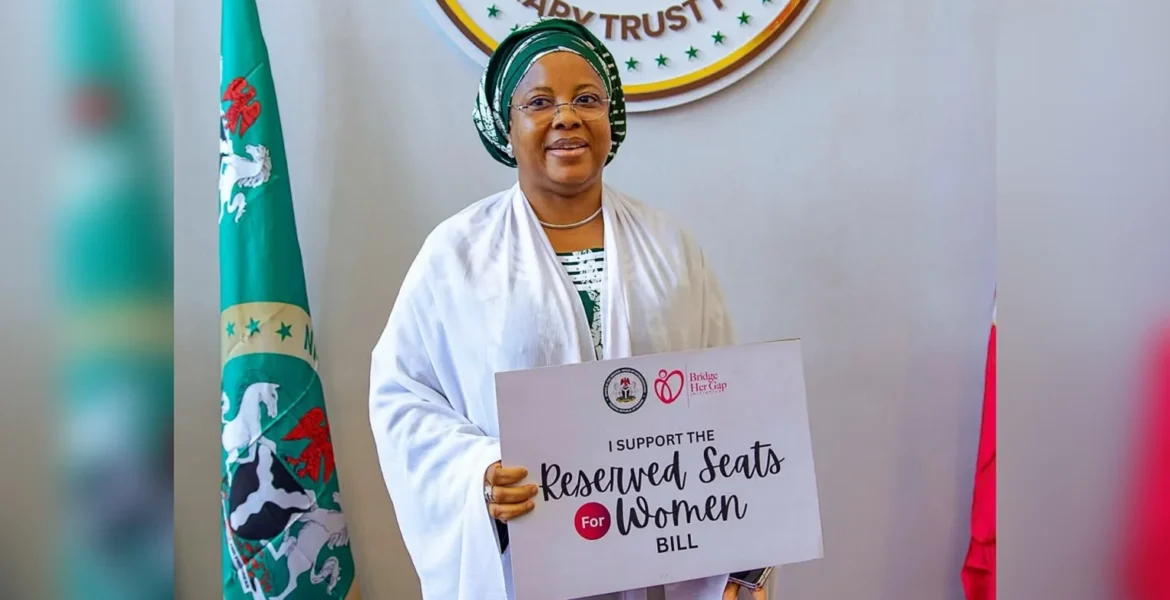
Chairperson of the House Committee on Women Affairs, Hon. Kafilat Ogbara, emphasized the urgency of passing the Special Seats Bill, describing it as a necessary step to address longstanding gender imbalance in Nigeria’s political system. According to her, delays in the legislative process have continued to hinder progress despite increasing support for the bill.
She noted that meaningful inclusion of women is critical to national development and effective governance, stressing that while women remain active at grassroots political levels, they are still largely excluded from positions where decisions are made. Ogbara also highlighted the importance of engaging political parties and traditional institutions, warning that without internal reforms and enforcement of gender provisions, progress would remain limited.
She further advocated sustained support for women currently holding elective positions, pointing out that retaining them in office offers a practical way to improve representation even before the proposed legislation is enacted.
Also speaking, Hon. Gaza Jonathan Gbefwi, who represents Keffi/Karu/Kokona Federal Constituency, identified low female candidacy as a major challenge. He observed that women’s underrepresentation is partly due to the limited number of those who step forward to contest elections, urging more women to actively participate in the political process.
While expressing optimism that the Special Seats Bill could eventually be passed, Gbefwi stressed the need for women to mobilize and support one another politically. He acknowledged the significant role women play as voters but questioned why this influence has not translated into proportional representation in leadership.
In his remarks, Executive Director of PLAC, Clement Nwankwo, described the current state of women’s political representation in Nigeria as deeply concerning. He cited figures showing minimal female presence in both chambers of the National Assembly and noted that several states still have no female lawmakers.
Nwankwo warned that failure to pass the Special Seats Bill would undermine ongoing constitutional reform efforts. He also raised concerns about internal party practices, including the use of “unity lists,” which he said could further sideline women if not carefully managed.
On her part, Chair of NBA-SPIDEL, Uju Agomoh, characterized women’s underrepresentation as a significant gap in Nigeria’s democratic process. She called for comprehensive legal and institutional reforms to tackle barriers such as cultural norms and financial constraints that continue to limit women’s political participation.
Similarly, Chief Executive Officer of the Nigerian Women Trust Fund, Brenda Anugorum, noted that structural challenges, rather than a lack of competence, remain the primary obstacles facing women in politics. She pointed out that although Nigerian women excel in various sectors globally, systemic barriers at home continue to restrict their political advancement.
Anugorum added that even if the Special Seats Bill is not passed before the 2027 elections, efforts should be sustained toward future electoral cycles, while immediate steps are taken to strengthen support systems for female candidates and intensify advocacy.
Speakers at the meeting also underscored the influence of political gatekeepers in shaping electoral outcomes. Ogbara, in particular, called on First Ladies to play a more active role in supporting women’s political aspirations, describing their influence as potentially transformative.
Contributions from other stakeholders, including representatives of state governments, echoed the need to move beyond symbolic participation of women in politics toward ensuring their presence in leadership and decision-making roles.
Political parties were identified as central to driving change, with calls for reforms such as reducing nomination fees, ensuring fairer processes, and implementing gender quotas already outlined in party constitutions.
The European Union reaffirmed its commitment to supporting inclusive governance in Nigeria, urging lawmakers and political actors to match their commitments with concrete actions that promote gender equality.
Participants agreed that achieving inclusive representation would require a combination of legislative action, internal party reforms, grassroots mobilization, and sustained advocacy.
As momentum builds around the Special Seats Bill, stakeholders stressed that the 2027 elections present both a critical test and an opportunity to make meaningful progress. The consensus at the meeting was clear: without deliberate efforts to include women in leadership, Nigeria’s democratic development will remain incomplete.