The Federal Government has called for the establishment of at least 500 Sexual Assault Referral Centres (SARCs) across Nigeria and renewed support for the Reserved Special Seats Bill to boost women’s representation in elective positions.
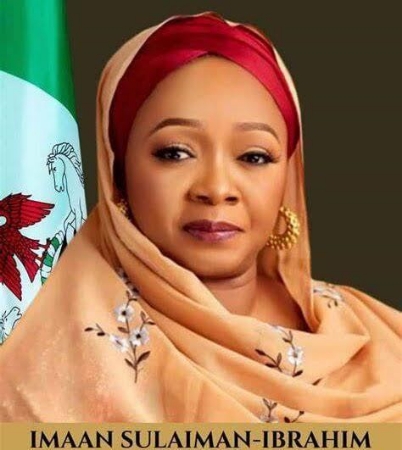
Minister of Women Affairs and Social Development, Imaan Sulaiman-Ibrahim, made the call on Friday in Abuja during a high-level press briefing to flag off activities marking the 2026 International Women’s Day (IWD) and Nigeria’s participation in the 70th session of the Commission on the Status of Women.
Sulaiman-Ibrahim said Nigeria’s current network of about 50 Sexual Assault Referral Centres across the 36 states and the Federal Capital Territory was grossly inadequate for a population exceeding 200 million people.
According to her, international standards recommend at least one centre per 400,000 people, meaning Nigeria requires a minimum of 500 centres nationwide to ensure survivors of gender-based violence receive timely medical, legal, and psychosocial support.
She stressed that expanding access to survivor-centred services and strengthening prevention and response mechanisms must remain a national priority.
“We recognize that some challenges remain. While Nigeria currently operates about 50 Sexual Assault Referral Centres, this remains deeply insufficient. Expanding survivor-centred services and strengthening prevention and response systems therefore remain urgent priorities,” she said.
The minister also threw her weight behind the Reserved Special Seats Bill, describing it as a historic opportunity to address the persistent under-representation of women in Nigeria’s political leadership.
She noted that although women have increasingly occupied strategic positions in government, financial institutions, and international organisations, representation in elective offices remains significantly low.
According to her, the proposed legislation would complement existing economic empowerment initiatives by accelerating inclusive governance and dismantling structural barriers that limit women’s participation in politics.
Beyond political inclusion, Sulaiman-Ibrahim highlighted ongoing reforms and programmes under the Federal Ministry of Women Affairs aimed at strengthening social protection, economic empowerment, and family support systems.
She disclosed that the ministry had prepared more than 43 policy documents, guidelines, and draft bills designed to strengthen gender equality, child protection systems, gender-based violence response frameworks, and social welfare coordination across the country.
The minister also said the government was accelerating the rollout of the Renewed Hope Social Impact Interventions, including nationwide empowerment initiatives for women, expansion of financial access for women-led businesses, and programmes supporting women farmers and energy entrepreneurs.
Speaking at the briefing, the Minister of Finance and Coordinating Minister of the Economy, Wale Edun, emphasised that empowering women and strengthening families were central to Nigeria’s economic transformation agenda.
Edun said social investment programmes under the administration of President Bola Ahmed Tinubu had already reached about nine million households across the country, with a target of expanding coverage to 15 million households.
He noted that social protection programmes were not merely welfare initiatives but strategic investments that contribute to productivity, resilience, and inclusive economic growth.
Also speaking, UN Women Country Representative to Nigeria and ECOWAS, Beatrice Eyong, urged stronger collaboration among governments, civil society, and development partners to remove structural barriers preventing women from reaching their full potential.
Eyong said that while Nigerian women remain among the most talented and resilient globally, they continue to face systemic challenges including limited access to finance, leadership opportunities, and protection from violence.
She stressed that advancing women’s rights requires sustained action, accountability, and investments that translate policy commitments into measurable improvements in the lives of women and girls.
The 2026 International Women’s Day is being commemorated globally under the theme “Rights. Justice. Action. For All Women and Girls,” with Nigeria aligning its national campaign around the message “Give to Gain.”