The Federal Government has disclosed plans to establish Sexual Assault Referral Centres (SARCs) in each of Nigeria’s 774 local government areas, admitting that the existing 52 centres are inadequate to serve a population of more than 240 million.
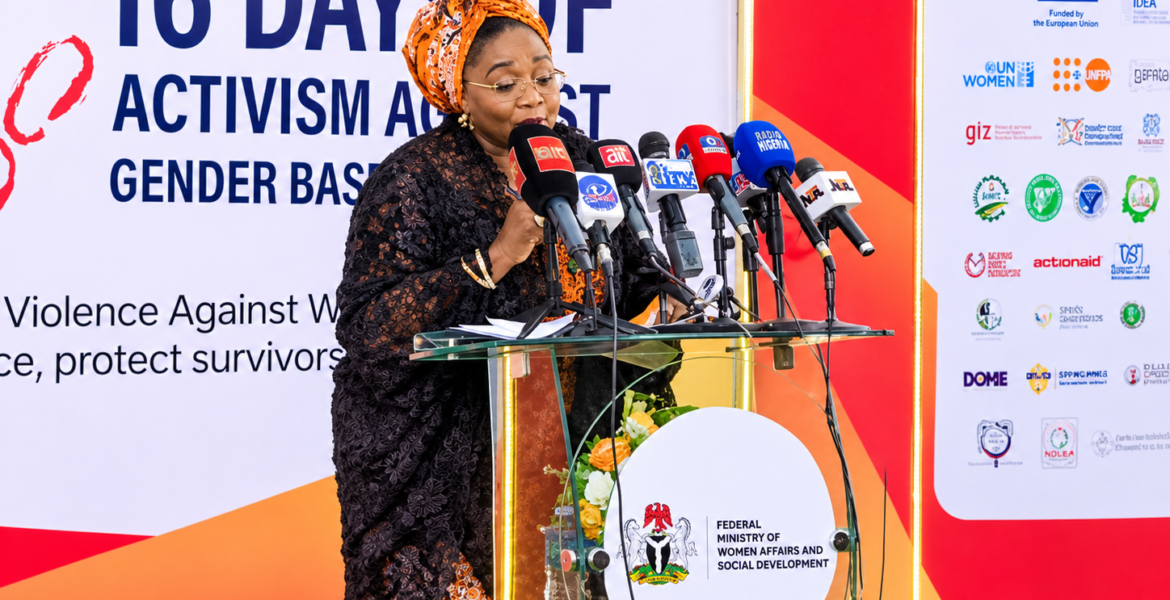
Minister of Women Affairs and Social Development, Imaan Sulaiman-Ibrahim, disclosed this in Abuja on Monday, November 23, while outlining government interventions to strengthen the response to sexual and gender-based violence (SGBV) ahead of the 2026 International 16 Days of Activism.
She said the ministry was working with state governments to expand the facilities nationwide, with a longer-term ambition of establishing a referral centre in every ward to bring survivor support services closer to communities.
“Across Nigeria, 52 Sexual Assault Referral Centres currently provide vital medical, psychosocial, and referral support to survivors. However, for a nation of over 240 million people, 52 centres are grossly inadequate,” the minister said.
The proposed expansion is expected to improve survivors’ access to medical care, psychosocial counselling and referrals for legal assistance, particularly for women and girls in underserved communities.
The announcement comes amid the scale of violence confronting Nigerian women and girls. According to figures presented by the ministry, nearly one in three Nigerian women aged 15 to 49 has experienced physical or sexual violence.
More than 27,000 cases of sexual and gender-based violence were documented in recent reporting cycles, although millions of incidents are believed to remain unreported.
Beyond its devastating consequences for survivors, Sulaiman-Ibrahim estimated that gender-based violence costs Nigeria approximately 1.5 per cent of its Gross Domestic Product, equivalent to about $3 billion annually through lost productivity, healthcare expenses and disrupted livelihoods.
Development partners at the briefing stressed that expanding referral facilities must go hand in hand with effective law enforcement, adequate funding and institutional accountability.
The UN Women Country Representative to Nigeria and ECOWAS, Beatrice Eyong, represented at the event, said approximately 840 million women globally, representing one in three, had experienced physical or sexual violence during their lifetime.
She urged the Federal Government to strengthen existing legal frameworks, address implementation gaps and ensure predictable funding for survivor-centred interventions.
Similarly, the International IDEA representative called for effective enforcement of the Violence Against Persons (Prohibition) Act, stressing that access to justice should not depend on survivors’ social status or economic circumstances.
The United Nations Population Fund (UNFPA) also emphasised prevention, believing survivors and ensuring that every form of violence is identified and addressed.
Meanwhile, UNICEF representative Wafaa Abdelatef urged the media to report cases responsibly, protect survivors’ identities and dignity, and hold institutions accountable for their responses to violence against children and adolescent girls.
The Federal Government also announced that its National Gender-Based Violence Electronic Dashboard and Situation Room was now operational to strengthen data management, coordination and evidence-based interventions.
The announcements form part of Nigeria’s activities for the 2026 International 16 Days of Activism Against Gender-Based Violence, scheduled for November 25 to December 10, under the theme: “UNiTE to End Violence Against Women and Girls: Ensure Justice, Protect Survivors, End Impunity.”
For survivors and women’s rights advocates, however, the central test will be whether the proposed expansion translates into accessible services, timely intervention and justice, regardless of where a survivor lives.