…Says women mediating conflicts, rebuilding communities receive little support, influence
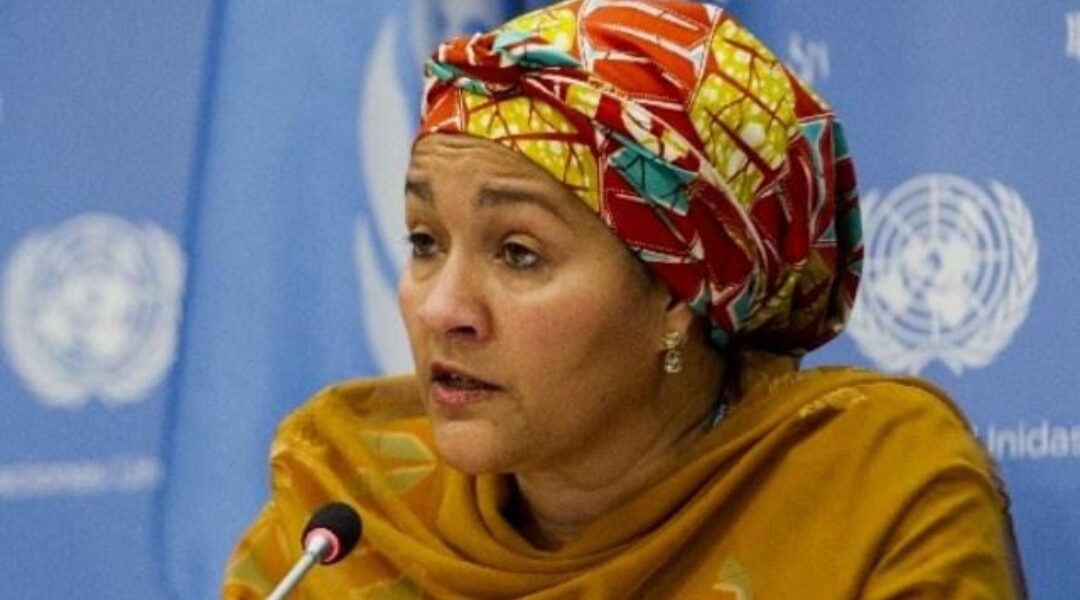
Women working to prevent conflicts, mediate community disputes and rebuild livelihoods in Nigeria continue to face inadequate funding, limited protection and exclusion from decision-making, United Nations Deputy Secretary-General, Amina Mohammed, has said.
She called on governments and development partners to increase financial and institutional support for women-led organisations, warning that the contributions of women peacebuilders would remain constrained without the resources, security and influence required to sustain their work.
Mohammed made the call at the maiden Nigeria Women Peace, Democracy and Inclusive Governance Summit and Awards, organised by the National Council of Women’s Societies (NCWS), Nigeria, in Abuja.
She said women were already playing critical roles in resolving local disputes, supporting families affected by insecurity and helping communities recover from conflict, but their efforts were often overlooked in formal peace and security structures.
“Women are mediating local disputes, supporting families affected by insecurity, and rebuilding livelihoods. Yet this work too often receives little funding, protection, or influence over decisions, and we have to change that,” she said.
The UN deputy chief urged governments and development partners to support women-led organisations and strengthen access to justice and care for survivors of violence.
“It means funding women’s organisations and ensuring survivors of violence can access justice and care,” Mohammed added.
Her intervention draws attention to a major challenge confronting the Women, Peace and Security (WPS) agenda: the gap between recognising women’s contributions to peacebuilding and providing the resources and institutional opportunities needed to make their participation meaningful.
Across communities affected by insecurity, women frequently sustain households, support displaced families, mediate tensions and organise local responses to violence. However, their involvement does not always translate into representation in formal security discussions, peace negotiations or decisions on recovery and reconstruction.
Mohammed also raised concerns about the growing global demand for critical minerals, saying the emerging economic opportunities must benefit local communities, particularly women and young people.
“Growing demand for critical minerals brings new opportunities, but also risks that we must address, so that this wealth benefits our communities, especially our women and youth,” she said.
The issue is particularly significant for women in communities where extractive activities can affect livelihoods, access to land, environmental safety and household income.
Earlier, NCWS National President, Princess Edna Azura, decried the continued exclusion of women from political processes, particularly party formations and primaries, saying the situation had restricted their access to leadership positions.
She called for women’s greater involvement in peacebuilding, mediation, community security and reconciliation, insisting that political leaders must include women in decisions affecting their communities.
“We are not asking for positions as favour, we are asking for fairness, inclusion and equal opportunity,” Azura said.
She also urged women to organise, support one another and strengthen their participation in governance, warning that internal divisions could weaken their collective voice.
The Minister of Women Affairs and Social Development, Hajiya Imaan Sulaiman-Ibrahim, said the Federal Government recognised women as important partners in conflict prevention and peacebuilding.
Represented by the Chairman of the Governing Council of the Maryam Babangida National Centre for Women Development, Princess Jummai Idonije, the minister stressed that women must be actively involved in peace and security processes.
She said their participation should be guided by Nigeria’s Third National Action Plan on Women, Peace and Security, which provides a framework for advancing women’s roles in conflict prevention, protection, participation and peacebuilding.
The minister maintained that women should not merely be protected during conflicts but must also have a role in shaping and sustaining peace.
“True political voice and peacebuilding require economic independence,” she said, adding that women’s economic empowerment was essential to strengthening their participation in governance, particularly ahead of the 2027 general elections.
The Third National Action Plan is part of Nigeria’s implementation of United Nations Security Council Resolution 1325, adopted in 2000, which recognises the disproportionate impact of armed conflict on women and girls and the importance of their participation in peace and security processes.
The resolution calls for increased representation of women at all decision-making levels in conflict prevention, management and resolution, as well as stronger protection against conflict-related sexual and gender-based violence.
However, translating these commitments into measurable outcomes requires sustained financing, coordination among government institutions and accountability for implementation.
Also speaking, Senator Philip Aduda called for greater support for women and girls across the country, pledging to support initiatives aimed at improving their welfare and expanding their opportunities.
“I will work for the progress of the girl child, of the women of not only the FCT, but of the Federal Republic of Nigeria,” he said.
The summit brought together government officials, women leaders and other stakeholders to deliberate on women’s roles in peacebuilding, democracy and inclusive governance.
The discussions come as Nigeria continues to confront security challenges that have affected communities across different regions, with women and girls facing heightened vulnerabilities arising from displacement, violence, economic hardship and disruptions to education and livelihoods.
For women-led organisations working at the grassroots, the call for increased funding and protection raises questions about access to resources, institutional recognition and the extent to which their recommendations influence government responses to insecurity.
As Nigeria approaches another election cycle, stakeholders say strengthening women’s participation in governance and peace processes will require more than public commitments. It will demand deliberate investment in women-led initiatives, protection for those working in vulnerable communities and opportunities for women to influence decisions on security, reconciliation and national development.