The United Nations Development Programme (UNDP) has urged the Federal Government and relevant institutions to strengthen the implementation of laws protecting vulnerable Nigerians, warning that the existence of legal frameworks alone cannot guarantee access to justice, healthcare and fundamental human rights.
The organisation said poor institutional coordination, fragmented service delivery and weak accountability continue to undermine protections available to women, girls, children, persons with disabilities, people in detention and other marginalised populations.
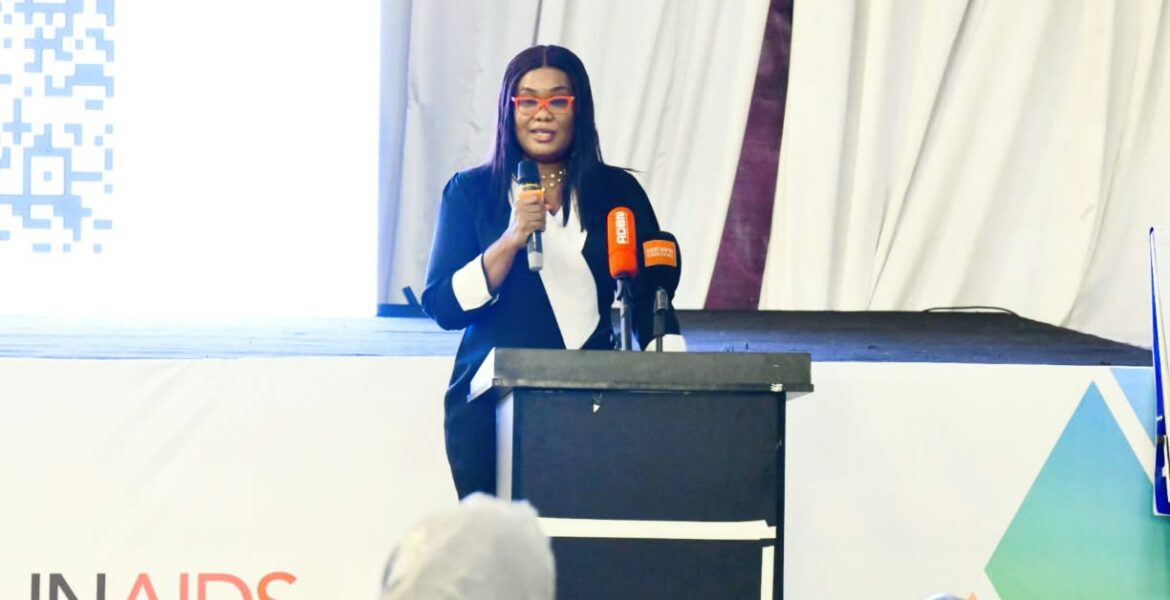
UNDP Gender Lead, Onyinye Ndubuisi, who represented the organisation’s Resident Representative, Elsie Attafuah, stated this at the National Technical and Institutional Validation Meeting on the Guidelines on Gender, Justice, Human Rights and Health: Effective Implementation of Selected Laws Applicable to Vulnerable Persons in Nigeria, in Abuja.
She said the guidelines were developed to address the disconnect between legal provisions and the practical experiences of people seeking protection, justice and essential healthcare services.
According to her, a survivor of gender-based violence may require medical attention, psychosocial support, legal assistance and protection but encounter fragmented institutional responses that make accessing these services difficult.
She explained that the guidelines would provide practical direction for translating existing legal commitments into coordinated institutional procedures, accessible services and rights-based interventions.
Ndubuisi also highlighted the relationship between justice and healthcare, disclosing that UNDP was preparing to undertake a study in detention centres to generate evidence on health and human rights challenges requiring institutional attention.
She said findings from the study would inform future programme interventions, while the guidelines would help strengthen the legal and operational framework for addressing identified gaps.
The UNDP official further disclosed that the organisation, in partnership with the Global Fund, the Federal and State Ministries of Justice, and the Institute of Human Virology Nigeria (IHVN), was supporting the expansion of the High-Level Observatory on Gender, Justice, Human Rights and Health across 19 states and the Federal Capital Territory.
She explained that the Observatory, covering 20 jurisdictions, would generate evidence on institutional performance, identify implementation gaps and strengthen oversight and accountability.
However, she stressed that the initiative was not intended to create parallel governance structures, noting that government institutions must retain ownership and leadership of the process.
Also speaking, a representative of the Federal Ministry of Justice, Habiba Hamza, Chief State Counsel, Sexual and Gender-Based Violence, described the guidelines as an important innovation for strengthening the protection of vulnerable persons.
She said the document consolidates provisions scattered across different laws into one operational framework, enabling justice and health sector institutions to better understand their responsibilities and respond to violations.
Hamza noted that the guidelines would help address issues affecting women, children in conflict with the law, persons in detention and other groups exposed to discrimination and rights violations.
Meanwhile, Ogechi Ogu, Executive Director of the Public Awareness on Rights and Rehabilitation of Vulnerable Persons Initiative (PARVP Initiative), identified inadequate funding and weak collaboration among institutions as major obstacles to the effective implementation of existing laws.
She observed that although different laws provide safeguards for vulnerable persons, poor coordination often results in institutions concentrating on their individual mandates without adequately complementing the responsibilities of others.
Ogu explained that the guidelines bring together the Violence Against Persons (Prohibition) Act 2015, Administration of Criminal Justice Act 2015 and Anti-Torture Act 2017, alongside other relevant legal provisions.
She emphasised that being in detention should not deprive individuals of their fundamental human rights, particularly access to healthcare and humane treatment.
According to her, the denial of medical attention, interruption of essential treatment and discrimination against people in custody could expose them to further harm.
She also warned that stigma and discrimination remained significant barriers to justice, particularly for people whose health conditions or social circumstances made them vulnerable.
A UNDP technical expert, Eberechi Oleme Onuselogu, called for functional public healthcare systems in correctional facilities and detention centres to ensure that people in custody receive adequate medical attention.
She said healthcare was a fundamental human right that should not be denied on account of a person’s detention status.
Onuselogu noted that violence was also a public health concern because its consequences extended beyond physical injuries to mental, psychological and social well-being.
She urged the government and development partners to strengthen healthcare infrastructure in detention facilities, including provisions for responding to disease outbreaks and other medical emergencies.
According to her, correctional facilities should help rehabilitate individuals rather than expose them to deteriorating health conditions.
The national validation exercise brought together representatives of federal and state ministries of justice, health institutions, human rights bodies, civil society organisations and technical experts to review the proposed guidelines.
The document is expected to provide an integrated operational reference for implementing existing legal safeguards, strengthening referral pathways and clarifying institutional responsibilities in the protection of vulnerable persons.
Stakeholders also examined the need to move beyond the validation of the document towards government adoption, institutional integration, adequate funding and sustained monitoring to ensure that its provisions translate into improved protection and services for vulnerable Nigerians.