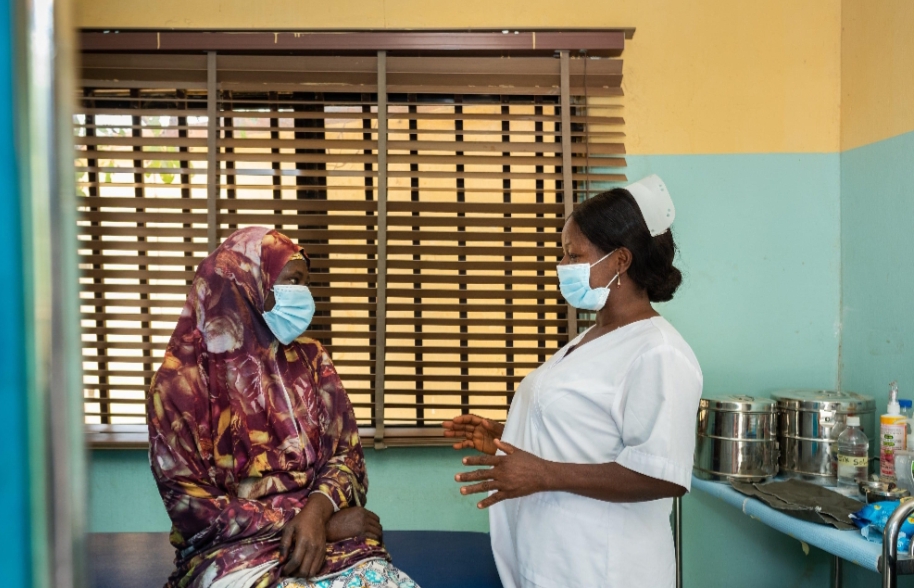
Efforts by the Kwara State Government and its development partners to improve women’s access to sexual and reproductive health services have recorded significant progress, with 22,788 women sensitised on cervical cancer screening, more than four times the project’s target of 5,235.
The achievement was disclosed at a community-level close-out and dissemination event organised by the Hope for Family Development Initiative (HFDI) in Offa, where stakeholders reviewed the outcomes of a Global Fund-supported project implemented by Jhpiego in collaboration with HFDI.
The intervention reached 22,481 residents across Asa, Moro and Offa Local Government Areas, representing about 219 per cent of its target of 10,264 people.
Beyond cervical cancer awareness, 8,073 adolescents and young people received information on available sexual and reproductive health services, exceeding the target of 2,361.
The Executive Director of HFDI, Dr Aremu Stephen Akinyele, also disclosed that 19,042 community members participated in sexual and reproductive health dialogues and events, while 91 community-led initiatives addressing identified health needs were recorded.
The figures highlight the impact of community mobilisation and collaboration in addressing barriers to reproductive healthcare, particularly among women, adolescents and other underserved groups.
Government strengthens preventive healthcare
The Kwara State Government has continued to demonstrate commitment to improving women’s health through partnerships, public health campaigns and efforts to bring preventive services closer to communities.
The State Family Planning Coordinator in the Ministry of Health, Hajia Bashirat Jattu, said the state had consistently organised annual cervical cancer screening activities for women of reproductive age.
She described the collaboration with the National Institute for Cancer Research and Treatment (NICRAT) to integrate cervical cancer screening into family planning services as an important addition to existing government interventions.
Under the partnership, women attending family planning clinics at selected primary healthcare facilities can access cervical cancer screening as part of routine services, reducing the need for separate visits and additional expenses.
The state has also commenced community mobilisation, with health educators and mobilisers visiting households to encourage women to take advantage of available screening services.
In October 2024, the government flagged off free breast and cervical cancer screening at the Bode Saadu Primary Health Centre in Moro Local Government Area. The exercise, inaugurated by the then Commissioner for Health, Dr Amina Ahmed El-Imam, was presented as part of efforts to improve early detection and expand access to preventive healthcare across the state.
More recently, Kwara was selected as the North-Central state for NICRAT’s pilot programme integrating cancer screening into primary healthcare services. The current phase targets at least 200 women in the state, with Okelele Primary Health Centre in Ilorin selected for the pilot implementation.
NICRAT’s Director-General, Prof. Usman Aliyu, represented by the institute’s Senior Scientific and Partnership Liaison Officer, Deloraine Dennis, said the programme was designed to make cancer prevention and early detection part of routine healthcare delivery.
The initiative uses HPV DNA testing, which health experts identify as a high-performance method for detecting the human papillomavirus associated with most cervical cancer cases.
Women who test positive for HPV are to be linked to further assessment and appropriate care. A positive HPV result, however, does not automatically mean that a woman has cervical cancer.
Adolescents and vulnerable communities reached
The wider SRHR project also sought to improve access to information and services for adolescents and young people, who often face stigma, misinformation and other barriers when seeking reproductive healthcare.
The 8,073 young people reached by the intervention exceeded the project’s target by more than threefold. Six youth-friendly centres were also established and commissioned to provide more appropriate access to sexual and reproductive health information and services.
The project covered 15 primary healthcare facilities across Asa, Moro and Offa, with activities including healthcare worker training, mentoring, supportive supervision, community engagement and improved linkages between health facilities and communities.
It also strengthened the capacity of healthcare workers to respond to gender-based violence, with emphasis on confidentiality, appropriate referrals and compassionate, survivor-centred care.
Jhpiego’s Kwara State Team Lead for the Integrated Sexual and Reproductive Health and Rights and Communicable Diseases Project, Williams Awotunde, said the intervention had improved the capacity of supported facilities.
He disclosed that the overall System Focus score of the facilities increased from 59.8 per cent in June to 67.4 per cent in September 2026, a rise of 7.6 percentage points.
However, he cautioned that generating referrals was not enough without ensuring that clients completed the process and received the care they needed.
“Generating a referral is only part of the journey. We must also ensure that people reach the appropriate service and receive the care they need,” he said.
Data presented at the close-out event showed that 147 of the 221 referrals recorded in the third quarter of 2026 had been documented as completed, pointing to the need for stronger referral tracking, follow-up and feedback between communities and health facilities.
Sustaining the gains
Despite the achievements, HFDI identified limited availability of some essential health commodities, incomplete referrals and financial barriers as challenges requiring sustained attention.
Akinyele called on government institutions, healthcare providers, civil society organisations and community leaders to maintain community mobilisation and strengthen referral systems beyond the project period.
The figures suggest that public awareness is increasing, but stakeholders say the next priority must be ensuring that women and young people can translate information into actual access to quality, affordable and timely healthcare.
For Kwara, sustaining the progress will require continued government ownership, adequate resources for primary healthcare facilities, reliable supplies of essential commodities and effective follow-up for people referred for further services.
The state’s ongoing collaboration with NICRAT, alongside its work with Jhpiego and HFDI, provides an opportunity to build on existing efforts and make preventive reproductive healthcare more accessible.
Ultimately, the measure of success will not only be the number of women reached with information, but also the number who can obtain screening, receive their results and access appropriate treatment without financial or geographical barriers.