
Health experts have raised concerns over the growing burden of breast cancer in Nigeria, warning that one in 11 Nigerian women is at risk of developing the disease, while between 70 and 80 per cent of patients present at advanced stages.
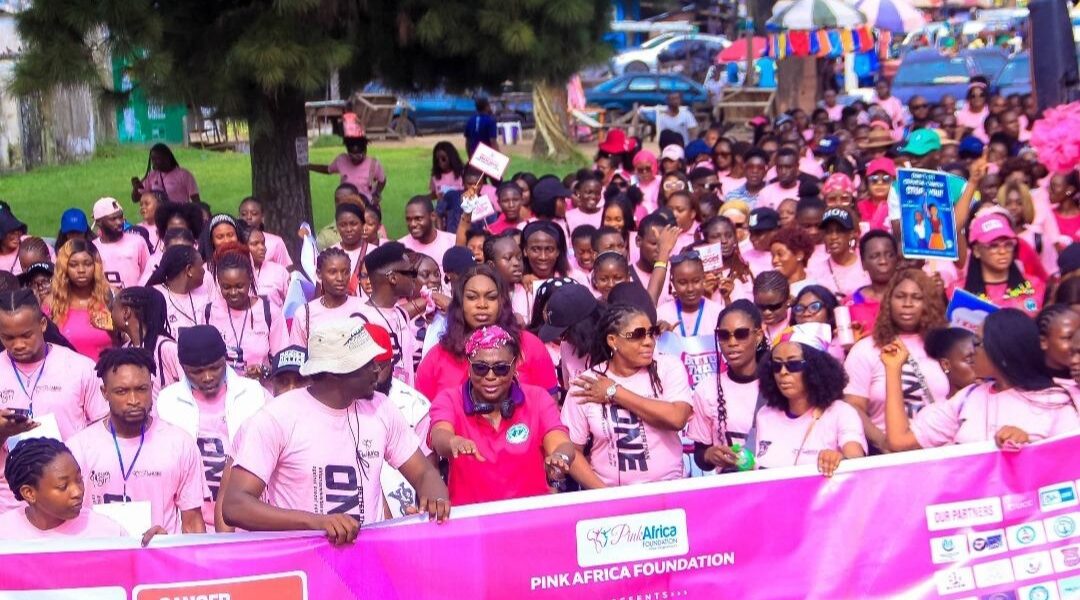
The warning was issued during the 2026 Go Pink Day awareness campaign organised by the Pink Africa Foundation in Calabar, Cross River State, where hundreds of people benefited from free screening for breast, cervical and prostate cancers, as well as eye care and other health services.
The campaign, held under the theme, “Turn Up the Fight in Breast Cancer Care,” focused on improving awareness, early detection and access to treatment, particularly for women in underserved communities.
The Executive Director of Pink Africa Foundation, Glory Enoh Egrinya, said raising awareness must be accompanied by practical interventions to address the barriers preventing women from accessing timely diagnosis and treatment.
“We are not just creating awareness. We are backing it up with action,” she said.
Egrinya identified late presentation and inadequate public awareness as major factors contributing to cancer-related deaths, urging women to become familiar with their breasts and seek medical attention promptly whenever they notice unusual changes.
She clarified, however, that not every breast lump is cancerous, stressing the importance of proper medical evaluation.
According to her, the foundation has supported several mastectomies and chemotherapy treatments, with some patients surviving following early detection and intervention.
She disclosed that more than 50 cases had been reported at the foundation’s centre since January, expressing concern that some patients could not afford transportation, diagnostic investigations and other basic healthcare expenses.
“Early detection saves lives,” she said, calling for increased government intervention to make cancer care more accessible and affordable.
Egrinya urged the government to subsidise treatment, provide additional radiotherapy equipment and recruit more oncologists to strengthen cancer care services in Cross River State.
She noted that women in rural communities, including Ikom, faced significant barriers to accessing specialised healthcare.
“We need government to come in and support us. A woman is caught between buying food for her children and paying for treatment,” she said.
Also speaking, the Executive Director of Asi Ukpo Hospitals and Asi Ukpo Comprehensive Cancer Centre, Calabar, Yegwa Ukpo, said Nigeria records approximately 144,000 new cancer cases annually, describing the disease burden as a major public health concern.
Ukpo said breast cancer accounted for about 60 per cent of patients attending her facility, adding that between 70 and 80 per cent of patients presented at advanced stages.
“The burden is quite heavy,” she said, emphasising the need for early diagnosis and improved access to treatment.
She urged Nigerians to undergo appropriate medical checks, noting that some cancers may develop without obvious symptoms during their early stages.
“The best thing is regular checkups. There are cancers with no symptoms until it is too late. Testing does not invite cancer,” she warned.
Ukpo also disclosed that the centre was in discussions with the National Health Insurance Authority on possible arrangements to include cancer care in health insurance coverage, a move she said could help reduce the financial burden on patients.
The Director-General of the Cross River State Primary Health Care Development Agency, Dr Vivian Mesembe Otu, described breast cancer as a major cause of cancer-related deaths among women in Nigeria and Africa.
Otu attributed late presentation to inadequate awareness, misinformation and cultural beliefs, urging women to seek medical assistance rather than suffer in silence.
“Many women present very late due to ignorance, poor awareness and beliefs, when it is already too late,” she said.
She encouraged women to seek professional assessment when they notice breast lumps or other unusual changes, explaining that medical examination is necessary to determine whether a lump is cancerous.
Otu also identified family history, obesity, physical inactivity and smoking among factors associated with breast cancer risk.
She disclosed that the Cross River State chapter of the Medical Women’s Association of Nigeria provides free breast and cervical cancer screening on the second Wednesday of every month at its facility on Barracks Road, Calabar.
According to her, the state government is also encouraging residents to enrol in national and state health insurance schemes, while the Pink Africa Foundation provides support for mastectomy procedures for eligible patients at the University of Calabar Teaching Hospital.
She added that awareness campaigns were being extended to rural communities through radio jingles, social mobilisation officers across local government areas and social media.
The President of the Medical Women’s Association of Nigeria, Cross River State branch, Dr Funke Ebughe, reiterated the estimate that one in 11 women is at risk of breast cancer, adding that men also account for a small proportion of cases.
Ebughe identified increasing age, family history and certain genetic mutations, including BRCA gene mutations, among non-modifiable risk factors, while physical inactivity, alcohol consumption and tobacco exposure were among factors that could contribute to risk.
She listed warning signs to watch for as breast lumps, skin changes resembling orange peel, dimpling and unusual nipple discharge, including clear, coloured or bloody fluid outside breastfeeding.
“If you walk through streets and pass 100 people, at least 10 have risk factors. This is really scary,” she said.
Ebughe called on individuals, communities and government institutions to strengthen efforts to improve early detection, expand access to screening and make treatment more affordable.
“Fighting it is not the job of health workers alone. Spread the right information and discard myths,” she urged.
The awareness campaign featured free screening for breast, cervical and prostate cancers, eye checks, a blood donation drive and first-aid services.
The organisers called for sustained collaboration among government agencies, healthcare providers, civil society organisations and communities to address gaps in cancer prevention, diagnosis and treatment.
They maintained that improving public awareness, strengthening healthcare infrastructure and reducing the financial burden of treatment were essential to improving outcomes for people affected by cancer.
Source: The Guardian Nigeria, “1 in 11 Nigerian Women at Cancer Risk as Experts Raise Alarm,” published October 24, 2026.
Read the original report: https://guardian.ng/features/health/1-in-11-nigerian-women-at-cancer-risk-as-experts-raise-alarm/