…Stresses need to organise, engage and secure a seat at decision-making tables
The Minister of Women Affairs and Social Development, Imaan Sulaiman-Ibrahim, has called on Nigerian women to translate their economic contributions, professional networks and community influence into greater participation in the spaces where decisions affecting their lives and livelihoods are made.
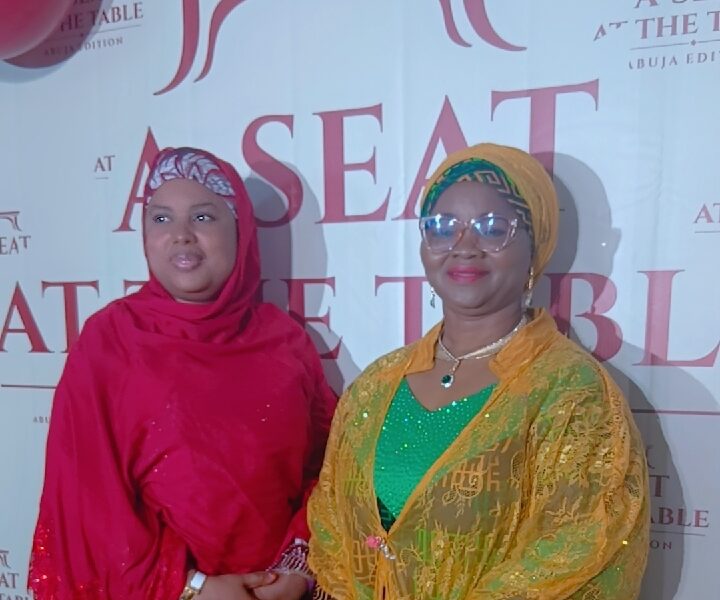
The minister made the call in a keynote address delivered at the Abuja edition of “A Seat at the Table” on Sunday, September 20, 2026, where she challenged women to move beyond occupying positions to becoming active contributors to policy, governance and economic decisions.
Sulaiman-Ibrahim, who was represented at the event by her Special Assistant, Technical and Community Engagement, and Chairman of the Governing Council of the Maryam Babangida National Centre for Women Development, Princess Jumai Idonije, said the concept of a “seat at the table” should be understood as access, visibility, participation and the ability to influence outcomes.
She said women had contributed substantially to households, businesses and communities, but needed to become more intentional about converting those contributions into organised influence.
“A seat is not simply a chair. It is access. It is visibility. It is participation. It is the opportunity to speak, to influence, to negotiate and to help determine outcomes,” the minister said.
From scattered strength to organised influence
The minister identified businesses, professional associations, cooperatives, market groups and community networks as potential platforms through which women could connect to information, finance, opportunities and policy discussions.
She argued that women’s enterprises should not be viewed merely as individual businesses, noting that the activities of women entrepreneurs have implications for employment, household welfare, supply chains and national productivity.
“Your enterprise is an economic institution,” she said, urging women to recognise the wider economic and social impact of their businesses and professional activities.
She further linked the call for stronger organisation to the “Power of 10 Million” initiative, describing the 10 million target as representing women across different sectors and communities whose collective participation could contribute to national development.
However, she stressed that numbers alone would not translate into influence unless women were organised, connected and deliberate in their engagement.
The minister’s call echoes the broader rationale previously given for the Power of 10 Million Women initiative, which has been presented as an effort to connect women across Nigeria’s 774 local government areas and strengthen their participation in economic and governance conversations.
Political participation
The minister also addressed women’s participation in the 2027 political process, stating that civic participation should extend beyond voting to being informed about issues, organising, engaging policymakers and ensuring women’s voices are represented in democratic processes.
Her address, however, also contained an explicit partisan element.
She said “One Voice. One Movement. One Choice”, within the political framing of the movement, represented collective support for President Bola Ahmed Tinubu as the All Progressives Congress presidential candidate for the 2027 election.
The statement therefore positioned the movement at the intersection of women’s civic participation, economic organisation and partisan political mobilisation.
At the same time, the minister urged women to remain informed about issues affecting their businesses, families and communities as they engage in the democratic process.
‘Do not sit in the corner’
Sulaiman-Ibrahim said women, particularly those from Northern Nigeria, should not allow cultural expectations to be interpreted as limitations on their ambition or capacity.
She described the women participating in the forum as entrepreneurs, executives, scholars, professionals, innovators, employers and community leaders whose experiences deserved greater visibility.
Drawing from her own public-service experience, including her time at the National Agency for the Prohibition of Trafficking in Persons and the National Commission for Refugees, Migrants and Internally Displaced Persons, the minister said she had often found herself as the only woman, or one of very few women, in decision-making spaces.
She recalled becoming Nigeria’s first female Minister of State for Police Affairs and said the experience reinforced her belief that women must be present when decisions concerning them are made.
“When women are absent from the room, decisions about women are still being made,” she said.
Ministry opens platform to women
The minister also called on women to engage directly with the Federal Ministry of Women Affairs and Social Development, saying the ministry should be seen as a platform through which women could connect their ideas, challenges, businesses and aspirations with government.
She encouraged women to bring forward challenges affecting their sectors and communities, as well as proposals and innovations that could inform government engagement.
She said the “table” women need to access extends beyond government to include finance, technology, agriculture, business and policy.
“Sometimes, when we cannot find a seat, we must have the courage to build another table—and invite others to it,” she said.
The minister concluded by urging women to move from being present to being purposeful, from beneficiaries to partners, and from participating in existing structures to helping shape those structures.
“This is Women O’Clock,” she declared, calling on women to harness their businesses, voices, networks and communities to strengthen their participation in national life.
The Abuja event comes amid renewed government and women-focused advocacy efforts around economic empowerment, political inclusion and the mobilisation of women as a coordinated constituency. Earlier in 2026, the Federal Ministry of Women Affairs promoted the Power of 10 Million Women initiative alongside calls for increased political representation, economic opportunities and financing for women’s development.