President of the National Assembly of Côte d’Ivoire and former Prime Minister, Patrick Achi, has said Africa’s development will remain incomplete and economic growth unequal unless women, young people and other excluded groups are placed at the centre of wealth creation, employment and decision-making.
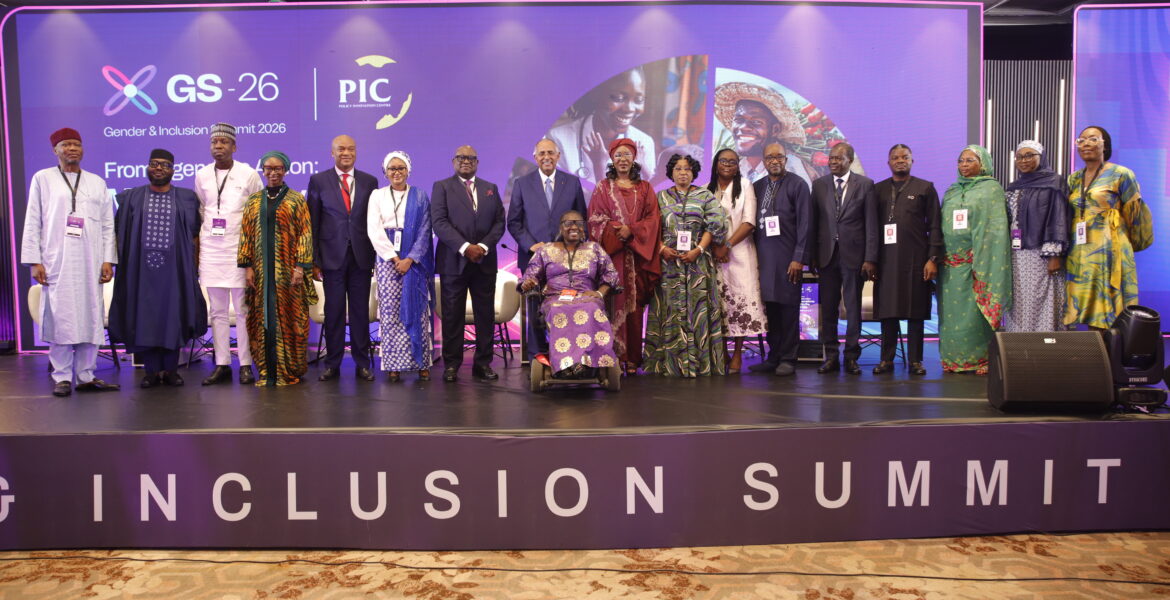
Achi spoke in Abuja at the fifth edition of the annual Gender and Inclusion Summit organised by the Policy Innovation Centre (PIC), with the theme, “Inclusion as Infrastructure: Unlocking Africa’s Growth Through Shared Prosperity and Participatory Development.”
He said Africa could no longer afford to treat gender and social inclusion as an additional social intervention, arguing that the participation of women and young people was fundamental to the continent’s economic transformation, adding that Africa’s growth will remain unequal without women, youth inclusion.
“Inclusion is not a social supplement to development. Inclusion is development,” Achi declared.
According to him, development infrastructure must connect people to opportunities and enable them to participate meaningfully in the economy.
He cited roads, electricity, schools, healthcare facilities and digital infrastructure as examples, stressing that their value should ultimately be measured by how effectively they connect citizens to markets, education, jobs, healthcare and other opportunities.
Achi said the “last mile” of development should not be understood simply as the final physical distance covered by infrastructure, but as the point where policies, investments and services translate into tangible improvements in people’s lives.
“The last mile is not where development ends. It is where development becomes real,” he said.
He called for a shift from managing poverty to creating sustainable pathways out of poverty through productive employment, rising incomes, private-sector investment and stronger human capital.
Achi further warned that excluding women and young people from education, employment, entrepreneurship and leadership amounted to denying Africa a significant part of its productive potential.
Women must have a seat at decision-making tables
The call for greater participation of women was reinforced by the First Lady of Kwara State and Chairperson of the Nigeria Governors’ Wives Forum, Ambassador Professor Olufolake AbdulRazaq, who urged stakeholders to create more space for women at decision-making tables.
AbdulRazaq said gender inequality remained a major barrier to sustainable development despite interventions in education, healthcare, economic empowerment, political participation and other sectors.
She argued that women’s economic empowerment should not be limited to income generation, but should encompass access to education, healthcare, leadership opportunities, finance and platforms where decisions affecting their lives and communities are made.
She said the Nigeria Governors’ Wives Forum had continued to support women, youths and vulnerable groups through skills acquisition, grants, scholarships, cooperative networks, healthcare interventions and grassroots advocacy.
According to her, sustained investment in women and girls was essential to building more inclusive communities and stronger economies.
From commitments to action
Earlier, Chairman of the Nigerian Economic Summit Group (NESG), Mr Olaniyi Yusuf, said the major challenge was no longer the absence of policies on inclusion, but the failure to ensure that commitments reached the people they were designed to serve.
Yusuf said the Gender and Inclusion Summit was created to help close the gap between policy commitments and lived realities, particularly for women, girls, youths, persons with disabilities and underserved communities.
“Nothing happens by chance. Opportunity only becomes meaningful when it reaches the last mile,” he said.
He urged stakeholders to move beyond conversations and commitments to actual implementation.
“We do not gather merely to celebrate. We gather to design. We gather to deliver.”
In his welcome remarks, Udeme Ufot stressed the need for stakeholders to confront the persistent gap between gender inclusion commitments and actual outcomes.
He urged governments, the private sector, civil society organisations and development partners to work together to ensure that policies, innovation and investments reach people who remain excluded from economic and social opportunities.
Ufot said the emphasis on the “last mile” was critical because the success of development interventions should ultimately be judged by their impact on ordinary citizens, particularly women, young people and vulnerable communities.
The speakers called for stronger accountability mechanisms, sustained investment in human capital, increased representation of women in leadership and effective systems for tracking inclusion commitments.
They stressed that the success of the summit should not be measured by the number of commitments made, but by the extent to which those commitments are implemented and translate into better opportunities and improved lives for women, youths and other excluded groups.
For women across Africa, the message from the summit was clear: inclusion must move beyond policy statements to real participation in the economy, leadership and decisions that shape their future.