The Federal Government has signalled a shift towards results-oriented budgeting, with a renewed focus on improving the lives of women with disabilities and other vulnerable groups through more inclusive public spending.
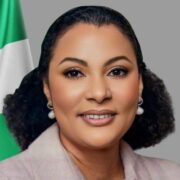
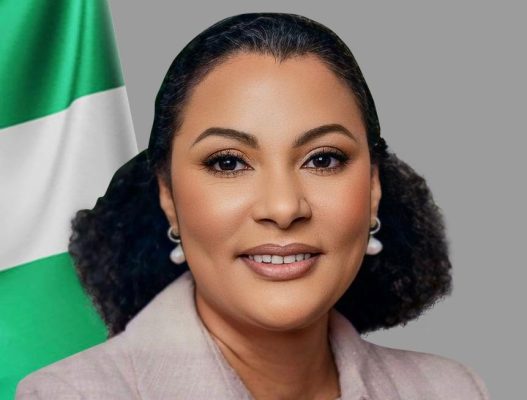
Minister of State for Budget and Economic Planning, Doris Uzoka-Anite, disclosed this at the UN Women International Women’s Day event for special groups held at the UN House Auditorium in Abuja.
She explained that government spending will increasingly be assessed based on its real impact on citizens, particularly those often excluded from development interventions.
According to her, the emphasis will no longer be on budget figures alone, but on tangible outcomes.
“We must begin to measure our budgets by the lives they change. Did it create opportunities for a girl with a disability to access education? Did it expand services for women who are frequently overlooked?” she queried.
Uzoka-Anite noted that the ministry is working to integrate gender-sensitive and disability-inclusive strategies into national planning processes, alongside mechanisms to monitor performance and ensure transparency.
“We are committed to embedding inclusive planning into our national development framework and tracking outcomes that truly matter,” she said.
She further revealed that the National Development Plan for 2026–2030 will align with the Renewed Hope Agenda of President Bola Ahmed Tinubu, with a strong focus on inclusive growth that leaves no segment of society behind.
Also speaking, the Minister of Women Affairs, Imaan Sulaiman-Ibrahim—represented by her Senior Special Assistant, Princess Jumai Idonnije—highlighted the economic and social value of investing in vulnerable populations.
She noted that prioritising inclusive spending in critical sectors such as health, education, and social protection yields significant national benefits, stressing that empowering women with disabilities can help reduce poverty levels and strengthen communities.
She also called for stronger accountability in public finance, including the need to track inclusive budget allocations, publish performance outcomes, and create opportunities for civil society participation in decision-making processes.
“We are working towards a Nigeria where no one’s needs are treated as secondary, but recognised as a priority,” she stated.
In her remarks, UN Women Country Representative to Nigeria and ECOWAS, Beatrice Eyong, urged stakeholders to move beyond policy commitments and focus on practical actions that improve the lives of women and girls with special needs.
She pointed out that despite existing frameworks, many women with disabilities still face barriers in accessing education, healthcare, and economic opportunities.
“This is a call to action for all stakeholders to ensure that women and girls with special needs are fully included in Nigeria’s development journey,” she said.
Eyong stressed that achieving meaningful inclusion requires deliberate efforts to tackle discrimination, improve accessibility, and widen opportunities for marginalised groups.
The event convened policymakers, development partners, and advocates to discuss pathways for strengthening inclusion and advancing the rights of women and girls with special needs across the country.