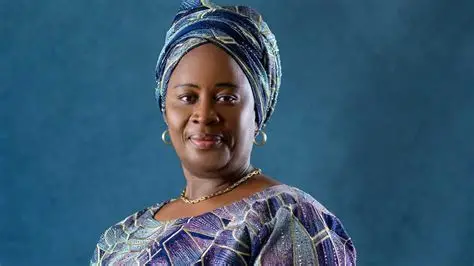
The Country Representative of UN Women Nigeria, Beatrice Eyong, has described Nigeria Women as some of the brightest and most competent globally, but lamented that the country continues to underutilize them in governance and decision-making.
Eyong stated this on Friday in Abuja during a strategic media parley organized to commemorate International Women’s Day 2026, themed “Rights, Justice, Action.”
According to her, gender inequality remains one of the greatest human rights challenges of the present time, even though addressing it holds immense potential for sustainable development and peace.
Women missing in decision-making
Eyong highlighted the persistent gender gap in Nigeria’s political leadership, noting that women currently occupy only about 3.9 per cent of parliamentary seats, one of the lowest rates globally.
“Gender equality is fundamentally a matter of power,” she said. “Neither rights nor justice can be realised without action.”
She stressed that inclusive governance cannot be achieved while women—who constitute more than half of the population when combined with youth—remain largely excluded from leadership.
“We cannot develop a nation sustainably while leaving the expertise, competence and energy of more than 50 per cent of the population out of the decision-making process,” Eyong said.
Push for Special Seats Bill
To address the imbalance, she said UN Women and its partners are intensifying advocacy for the passage of the Special Seats for Women Bill, which seeks constitutional reforms to increase women’s representation in legislative bodies.
She described the proposed legislation as a long-standing aspiration for Nigerian women.
“It remains a dream for women and girls in Nigeria, and also for men who support gender equality,” she said.
Eyong emphasised that Nigeria cannot claim its leadership position on the continent while failing to harness the capabilities of its women.
“Nigeria has the brightest and most competent women on the continent. These women are excelling globally. The question is why they are not given the opportunity to use their expertise at home,” she said.
Violence against women and justice concerns
Eyong also raised concerns over persistent cases of violence against women and the difficulty many survivors face in accessing justice.
“Rights mean little without justice. Justice must be lived and felt in women’s safety and freedom from fear,” she said.
She disclosed that UN Women is supporting the Federal Ministry of Women Affairs to strengthen the National Sexual Offender Database in order to improve accountability for perpetrators of sexual violence and prevent offenders from moving across states undetected.
The organisation, she added, is also working with traditional and religious leaders to challenge harmful cultural norms that sustain violence and discrimination against women.
“We are advancing the UN Secretary-General’s call for zero tolerance and zero excuses for violence against women,” she said.
Expanding economic opportunities for women
Eyong further highlighted efforts to expand women’s economic empowerment through partnerships with the private and financial sectors.
According to her, more than 200 companies in Nigeria have adopted the Women’s Empowerment Principles, a United Nations initiative that encourages businesses to promote gender equality and support women entrepreneurs.
She added that UN Women is working with development finance institutions, including the African Development Bank, to increase women’s access to finance through specialised credit lines, financial products and gender bonds targeted at women-led businesses.
Eyong disclosed that a new programme supported by the bank would be launched by June to improve financing opportunities for women entrepreneurs.
“If women are empowered economically, we will see fewer cases of violence and greater stability in our communities,” she said.
Implementation remains key challenge
While acknowledging that Nigeria has ratified several international conventions and adopted multiple gender-related policies, Eyong said the country’s biggest challenge lies in implementation.
“Nigeria does not lack policies,” she said. “The real challenge is financing them, enforcing them and sustaining them.”
She explained that many policies lack costed action plans or adequate budget releases, making effective implementation difficult.
Stakeholders call for stronger political and legal reforms
Also speaking at the parley, the National President of the League of Women Voters of Nigeria, Irene Awunah, called for stronger political commitment to increase women’s participation in governance. She stressed that increasing women’s participation in politics would strengthen democracy and ensure that governance reflects the interests of all citizens.
Similarly, a representative of FIDA Nigeria stressed the need for more effective implementation of laws designed to protect women, particularly the Violence Against Persons (Prohibition) Act, urging government institutions to strengthen the justice system to ensure perpetrators are held accountable and survivors receive timely support.