…Urges 10th NASS on swift passage
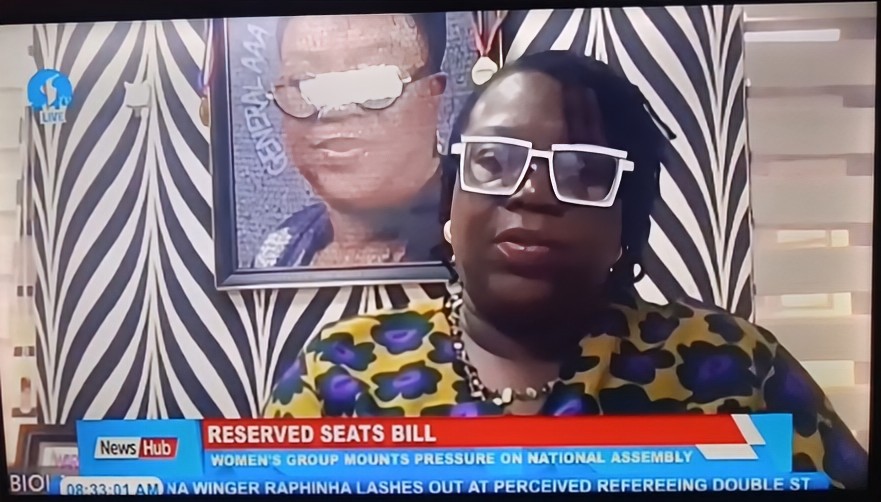
The Founding Director of the Women Advocates Research and Documentation Centre (WARDC), Abiola Akiyode-Afolabi, has urged the 10th National Assembly to pass the Reserved Seats for Women Bill, stating that Nigeria is at a loss not fully tapping the potential of its female population in governance. She emphasized that the benefits of inclusive representation far outweigh any perceived costs of creating special seats for women.
Speaking during a live interview on Silverbird Television, Akiyode-Afolabi dismissed concerns that the bill would increase government expenditure, describing the costs as “insignificant” compared to the gains for governance, national development, and social equity.
“The cost is not significant when weighed against the benefits of inclusive governance,” she said, citing examples from countries like Rwanda and Uganda, where affirmative action policies have increased women’s participation and strengthened decision-making. “What we are proposing is minimal. It is a necessary corrective measure for historical injustices.”
The bill, which seeks to amend sections of the 1999 Constitution to guarantee women reserved positions in the National and State Assemblies, is yet to be voted on. Akiyode-Afolabi expressed concern over delays, urging lawmakers to act promptly. “With the momentum already built, this is the time to act. The Special Seats Bill is not about charity; it is about justice, representation, and national development,” she said.
Nigeria Lags in Women’s Political Participation
Highlighting Nigeria’s global ranking, she noted that out of 148 countries, Nigeria is 124th in terms of women’s representation in governance. “At the National Assembly, women occupy only 4.4 per cent of seats, despite constituting nearly half of the country’s population,” she said.
She argued that this underrepresentation undermines inclusive governance and effective policymaking. “Decisions affecting women cannot continue to be made without women at the table. Representation is not just about fairness; it is about better policy outcomes and national growth,” she added.
Barriers at State and Party Levels
Responding to questions about women’s participation at state and party levels, Akiyode-Afolabi rejected the notion that women are unwilling to engage in politics. Instead, she cited structural obstacles within political parties, including opaque candidate selection processes, internal politics, cultural and religious biases, and other systemic challenges.
“Women are participating. They contest elections across the country. The problem lies in the obstacles that prevent them from emerging as candidates or winning elections,” she explained. She also noted that several State Houses of Assembly currently have no female representation, calling the situation “unacceptable” in a nation where women make up nearly half the population.
Constitutional Support Needed
Akiyode-Afolabi stressed that constitutional amendments are necessary to ensure sustainable inclusion. “Women have endured historical injustices — from limited access to education to political violence and economic disempowerment. The Constitution, as the highest law of the land, must provide a corrective mechanism,” she said.
Drawing lessons from Kenya, which has significantly increased female representation through affirmative action, she urged Nigeria to take deliberate steps to reverse decades of exclusion.
Beyond Gender: Governance and Accountability
While acknowledging challenges faced by women in public office, she warned against reducing governance issues to gender alone. “It is not about whether a woman succeeds or fails. It is about building a transparent and accountable system that measures performance fairly,” she said.
She concluded by calling on lawmakers to act decisively. “The Special Seats Bill is a minimal investment with maximal returns, for women, for governance, and for the development of Nigeria,” she said.
The National Assembly is expected to vote on the bill as part of the ongoing constitutional amendment process.