…Laments lack of will by 10th NASS, seek urgent support
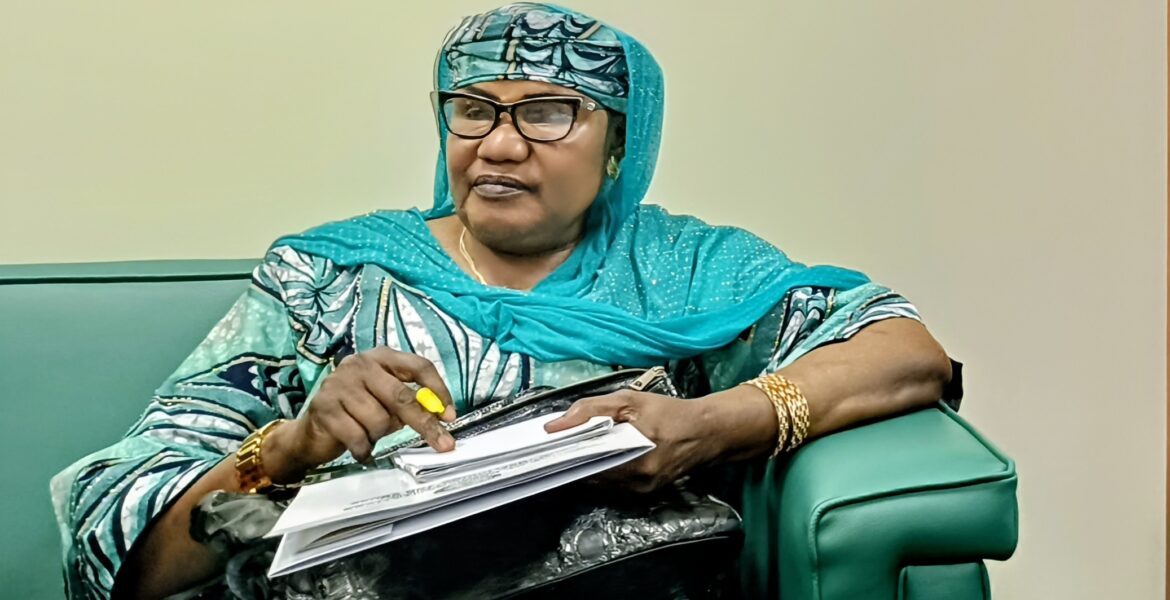
The Chairperson of the House Committee on Women in Parliament, Hon. Fatima Talba, has called for stronger collaboration and deeper understanding of the proposed Special Seats Bill, describing it as a practical and temporary strategy to strengthen women’s representation in Nigeria’s legislature.
Talba made the appeal while hosting representatives of the Woman Advocate Research and Documentation Centre (WARDC) and the Nigerian Women Trust Fund (NWTF) at her office in the National Assembly earlier this week.
She expressed worry over what she described as a lack of political will within the 10th National Assembly to pass the proposed Special Seats Bill, insisting the initiative is “not a takeover, but a lifeline” for women’s representation in Nigeria, regretting that the Special Seats proposal is widely misunderstood and requires more stakeholder engagement to gain traction within and outside parliament.
She explained that the Special Seats Bill does not seek to displace sitting lawmakers or alter existing constituencies. Rather, it proposes additional, reserved seats for women for a limited period, about 14 years, to help build a stronger presence for women in decision-making spaces.
“The bill has been on for some time, but in-depth knowledge of it has not been given. That is why we must continue to educate people, even our colleagues at the national assembly on what it truly represents.
“This is just an additional seat. It has nothing to do with current seats. It is a temporary measure to see if it will bring more women into governance,” she explained.
Currently, women occupy only 19 out of about 400 seats in the National Assembly, a figure she said has made it difficult for gender-related bills to secure the required votes during legislative processes.
“When the numbers are low, it becomes challenging to push certain reforms. We want to improve that situation so that issues affecting women and families can receive the attention they deserve,” she noted.
Talba stressed that the initiative is non-partisan and should be seen as a national development strategy rather than a political contest.
“We are not limited to the National Assembly alone. We are looking at the State Assemblies and the broader political structure. This is about encouraging more women to come on board,” she said.
The lawmaker urged civil society organisations to intensify advocacy efforts, including media engagements, grassroots sensitisation and direct consultations with political leaders and party structures.
“If we still have time and the bill does not pass immediately, then advocacy must come first. We need to talk to governors, party leaders and stakeholders across regions.”
She also encouraged NGOs to harmonise their strategies and submit clear work plans outlining how they intend to support the process. According to her, a coordinated approach would strengthen engagements with the leadership of the National Assembly.
“With less than a year left in this legislative cycle, we want to make meaningful impact and leave a legacy,” she added.
Speaking during the meeting, the Programme Manager at WARDC, Emmanuella Azu, highlighted the organisation’s longstanding collaboration with the National Assembly on women’s political inclusion.
She recalled that since 2009, WARDC has hosted National Women in Parliament Summits, beginning with the first summit organised alongside Hon. Nkiru Onyejeocha. The initiative, she said, brings together women from the National Assembly, State Houses of Assembly, local governments and the executive arm of government to agree on shared legislative priorities.
“It is a platform where women in politics and governance come together to speak with one voice,” Azu explained.
She noted that WARDC was also part of the advocacy efforts that led to the establishment of the Women in Parliament Committee and the Gender Technical Unit (GTU) within the Assembly.
Representative of the Nigerian Women’s Trust Fund Malia Ousmane, reaffirmed the organisation’s commitment to increasing women’s political participation nationwide. She said NWTF focuses on supporting women candidates, nurturing young women leaders and addressing barriers that limit women’s entry into politics.
She added that greater public awareness and collective advocacy would be crucial to advancing the Special Seats Bill.
“There is a need for women to speak more boldly and collectively,” she said. “We are ready to support efforts that will strengthen women’s participation across Nigeria.”
The meeting ended with a shared commitment to deepen collaboration between the committee and civil society groups. Talba emphasised the importance of unity among women-focused organisations, noting that collective action would improve the chances of achieving meaningful reform.
“We need to work as a team. If we harmonise our efforts and focus on the same goal, we can make progress,” she said.