…”We’re Nigerians too, we want real inclusion“
Women living in Internally Displaced Persons (IDP) camps across Nigeria have renewed calls for economic empowerment, leadership inclusion, and concrete government commitment, declaring that they are citizens deserving of opportunity, not charity.
The call echoed strongly at a Policy Dialogue on Strengthening Economic and Livelihood Decision-Making Processes for Women in IDP Camps, hosted in Abuja by Stand With A Girl (SWAG) Initiative with support from BMZ through the Deutsche Gesellschaft für Internationale Zusammenarbeit (GIZ).
With more than six million Nigerians displaced and about 70 percent of them women and children, stakeholders agreed that humanitarian aid alone can no longer address the scale and complexity of the crisis.
From Aid to Agency
Delivering a keynote address, the Head of the Vulnerable Women and Children Department at the Federal Ministry of Humanitarian Affairs and Poverty Reduction, Gloria Ihekwoaba, acknowledged that while the National Policy on IDPs provides a solid protection framework, protection alone is insufficient.
“There is a compelling need to transition from short-term humanitarian aid to sustainable economic agency,” she said.
She outlined three key pillars guiding the Ministry’s 2026 mandate for displaced women: Targeted skills acquisition and digital literacy, including agri-technology, renewable energy solutions, and digital micro-work to enable women earn income regardless of location.
Financial inclusion and seed capital, through low-interest micro-grants and revolving loan schemes for women-led cooperatives, aligned with NALDA and the National Commission for Refugees, Migrants and IDPs, and Decision-making integration, institutionalising displaced women’s participation in camp management committees and local economic planning platforms.
The Ministry also committed that at least 15 percent of economic empowerment beneficiaries in IDP settings will be women living with disabilities.
“Sustainable recovery is built on opportunity, not charity. Displaced women must be supported as economic actors and leaders capable of shaping their own futures,” Ihekwoaba stressed.
Presidency Pledges Closer Engagement
Speaking during a panel session titled Enhancing Women’s Economic Access and Leadership in Nigeria’s IDP Context: Opportunities, Barriers, and Trade-Offs, the Senior Special Adviser to the President on Community Engagement, Dr. Abiodun Essiet, said her office would intensify attention to the growing number of IDPs, particularly in the north-central region.
“For having people like us on board to listen to the concerns of the IDPs is one of the things that will be a great platform for their concerns to be taken seriously,” she said.
Essiet noted that once security operations stabilise affected communities, low-cost housing initiatives could serve as both shelter and empowerment platforms.
“We are actually using the low-cost housing to also empower the refugees. We are asking them to build themselves and pay their own living expenses for two and three times. This is an avenue we need to discuss more, and we need more decision-makers at the table to listen to their concerns,” she explained.
She pledged to document the concerns raised and forward reports to President Bola Ahmed Tinubu through the Ministry of Humanitarian Affairs, while also sharing findings with UN refugee agencies.
Highlighting the layered vulnerabilities women face, Essiet said displacement compounds pre-existing gender marginalisation.
“Women are already marginalized based on their gender. Now add cultural and security challenges, and it becomes cumbersome to truly understand what they are facing,” she said.
She emphasized intersectionality, noting that women are not a homogeneous group.
“You have women leaders, women in IDPs, women with disabilities. Any intervention must understand these adversities and address them accordingly.”
In a show of immediate support, Essiet announced a donation of one million naira to support IDP women through SWAG Initiative.
“They Train Us, But Leave Us With Certificates”
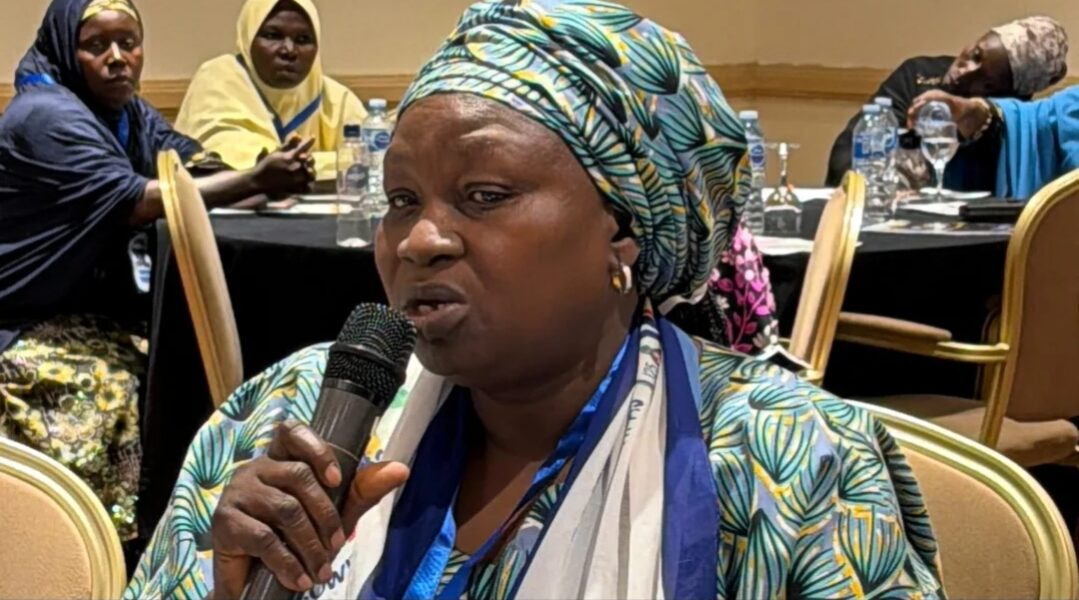
For displaced women present at the dialogue, the discussions were deeply personal.
Hanatu Yohanna, Secretary to the Women Leader in New Kuchingoro IDP Camp, said the workshop gave her confidence to demand inclusion.
“We have rights, rights to leadership, rights to build our houses, rights to empowerment,” she said.
Displaced since 2014, her community now lives on a government road facing possible eviction due to infrastructure development.
“If government constructs this road today, where are we going? We want peace so we can return home. There is no place like home,” she said.
She further revealed that women in her camp are largely excluded from decision-making processes, with only a symbolic woman leader and no formal roles such as financial secretary or camp secretary.
“When they go for meetings or receive support, women are not involved. Sometimes help comes and we don’t even know how it is shared,” she said.
“They train 50 women, but empower none. We have many certificates but no capital. They teach sewing and business skills but give no money to start.”
Despite establishing a volunteer-run school serving both displaced and host community children, government support remains minimal. Many secondary school graduates now sit idle due to lack of fees.
“We are Nigerians too, we have the right to good schools, hospitals, and decent houses,” Yohanna declared.
Beyond Palliatives
Executive Director of SWAG Initiative, Margaret Bolaji-Adegbola, said the dialogue was designed to bridge the gap between policy and lived realities, She stressed that government commitment must move beyond rhetoric.
“Over 70 percent of displaced persons are women and children, yet they face exclusion from governance and economic platforms,” she said.
“Commitment means putting resources into the national IDP policy and coordinating partners so we do not duplicate efforts. We must meet not just economic needs, but education and health needs.”
As displacement persists nearly a decade for some communities, stakeholders agreed that durable solutions, integration, resettlement, or safe return, must be matched with economic empowerment and leadership inclusion.
The message from displaced women was clear: they do not want indefinite dependency, they want agency, inclusion, and above all, they want recognition as full citizens.
“We are not asking for charity, we are asking for our rights,” Yohanna said.