
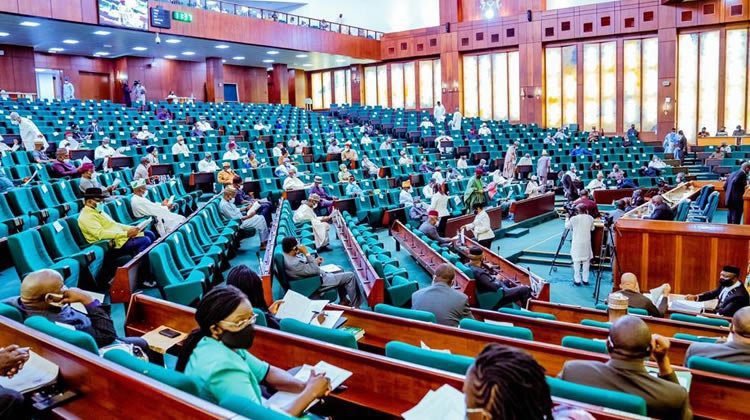
The House of Representatives has initiated a constitutional amendment process that would bar the execution of pregnant women convicted of capital offences, shifting the legal focus toward the protection of unborn children and the moral boundaries of punishment in Nigeria’s justice system.
The proposal, adopted through the House Committee on Constitution Review chaired by Deputy Speaker Benjamin Kalu, seeks to revise Section 33(1) of the 1999 Constitution, which guarantees the right to life but permits deprivation of life through lawful execution following criminal conviction.
Under the proposed amendment, a new subsection would mandate that any pregnant woman sentenced to death shall have her punishment commuted to life imprisonment, once pregnancy is established to the satisfaction of the court. The provision is framed not as clemency for the convict, but as constitutional protection for the unborn child.
Legal scholars and human rights advocates have described the move as a significant ethical intervention in capital punishment jurisprudence. Senior Advocate of Nigeria, Mike Ozekhome, praised the initiative as a humane reform that separates criminal liability from the rights of unborn life, arguing that justice must not extend punishment to those who bear no responsibility for the crime.
He maintained that the execution of a pregnant convict effectively extinguishes two lives, one through lawful sanction and the other through the denial of legal protection to an innocent unborn child, a contradiction, he said, that modern constitutional systems must confront.
Constitutional lawyer Abdul Mahmud also welcomed the proposal, describing it as an attempt to reconcile criminal justice with evolving human rights standards. He noted that by commuting the sentence to life imprisonment, the amendment affirms the principle that punishment must remain personal, proportionate, and morally bounded.
Mahmud further observed that the reform raises broader questions about the continued place of the death penalty within Nigeria’s constitutional order, arguing that the need for repeated exceptions may signal deeper ethical tensions within capital punishment itself.
Beyond criminal justice reform, the House also advanced a separate constitutional proposal to entrench environmental rights. Lawmakers are seeking to introduce a new Section 33A to guarantee every Nigerian the right to a clean, safe and healthy environment, including access to environmental information, public participation in environmental decision-making, and legal accountability for ecological harm.
The proposed provision would impose a constitutional duty on the state to pursue sustainable development policies that balance environmental protection with economic and social needs, while safeguarding the interests of future generations.
Together, the amendments signal a broader legislative shift toward rights-based constitutional reform, expanding the scope of protection beyond individual liberties to include unborn life and environmental justice as core constitutional values.