The Federal Government has reiterated that narrowing Nigeria’s gender health gap is central to achieving lasting health sector reforms, driving economic growth, and advancing national development.
It observed that the country’s persistently high maternal and child mortality rates are not merely medical issues but reflect deeper structural problems, including unequal access to quality healthcare, shortages of skilled health professionals, weak financial protection mechanisms, and wider social and economic inequalities.
This position was made known by the Coordinating Minister of Health and Social Welfare, Prof. Muhammad Ali Pate, during the launch of the Built for Her Foundation in Abuja, an initiative focused on improving women’s health and wellbeing nationwide.
Speaking through his Chief of Staff, Dr Mayowa Alade, the minister described women’s health as a critical driver of national productivity and long-term prosperity. He noted that efforts which combine healthcare delivery with research, education, community engagement and attention to social determinants of health serve as vital complements to government interventions.
The launch also unveiled the foundation’s vision and priority areas, which are guided by the McKinsey Health Institute framework on closing the gender health gap. The initiative plans to advance its goals through partnerships across healthcare, research, education, technology and community-based organisations.
Founder of the Built for Her Foundation, Dr Teniola Saraki, said the organisation was founded on the conviction that women and girls deserve health systems intentionally designed to meet their needs. She stressed that women’s health goes beyond reproductive care to include conditions such as cancers, cardiovascular diseases, mental health challenges and autoimmune disorders, where women often face delayed diagnosis and poorer outcomes.
She revealed that Nigeria records an estimated maternal death every seven minutes, with about 75,000 maternal deaths recorded in 2023, representing nearly 29 per cent of global maternal deaths. Referencing a 2024 McKinsey Health Institute report, Saraki added that women worldwide spend about a quarter more of their lives in poor health than men, largely due to gaps in data, research and access.
“These disparities are not inevitable. They reflect how health systems have been structured and can be corrected through deliberate, evidence-based action,” she said.
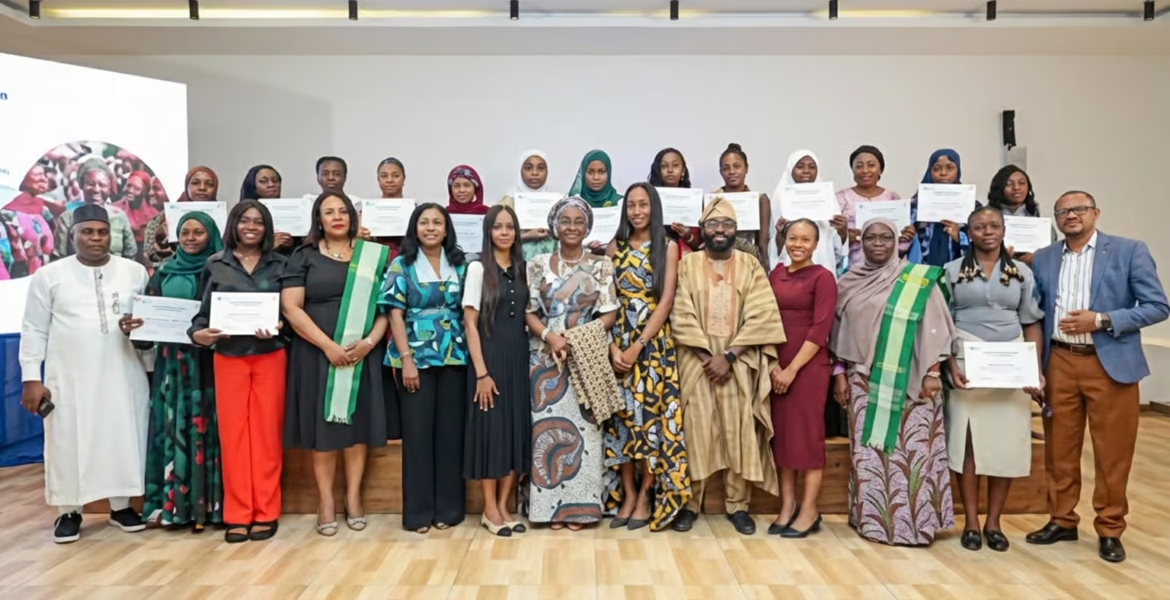
A major highlight of the event was the recognition of 30 recipients of the Built for Her National Medical Students Scholarship, implemented in partnership with the Nigerian Medical Students’ Association (NiMSA). The beneficiaries were selected from over 100 applicants across the country and drawn from all six geopolitical zones. All are 400-level medical students.
One of the awardees, Hindat Abdulwahab, described the scholarship as both an encouragement and a statement of belief in women’s capacity to lead and innovate in healthcare. She said the initiative sends a strong message that women are valued and capable of transforming health systems.
Also speaking at the event, Founder of the Wellbeing Foundation Africa, Mrs Toyin Saraki, emphasised that sustainable national progress cannot be achieved without prioritising the health and wellbeing of women and girls. She noted that persistent gaps in access, representation and investment continue to drive unequal health outcomes.
According to her, the Built for Her Foundation enters the space with a strong, data-driven approach grounded in research, accountability and global evidence on addressing gender-based health disparities.
Culled from Guardian Newspapers
Women’s health central to economic growth, sustainable reforms – FG https://guardian.ng/features/health/womens-health-central-to-economic-growth-sustainable-reforms-fg/