How Far Nigeria Went in 2025, What 2026 Must Deliver
As Nigeria enters 2026, the question of women’s leadership and governance remains one of the country’s most unresolved democratic challenges. The past year, 2025, was marked by heightened advocacy, renewed legislative debates and repeated assurances from political leaders that gender inclusion is no longer optional. Yet, beneath the promises and public statements, women’s representation in elective office remained low, exposing the distance between acknowledgement and action.
For women’s rights advocates, 2025 was a year of pressure and positioning. For political institutions, it was a year of reckoning, one that revealed both an increased willingness to engage with the issue of women’s inclusion and a persistent reluctance to implement reforms that would fundamentally alter Nigeria’s power structure.
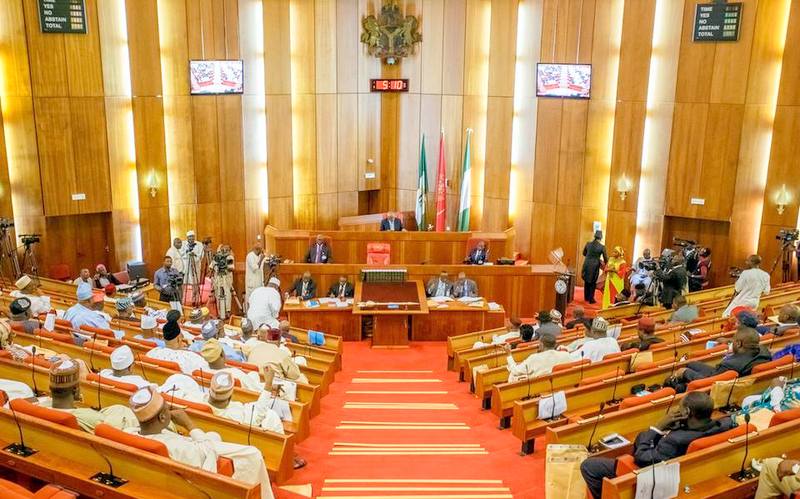
At the centre of the conversation was data that Nigeria has struggled to escape. As of the end of 2025, women occupied fewer than five per cent of seats in the National Assembly. Out of 109 senators, only four were women, while the 360-member House of Representatives had fewer than 20 female lawmakers. Across the 36 State Houses of Assembly, women’s representation hovered around six per cent, with several states having no female legislators at all.
These figures placed Nigeria near the bottom of global rankings on women’s parliamentary representation, far below the African average of about 25 per cent and well under the African Union’s parity targets. Analysts repeatedly pointed out that Nigeria’s gender imbalance in governance is not a reflection of women’s capacity or participation in public life, but of systemic barriers embedded in party politics, campaign financing and electoral violence.
2025 year of intensified advocacy
Against this backdrop, 2025 saw a renewed push by women’s organisations to move beyond symbolic inclusion toward structural reform. Advocacy coalitions, professional associations and grassroots movements coordinated campaigns aimed at the legislature, political parties and the executive.
A defining feature of the year was the shift from elite advocacy to mass participation. Women from across the country travelled to Abuja for public hearings on constitutional review, particularly to support proposals designed to increase women’s representation in legislative bodies. These engagements marked one of the largest sustained mobilisations of women around a single governance issue in recent years.
The argument advanced by advocates was consistent: without deliberate constitutional intervention, Nigeria would continue to reproduce a male-dominated political system that excludes women regardless of merit, experience or public support.
The Reserved Seats Bill and its long road
Central to the year’s advocacy was the Reserved Seats Bill, a proposed constitutional amendment seeking to create additional seats for women in the National Assembly and State Houses of Assembly. The proposal, which has existed in various forms over the years, gained renewed momentum in 2025 as part of the ongoing constitutional alteration process.
Supporters framed the bill as a temporary corrective measure, designed to address historical exclusion rather than confer permanent advantage. They argued that Nigeria’s political environment; shaped by high campaign costs, party gatekeeping and violence, disproportionately disadvantages women and requires targeted intervention.
During public hearings held by the National Assembly’s constitution review committees, women’s groups presented data, testimonies and comparative examples from other African countries where reserved seats have significantly improved women’s participation in governance.
By mid-2025, leaders of the National Assembly publicly acknowledged the problem the bill sought to address. Senate President Godswill Akpabio and Speaker of the House of Representatives Tajudeen Abbas both spoke in favour of greater inclusion of women in governance during constitutional review engagements. President Bola Ahmed Tinubu, through official channels, was also reported to have expressed support for women’s participation as part of broader democratic reform.
However, by the close of the year, the bill had not been passed into law, reinforcing long-standing concerns among advocates that political support often stalls when reform threatens entrenched interests.
The events of 2025 placed Nigeria’s male-dominated political leadership under sharper scrutiny. While public endorsements of women’s inclusion became more frequent, advocates increasingly questioned the absence of clear legislative timelines and voting commitments.
Civil society organisations began documenting statements made by lawmakers in support of the Reserved Seats Bill, signalling an intention to track whether those commitments translate into legislative action in 2026. For many advocates, the bill has become a test of political sincerity rather than a symbolic policy proposal.
The accountability question was simple: having acknowledged that women are underrepresented, will the National Assembly act decisively to change that reality, or will the issue be deferred once again?
The role of the Women Affairs Ministry
Throughout 2025, the Ministry of Women Affairs and Social Development played a visible role in shaping the national conversation. Minister Imaan Sulaiman-Ibrahim repeatedly described women’s leadership as essential to national development and social stability, aligning government rhetoric with global commitments to gender equality.
However, her description of the Reserved Seats Bill as a “weak negotiation” introduced complexity into the debate. While some interpreted the remark as a call for a more ambitious reform package, others expressed concern that it reflected limited executive enthusiasm for the bill as currently framed.
The episode highlighted a recurring challenge in Nigeria’s gender governance space: strong rhetorical support exists alongside cautious political positioning, especially when reforms require constitutional change and bipartisan consensus.
Beyond legislation: women in governance spaces
Outside the legislature, women continued to play visible roles in governance in 2025. Female ministers, heads of agencies and senior civil servants contributed to policymaking in sectors ranging from health and education to social development and economic reform.
Professional networks and leadership programmes expanded efforts to mentor younger women and strengthen pipelines for future leadership. Conferences and policy dialogues created platforms for women to articulate governance priorities and influence public discourse.
Yet analysts stressed that appointments, while important, remain vulnerable to political turnover and do not substitute for elected power. Without meaningful representation in legislatures, women’s influence over lawmaking and budgetary priorities remains limited.
Public discourse around women’s leadership intensified in 2025, driven by media coverage, opinion writing and social media debates. While support for women’s inclusion has grown, resistance remains rooted in cultural norms, party structures and misconceptions about affirmative action.
Opponents of reserved seats often framed the policy as preferential treatment, an argument advocates countered by pointing to decades of structural exclusion and unequal starting conditions. The debate underscored the reality that legal reform alone cannot resolve gender imbalance without broader cultural change.
For many women, particularly in rural and marginalised communities, leadership debates remain abstract unless they lead to tangible improvements in daily life. This disconnect continues to shape public scepticism about elite-driven gender reforms.
What 2026 must confront
As Nigeria moves through 2026, expectations have sharpened. Women’s groups are calling for clear legislative milestones on the Reserved Seats Bill, including transparent timelines and recorded votes. Political parties are under pressure to demonstrate internal reforms that create pathways for women candidates ahead of the 2027 elections.
Observers say the coming year will be decisive. The constitutional review process cannot be open-ended, and delays risk undermining public trust in democratic reform. The National Assembly, having acknowledged the gender gap, faces increasing pressure to move from dialogue to decision.
At the executive level, advocates are also calling for stronger coordination between ministries, legislators and political parties to ensure that gender inclusion is treated as a governance priority rather than a peripheral issue.
An unresolved test for Nigeria’s democracy
By the end of 2025, Nigeria had made progress in elevating women’s leadership from the margins to the center of national debate. Advocacy was stronger, public awareness wider and political leaders more vocal in their support.
What remained unresolved was whether these developments would produce tangible change.
As 2026 unfolds, the measure of progress will not lie in the number of conferences held or statements issued, but in whether Nigeria’s political institutions are willing to redesign a system that has consistently excluded women from power.
For women across the country, the demand is no longer to be heard, but to be represented. and the year ahead will show whether Nigeria is prepared to meet that demand.
Written by Ene Oshaba – Editor, Women News Today